As an Amazon Associate, I earn from qualifying purchases at no extra cost to you.
6 Best Beginner Chef Knife Picks (Buying Guide) 2026
 ByZayyan

Picking your first real chef knife is harder than it sounds. There are hundreds of options, confusing specs, and zero guidance. You end up either overspending on something you don’t need or buying a dull disappointment. In this article I will show you the top 6 best beginner chef knife options that are actually worth your money.


Top 6 Best Beginner Chef Knives You Can Buy Now
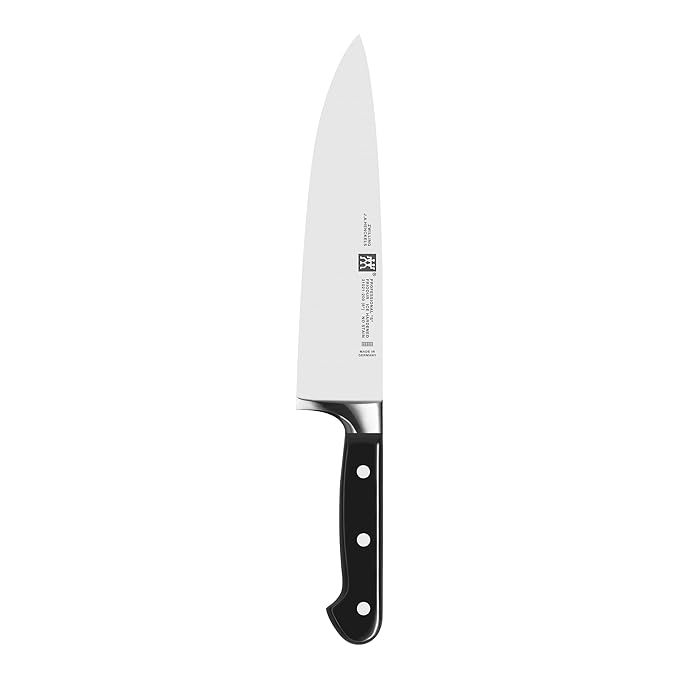
ZWILLING Professional S 8-Inch Chef’s Knife, Best Overall Pick for Beginners
ZWILLING has been making knives since 1731. That’s not a typo. These guys have been at it for nearly 300 years, and it shows in every single detail of this knife.
The blade is made from high-carbon stainless steel and forged in one solid piece, handle included. That matters because it means the knife is stronger, better balanced, and built to last decades, not just a few years. The ice-hardening process ZWILLING uses makes the steel harder and more resistant to staining or chipping.
For a beginner, the balance on this knife is a game-changer, sorry, a real standout. It doesn’t feel too heavy in the front or too light in the back. It sits right in your hand like it belongs there. The curved belly of the blade also makes rocking cuts feel natural, which is exactly what most home cooks do daily.
Yes, it costs more than a grocery store knife. But this is the kind of knife you buy once and never replace. If you’re serious about cooking, even just a little, this is worth every penny.
- Forged high-carbon stainless steel
- Full tang construction for balance
- Ice-hardened for durability
- Great for rocking cuts and everyday chopping
- Long-term investment piece
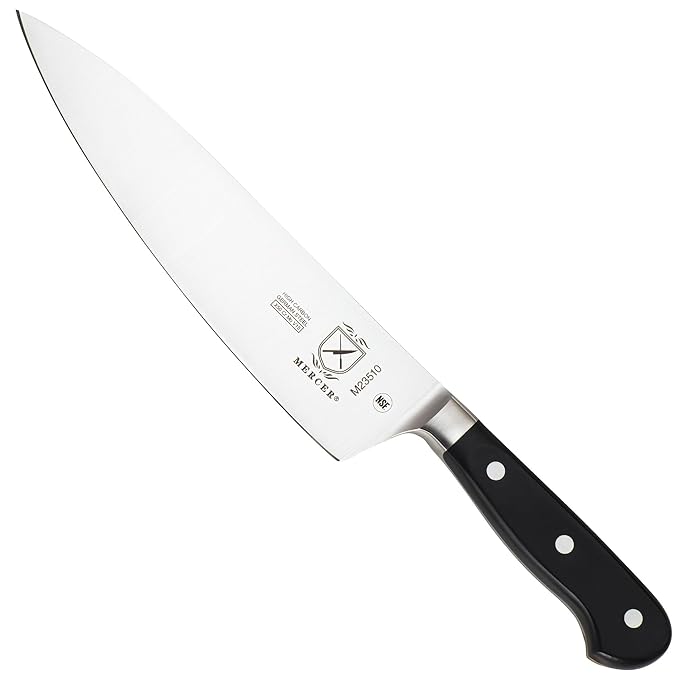
Mercer Culinary M23510 Chef’s Knife, Best Budget Pick That Actually Performs
Don’t let the low price fool you. The Mercer Culinary Renaissance 8-inch is what culinary schools across the US actually hand to students on day one. That alone should tell you something.
The blade is made from high-carbon German steel, which holds an edge well and is easy to sharpen at home. It’s not the fanciest steel on the market, but for a beginner who’s still learning how to handle a knife, it hits the sweet spot between performance and price.
The handle is ergonomic with a finger guard built right in. That little detail matters a lot when you’re new and your hands aren’t used to long cutting sessions. It keeps your fingers safely away from the blade without you even thinking about it.
The knife is a bit lighter than some premium options, which some people love and others don’t. If you have smaller hands or get tired easily, that lighter feel is a real plus. It makes long prep sessions way less exhausting.
Honestly, for under $40, this knife punches way above its weight. It’s the best starting point if you want to try a quality knife without spending a lot.
- High-carbon German steel blade
- Built-in finger guard for safety
- Lightweight and easy to handle
- Used in culinary schools
- Perfect entry-level price
HENCKELS Classic Razor-Sharp 8-Inch Chef Knife, Best for Everyday Home Cooking
HENCKELS is ZWILLING’s sister brand, and they share a lot of the same DNA. But the Classic line is designed to be more accessible, both in price and in feel.
The blade on this knife is stamped rather than forged, which keeps the cost down. But HENCKELS still uses their laser-controlled edge, so the sharpness right out of the box is genuinely impressive. Seriously, you could shave with this thing. For a beginner, that out-of-box sharpness means you can start cooking confidently on day one without needing to sharpen it first.
The handle is made from a durable polymer that’s comfortable and easy to grip even when your hands are wet. That’s more important than most people realize. A slippery handle when you’re cutting a butternut squash is not fun.
The knife feels substantial without being heavy. It’s the kind of knife that makes you feel like you know what you’re doing, even when you’re still learning. That confidence boost early on actually helps you improve faster.
It’s a solid, no-fuss knife that’s easy to maintain and built for real-life home kitchens.
- Laser-controlled razor-sharp edge
- Stamped blade keeps cost down
- Grippy polymer handle
- Great out-of-box sharpness
- Easy to maintain for beginners
Global Knives 8-Inch Chef’s Knife, Best for Those Who Want Something Different
Global is Japanese, and it shows. This knife looks unlike anything else on this list. The whole thing, blade and handle, is made from one piece of stainless steel. No seams, no crevices, nowhere for bacteria to hide. That’s a big deal for hygiene.
The blade uses Cromova 18 stainless steel, which is Global’s own formula. It’s harder than most German steels, which means it holds a sharper edge for longer. The trade-off is that it can chip if you’re rough with it or use it on hard bones. So treat it with a little respect and it’ll reward you.
The handle has dimples all over it for grip. It’s not as traditional as a riveted wood handle, but once you hold it, it feels good. Some people take a while to get used to it, but most beginners find it comfortable within a week.
The knife is lighter than German-style knives, which makes precision cuts feel more controlled. If you’re into fine knife work, like julienning vegetables or thin slicing, this knife shines. It’s a great pick if you want a knife that feels a bit more special.
- One-piece stainless steel construction
- Cromova 18 steel for edge retention
- Lightweight for precision cuts
- Hygienic, seamless design
- Unique look that stands out
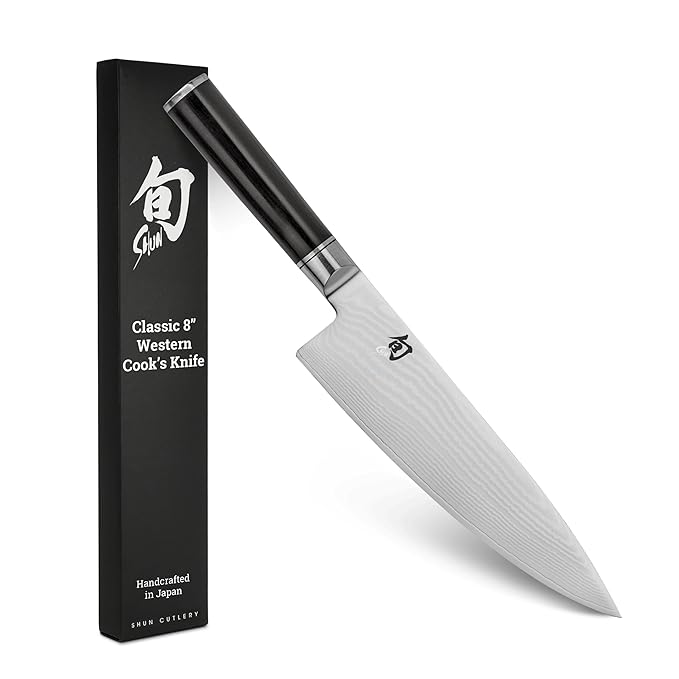
Shun Classic 8-Inch Western Cook’s Knife, Best Premium Pick for Aspiring Home Chefs
Shun is where Japanese craftsmanship meets Western functionality. This knife is beautiful, and it performs just as good as it looks. The blade has that stunning Damascus pattern that you’ve probably seen on cooking shows or Instagram kitchens.
Under that gorgeous exterior is VG-MAX steel, Shun’s proprietary formula. It’s incredibly hard, which means the edge stays sharp for a long time. The blade is also thinner than most German knives, so it slices through food with less resistance. Cutting tomatoes, herbs, or fish feels almost effortless.
The handle is D-shaped, made from Pakkawood, which is a resin-infused hardwood that’s both beautiful and durable. It fits right-handed users naturally, though they do make left-handed versions too. For a beginner, that comfortable grip reduces fatigue and gives you more control.
Now, the price is higher. That’s the reality. But if you’re someone who loves cooking and wants a knife you’ll be proud to own, this is a treat worth considering. It’s not just a tool, it’s something you’ll actually want to use every single day.
- VG-MAX steel for superior sharpness
- Damascus patterned blade
- D-shaped Pakkawood handle
- Thin blade for effortless slicing
- A beautiful, heirloom-quality knife
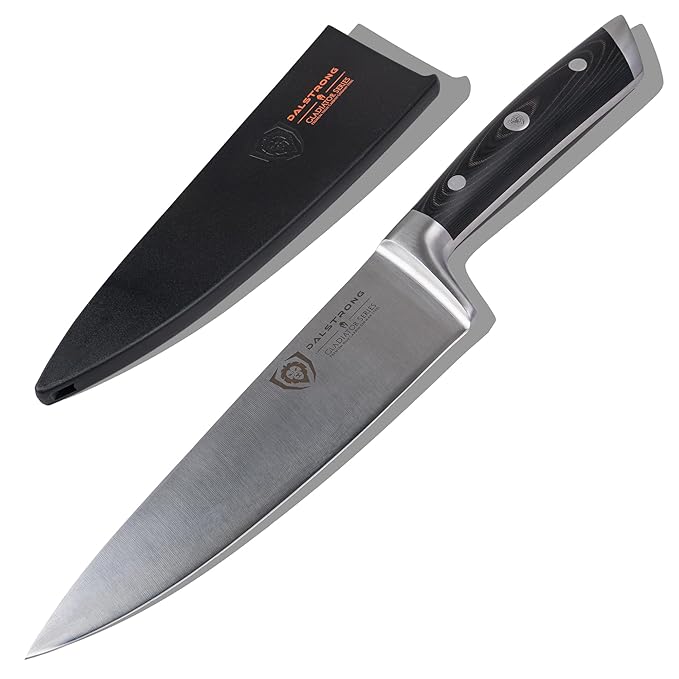
Dalstrong 8-Inch Chef Knife, Best for Value-Seekers Who Want It All
Dalstrong has built a cult following online, and for good reason. They offer premium-looking, premium-feeling knives at a price that doesn’t make you cry. The Gladiator Series uses high-carbon German steel, the same type the big-name brands use.
The blade has a full tang design, which means the steel runs all the way through the handle. That gives it great balance and makes it feel more solid in your hand. The edge comes at a 16-18 degree angle, which is sharp enough for most kitchen tasks without being so delicate that a beginner will chip it right away.
The handle is made from black G10 military-grade material. It’s tough, resistant to moisture, and doesn’t slip. The triple-riveted design also makes it look and feel premium. People who pick it up for the first time often guess it costs twice what it does.
Dalstrong also has great customer service, and their knives come with a nice presentation box, which makes them a great gift too. If you want something that looks and performs like a high-end knife but won’t break your budget, Dalstrong is a smart call.
- High-carbon German steel blade
- Full tang for balance and durability
- G10 military-grade handle
- 16-18 degree sharp edge
- Impressive looks at a fair price
I hope this guide helped you cut through the confusion, pun intended. The best knife for you is the one that fits your hand, your budget, and your cooking style. Don’t stress over getting it perfect. Just pick one from this list and start cooking. You’ll learn what you love as you go. And trust me, a good knife makes cooking so much more enjoyable.
| Knife | Steel Type | Handle Material | Best For | Price Range |
|---|---|---|---|---|
| ZWILLING Professional S | High-carbon stainless (forged) | Polymer/Triple riveted | Best overall, long-term use | $$$ |
| Mercer Culinary M23510 | High-carbon German | Ergonomic polymer | Budget beginners, culinary students | $ |
| HENCKELS Classic | High-carbon stainless (stamped) | Durable polymer | Everyday home cooking | $$ |
| Global G-2 | Cromova 18 stainless | One-piece stainless steel | Precision cuts, hygiene lovers | $$$ |
| Shun Classic Western | VG-MAX Damascus | Pakkawood (D-shaped) | Premium aspiring home chefs | $$$$ |
| Dalstrong Gladiator | High-carbon German | G10 military-grade | Value seekers, gift buyers | $$ |
Things to Consider Before Buying a Beginner Chef Knife: A Real Buyer’s Guide
Buying your first real chef knife feels exciting until you actually start looking. Suddenly there are hundreds of options, confusing terms like “full tang” and “Rockwell hardness,” and prices that range from $20 to $300. It’s a lot.
The truth is, most beginners buy the wrong knife, not because they didn’t care, but because nobody told them what actually matters. Knowing the things to consider before buying a beginner chef knife saves you money, frustration, and a drawer full of regret.
Blade Material: What the Knife Is Actually Made Of
The steel your knife is made from affects everything. How sharp it gets, how long it stays sharp, and how much care it needs. Most beginner knives use either German steel or Japanese steel, and they behave very differently in real life.
German steel is tougher and more forgiving. You can be a little rough with it, put it through heavy chopping, hit a hard sweet potato, and it won’t chip easily. Japanese steel is harder, so it gets sharper and holds that edge longer, but it’s more delicate. One wrong move on a bone and you might chip the blade.
For most beginners, German steel is the smarter starting point. It handles mistakes better while you’re still learning. You can always move to Japanese steel once your technique improves and you know how to treat a knife right.
- German steel is tough and forgiving for daily use
- Japanese steel is sharper but needs more careful handling
- High-carbon steel holds an edge better than basic stainless
- Check for rust resistance if you tend to leave knives wet
Blade Length: Size Really Does Matter Here
The most common chef knife length is 8 inches, and there’s a good reason for that. It’s long enough to handle a big watermelon cut or a full chicken breast, but short enough that you still feel in control. An 8-inch blade is the sweet spot for most home cooks.
Some beginners are tempted to go bigger, like a 10-inch blade, thinking more length means more capability. But a longer knife on a small cutting board in a tight kitchen is genuinely awkward. It can feel clumsy, and that leads to poor cuts and sore wrists.
If you have smaller hands or a smaller kitchen, a 6-inch knife might actually feel better. Don’t just follow what looks impressive online. Pick up a knife, or at least read detailed reviews, and think about your actual cooking space and hand size before committing.
- 8 inches works well for most beginner home cooks
- Smaller kitchens and hands may prefer 6 inches
- Bigger isn’t always better, control matters more
- Match blade length to your cutting board size
Handle Comfort: If It Doesn’t Feel Good, You Won’t Use It
The handle is the part you actually touch, and yet so many buyers completely ignore it. A beautiful blade means nothing if the handle makes your hand cramp after five minutes of chopping onions. Comfort is everything here.
Handles come in a few styles. Western handles are thicker and rounder, great for larger hands. Japanese-style handles are more slender and octagonal, which gives a very precise grip. Then there are ergonomic handles with curves built in, which some people love and others find weird.
Material matters too. Pakkawood and G10 are both popular because they’re durable, moisture-resistant, and feel solid. Basic plastic handles work fine but can get slippery when wet. Wood looks beautiful but needs more maintenance. Think about how you actually cook before picking.
- Try to hold the knife before buying when possible
- Western handles suit larger hands, Japanese suits smaller
- Avoid slippery materials, especially if your hands get wet while cooking
- A comfortable handle means longer, easier cooking sessions
Weight and Balance: How the Knife Feels in Motion
A knife’s weight affects how tired your hand gets and how much control you have. Heavier knives are great for tough jobs like breaking down a whole chicken. Lighter knives give you more speed and precision for fine work like mincing herbs.
Balance is about where the weight sits. A well-balanced knife feels natural in your hand, neither too heavy at the tip nor too heavy at the handle. A quick test: hold the knife by the bolster (that thick part between blade and handle) and see if it stays level. If it does, the balance is good.
Most beginners do better with a knife that leans slightly heavier toward the handle. It feels more controlled and less fatiguing. As your grip strength and technique improve, you’ll naturally start preferring something more evenly balanced.
- Heavier knives suit tough chopping, lighter ones suit precision
- Balance matters more than raw weight
- Test balance at the bolster if you can
- Fatigue is real, pick something you can use for 20 minutes comfortably
Tang Construction: The Hidden Backbone of Your Knife
Most people have never heard of a tang. But it’s one of the most important things to check before buying. The tang is the part of the blade that extends into the handle. And how far it extends changes everything about the knife’s strength and feel.
A full tang knife has steel running all the way through the handle, usually visible as a strip along the sides. This makes the knife stronger, better balanced, and way more durable. A partial tang only extends partway, which makes the knife lighter but also weaker over time.
For a beginner, always go for a full tang knife. It might cost slightly more, but it won’t snap at the handle after a year of regular use. It also feels more solid in your hand, which builds your confidence while you cook.
- Full tang means steel runs the full length of the handle
- Partial tang knives are weaker and can break at the joint
- Full tang adds balance and long-term durability
- Check product descriptions carefully, this detail is often buried
Budget: How Much Should You Actually Spend
Here’s the honest truth. You don’t need to spend $200 on your first chef knife. But you also shouldn’t buy a $10 knife from a discount bin and expect it to perform. The sweet spot for a quality beginner knife is somewhere between $40 and $100.
In that range, you get proper steel, a decent handle, and a blade that actually holds an edge. Brands like Mercer, HENCKELS, and Victorinox all make reliable knives in that price window. You’ll be happy with any of them while you’re learning.
Watch out for knives that look premium but charge for the branding, not the quality. A fancy box and a cool name don’t make a knife better. Read real user reviews, check what the blade steel actually is, and spend your money on what’s inside the knife, not what’s printed on it.
- $40 to $100 is the sweet spot for beginner quality
- Avoid super cheap knives, they dull fast and feel unsafe
- Don’t overpay for branding or packaging
- Mercer, HENCKELS, and Victorinox are honest options in this range
I hope these things to consider before buying a beginner chef knife give you real clarity before you spend a single dollar. A good knife makes cooking feel easier and more enjoyable. Trust your instincts, match the knife to your actual kitchen life, and don’t overthink it. The right one is closer than you think.
| Factor | What to Look For | Beginner Tip | Watch Out For |
|---|---|---|---|
| Blade Material | High-carbon German or Japanese steel | Start with German steel, it’s more forgiving | Vague labels like “stainless steel” with no grade listed |
| Blade Length | 8 inches for most home cooks | Go 6 inches if you have smaller hands or a tight kitchen | Buying long blades just because they look impressive |
| Handle Comfort | Ergonomic fit, moisture-resistant material | Hold it or check grip reviews before buying | Slippery plastic handles that feel fine dry but slip when wet |
| Weight and Balance | Balanced at the bolster, comfortable for 20+ minutes | Slightly handle-heavy feels more controlled for beginners | Knives that feel top-heavy or unstable during chopping |
| Tang Construction | Full tang for strength and durability | Always check the product description for tang type | Partial tang knives that hide the detail in fine print |
| Budget Range | $40 to $100 for real quality | Spend on steel quality, not packaging or branding | Flashy boxes and brand names that inflate cost without adding value |
Frequently Asked Questions (FAQs)
Is it worth spending more on a beginner chef knife?
Yes, honestly. A cheap knife can actually be more dangerous because it slips and slides on food instead of cutting cleanly. Spending even $40-$80 on a decent knife gives you better control, better safety, and a much more enjoyable cooking experience. You don’t need to spend hundreds, but don’t go rock-bottom cheap either.
Is it okay to wash my chef knife in the dishwasher?
Please don’t. The dishwasher is rough on knife blades. The heat, the moisture, and the banging around against other utensils will dull and damage even a great knife over time. Always wash your knife by hand with warm soapy water, dry it right away, and store it properly. That one habit alone will keep your knife sharp for years.
Can I use a chef knife to cut through bone?
You can try, but you really shouldn’t. Chef knives are not designed for bones. Using them on hard bones can chip or crack the blade, especially on thinner Japanese-style knives. For bones, use a cleaver or a dedicated boning knife. Protect your chef knife and use it for what it’s built for, vegetables, proteins, herbs, and general prep work.
Do I need to sharpen my knife before using it for the first time?
Most quality knives on this list come sharp enough to use right away. But after a few weeks of regular use, you’ll want to use a honing rod to realign the edge. Honing is not the same as sharpening. Think of honing as maintenance and sharpening as a reset. A honing rod a few times a week keeps your knife feeling sharp between sharpenings.
Is a heavier knife better than a lighter one?
Not necessarily. It really depends on your cooking style and hand strength. Heavier German-style knives are great for tough chopping tasks. Lighter Japanese-style knives are better for precision and speed. Beginners with smaller hands often prefer lighter knives. Try both styles if you can, and go with what feels comfortable after a few minutes of use.
Can a beginner learn to sharpen their own knife?
Absolutely. It’s not as scary as it sounds. Start with a simple whetstone or a pull-through sharpener. Whetstones give the best results but take a little practice. Pull-through sharpeners are quick and easy but remove more metal over time. Watch a few YouTube videos, practice on a cheap knife first if you’re nervous, and you’ll get the hang of it fast.
Do I need multiple knives or is one chef knife enough?
For most beginners, one good 8-inch chef knife handles 80-90% of kitchen tasks. You can chop, slice, dice, mince, and even do basic carving with just one good knife. Once you get comfortable and start cooking more, you might add a small paring knife and a serrated bread knife. But starting with one great chef knife is the smart move.
Is a longer blade better than a shorter one?
Not always. An 8-inch blade is the sweet spot for most home cooks. It’s long enough to handle big vegetables and proteins but short enough to stay in control. If you have a small cutting board or work in a tight kitchen, a shorter 6-inch blade might actually feel better. The length matters less than the comfort and control you feel while using it.
Can I store my chef knife in a drawer?
You can, but it’s not ideal. Tossing a knife loose in a drawer bangs the blade against other things and dulls it fast. It’s also a safety hazard when you reach in blind. A magnetic knife strip on the wall or a countertop knife block is a much better option. Either one keeps the blade protected and makes grabbing your knife easy and safe.
Is German steel or Japanese steel better for beginners?
German steel is generally more forgiving for beginners. It’s slightly softer, which means it’s less likely to chip if you accidentally hit a hard surface. Japanese steel is harder and holds a sharper edge, but it requires more careful handling. If you’re just starting out, German steel is a safer, easier bet. As your skills grow, Japanese steel becomes a really exciting step up.