As an Amazon Associate, I earn from qualifying purchases at no extra cost to you.
Bosch Dishwasher Error Code E31: Fix It Now Like a Pro
 ByZayyan

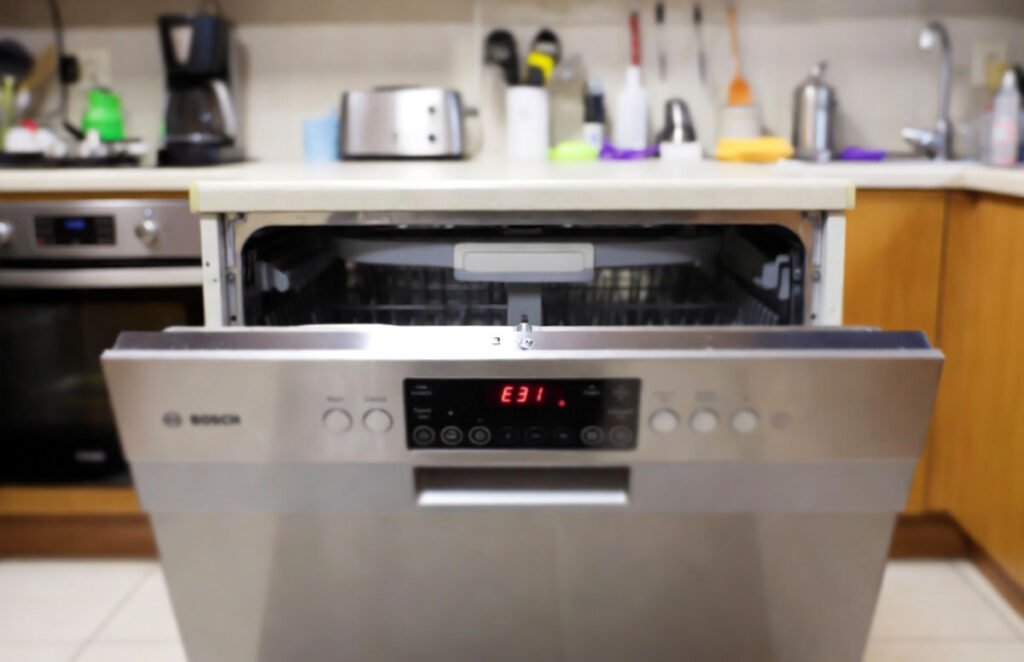
I know exactly how you feel right now. You just finished a big family dinner and the kitchen is a disaster area. You loaded up the dishwasher expecting it to do the heavy lifting. Instead, you are staring at a blinking Bosch dishwasher error code E31 and a tub full of dirty water. It is honestly the worst kind of surprise after a long day of work.
Fixing this issue usually comes down to dealing with the heat pump or the zeolite drying system. You will need to check for any moisture that might have leaked into the base of the unit. Most of the time, resetting the power or clearing out a small blockage in the sump area can get things moving again. If those quick fixes do not work, you might be looking at replacing the heat pump or the drying fan unit entirely.
What is This Bosch Dishwasher Error Code E31?
The E31 code is a specific signal from your Bosch dishwasher. It means something is wrong with the drying system. In many modern Bosch models, this involves the Zeolith technology. This system uses special minerals to create heat. When the sensors detect that the air is not heating up, the machine stops. It does this to prevent any further damage. It is a safety feature designed to protect the delicate internal electronics from short circuiting during the cycle.
This error often pops up right at the end of a wash cycle. This happens when the machine tries to transition into the drying phase. You might hear the motor humming or a strange clicking sound first. Then, the code appears on the display. It is incredibly frustrating because your dishes are clean but they are soaking wet. The control board is essentially telling you that it cannot guarantee a safe drying environment. Therefore, it shuts down for your protection.
Most people panic when they see this code. It sounds very technical. However, it usually points to a handful of common hardware failures. It could be a faulty heater or a stuck fan. Sometimes, just some stray moisture trips a sensitive sensor in the base. Over my twenty years of fixing these machines, I have seen many causes. Environmental factors like high humidity or a small leak are often the hidden culprits. Understanding this communication error is the first step.
- A faulty Zeolith heating element that can no longer reach the required temperature.
- Water leakage into the base tray which triggers the safety float switch.
- A malfunctioning drying fan that is stuck or has a burnt-out motor.
- Corroded wiring connectors between the main control board and the heat pump.
- A glitch in the main power module that requires a hard manual reset.
- Debris or mineral buildup inside the Zeolith container blocking the essential airflow.
How to Fix Bosch Dishwasher Error Code E31 Like a Pro
Safety First and Power Reset
Before you even think about grabbing a screwdriver, you must ensure your safety. First, unplug the dishwasher from the wall outlet. You can also flip the circuit breaker in your electrical panel. Working on an appliance with both water and electricity is very dangerous. So, please do not skip this step. Give the machine at least ten minutes without power. This lets the capacitors discharge fully.
This waiting period is not just for safety. It also acts as a soft reset for the internal computer. Sometimes the E31 code is just a temporary digital hiccup. It might be caused by a power surge or a brief sensor glitch. By leaving it unplugged, you allow the control board to clear its memory. This is the easiest possible fix. Consequently, it works more often than you might think.
While the power is off, take a moment to clear the area around the dishwasher. You will likely need to move it out from under the counter later. So, make sure the floor is clear. Having a dry towel nearby is a great idea. You might need it in case any water spills out during the process. Preparing your workspace properly makes the entire repair much less stressful. Plus, it keeps you organized.
- Disconnect the power cord or turn off the breaker to ensure total safety.
- Wait at least ten minutes to allow the control board to reset itself.
- Prepare your workspace by clearing the floor and having absorbent towels ready.
- Restore power and run a test cycle to check if the error cleared.
Inspect the Filter and Sump Area
Now that we know a simple reset will not cut it, we need a new plan. We need to look at the heart of the machine. Open the door and remove the bottom rack. This allows you to access the floor of the dishwasher. Next, twist the cylindrical filter counterclockwise. Lift it out to inspect it for any gunk. A clogged filter can cause drainage issues. These issues often lead to heating errors.
Clean the filter thoroughly under hot running water. Use a soft brush to remove any grease or food particles. Even if it looks relatively clean, small bits can hide. Tiny pieces of plastic or seeds can get stuck in the mesh. While the filter is out, look down into the sump area. This is where the water collects. Use a sponge to soak up any standing water. Then, you can see the bottom clearly.
Check for any foreign objects like broken glass or toothpicks. These might be jammed near the pump intake. If the water cannot circulate properly, the heating system might struggle. It will not be able to regulate its temperature. This triggers the error code. I have seen tiny pieces of labels cause massive headaches. They block the internal sensors. It only takes a second to verify that everything is clear.
After cleaning everything, put the filter back in. Make sure it clicks securely into its locked position. A loose filter can allow debris to bypass the system. This can damage the expensive heat pump later on.
- Remove the bottom rack and unscrew the main filter from the dishwasher floor.
- Scrub the filter mesh with hot water and soap to remove debris.
- Use a sponge to remove standing water and check the sump for blockages.
- Reinstall the filter correctly by ensuring it is locked firmly in its housing.
Access the Bottom Base Tray
If the error persists, we need to check for hidden water. You will need to remove the lower front panel. This is often called the kick plate. This task usually requires a Torx T20 screwdriver. Remove a few small screws holding the plastic or metal cover. Once that panel is off, you can see the white plastic base. This sits directly under the main tub.
Use a flashlight to peer into this dark space. Look for any signs of standing water. If you see a puddle, that is a huge red flag. It means a leak has occurred somewhere. Bosch dishwashers have a float switch in the base. It shuts down the heater if it detects moisture. This is a brilliant safety feature. It prevents electrical shorts and potential fires in your kitchen.
If you find water, use a dry towel to remove it. A shop vac also works well. You must remove every single drop from the base tray. Be careful not to bump the delicate wires. Also, avoid hitting the Styrofoam float while you are cleaning. Once the base is completely dry, the sensor should reset. Then, the E31 code might finally disappear. Of course, you still need a long term solution.
You still need to find out where that water came from. While you are down there, check the hoses. Look for any damp spots or white mineral deposits. These marks are like a map. They lead you directly to the source of a slow leak. Tightening a loose clamp might be the permanent fix. Alternatively, you might need to reseal a gasket. Keeping this dry area bone dry is essential.
- Remove the front kick plate screws using a Torx T20 screwdriver for access.
- Use a bright flashlight to inspect the bottom tray for signs of water.
- Dry the entire base tray thoroughly using towels to reset the float sensor.
- Check all visible hoses and connections for drips or signs of previous leaks.
Check the Heat Pump Connections
The heat pump is a very sophisticated component. It combines the motor and the heater into one unit. Over time, the machine vibrates during wash cycles. This can cause the electrical connectors to wiggle loose. Locate the heat pump on the right side of the base. Look closely at the wiring harness. You are looking for any plugs that are not pushed in.
Carefully unplug each connector one at a time. Then, inspect the metal pins for any damage. Look for signs of burning or corrosion. If a pin looks black or melted, you found a fault. This likely requires a part replacement. However, if they just look a bit dusty, you can clean them. Simply use a puff of air. Firmly press the connectors back into place. Ensure they click.
Wiring issues are a common cause of the E31 error. This happens because the control board loses its connection. If the board cannot talk to the heat pump, it assumes failure. Then, it throws the code. By ensuring a tight and clean connection, you restore communication. It is a simple check. Consequently, it can save you hundreds of dollars in unnecessary parts.
Pay close attention to the ground wire. This is usually green or yellow. It is crucial for safety. A loose ground can cause all sorts of erratic behavior. It often creates weird error codes on modern appliances. Once you are confident that all the wires are secure, you can stop. This step bridges the gap between a simple fix and a technical diagnostic. Now, you are almost done.
- Locate the heat pump assembly and identify the wiring harnesses connected to it.
- Unplug and inspect each connector for signs of overheating or green corrosion.
- Clean the contact points and firmly reseal every plug until it clicks.
- Verify that the ground wire is securely attached to the metal frame.
Inspect the Zeolith Fan Motor
Many high end Bosch models use a Zeolith drying system. This relies on a specific fan motor. This fan is responsible for blowing moist air through the minerals. This process generates heat. If the fan gets stuck, the air will not move. Then, the E31 code will trigger. You can usually find this fan assembly toward the rear. It might also be on the side.
Try to rotate the fan blades manually. You can use a finger or a small screwdriver. See if they spin freely. If the fan feels stiff, there might be debris. Sometimes, the bearings might be shot. A small piece of plastic can find its way into the ducting. Even a stray toothpick can cause problems. Clearing a simple obstruction like this can bring the system back.
If the fan spins freely but the error remains, the motor might be dead. The motor itself might have an internal electrical failure. You can check the motor for continuity. Use a multimeter if you feel comfortable with advanced tools. A reading of “OL” means the internal coils are broken. In this case, the part must be replaced. This is a common failure point.
- Locate the drying fan assembly and check the blades for any physical obstructions.
- Manually spin the fan to ensure it moves freely without any grinding noise.
- Use a multimeter to test the motor for continuity if the fan spins.
- Replace the fan unit if the motor is dead or bearings have seized.
Test the Zeolith Heating Element
The final piece of the puzzle is the heating element. This sits inside the Zeolith system. This element provides the initial heat. It activates the moisture absorbing minerals during the dry cycle. If this element burns out, the air will stay cold. Consequently, the sensors will report an E31 error. It is a very robust part. However, it can fail after thousands of cycles.
Testing this element requires a multimeter. Set it to the ohms setting to check for resistance. You will need to find the two main power wires. These go into the heater housing. Take a reading carefully. A healthy heater should show a specific resistance value. This is usually between 10 and 30 ohms. If the meter shows no movement, the element is broken.
If you determine the heater is bad, you have a choice. This is the point where you decide to repair or replace. The Zeolith container is a sealed system. This means you might have to replace the entire assembly. This can be a more expensive part. So, it is worth double checking all other findings first. However, a new unit will make the machine dry.
Once you have replaced any faulty parts, reassemble the dishwasher. Put the kick plate back on carefully. Ensure the machine is leveled properly under the counter. Finally, turn the power back on. Run a full heavy duty cycle to test your work. Seeing that “Clean” light without an error is the best feeling. You did it like a pro. Your kitchen is back.
- Set a multimeter to the ohms scale to test the heating element resistance.
- Check for a reading between 10 and 30 ohms to verify functionality.
- Identify if the entire Zeolith container needs replacement or just the element.
- Reassemble the unit and run a full cycle to confirm a successful repair.
How Can I Prevent Bosch Dishwasher Error Code E31?
Preventing this error is mostly about keeping things clean. You want the internal environment to stay dry. One of the best things you can do is change your habits. Avoid pre-rinsing your dishes too aggressively in the sink. While that sounds counterintuitive, the sensors actually need a little bit of soil. If the water is too clean, the detergent creates foam. This foam leaks and trips sensors.
Another huge tip is to use a high quality rinse aid. Also, use the correct amount of detergent. Many E31 codes are triggered by moisture issues. Rinse aid helps the water sheet off the dishes. Then, it moves toward the drain more efficiently. This keeps the humidity levels inside the tub manageable. Also, make sure you are cleaning that bottom filter. Do this at least once a month.
Lastly, you should run a dedicated cleaning cycle. Use a specialized descaler for this. This helps remove mineral buildup from the Zeolith beads. It also cleans the heating element. This keeps them working at peak efficiency. Over time, hard water can coat the internal components. This makes them overheat or work harder. A little bit of regular maintenance goes a long way. It stops future errors.
- Stop pre-rinsing dishes to prevent excessive foaming that leads to leaks.
- Always use a high quality rinse aid to help the drying system.
- Clean the mesh filter every month to prevent water backups and drainage.
- Run a descaling cycle every few months to remove mineral deposits.
- Ensure the dishwasher is perfectly level to prevent water pooling in the base.
- Check the door seal regularly for cracks that allow steam to escape.
Final Thoughts
I know how overwhelming it feels to fix a modern appliance. However, you are more than capable of handling this task. The E31 code is just the machine asking for a little bit of attention. Whether it is drying out a small leak or replacing a fan, you are doing great. You are taking the right steps to save money. Take it one step at a time. You will be successful.
Frequently Asked Questions (FAQs)
Is it safe to use my dishwasher while the E31 code is showing?
It is generally not a good idea to keep running the machine now. The E31 code specifically relates to the heating and drying system. This involves high voltage and high temperatures. If you ignore it, you could cause a short circuit. You might even damage the main control board. This leads to a much more expensive repair. It is better to leave it off for now.
Can I fix the E31 error without calling a professional technician?
You can absolutely handle many of the common causes for this error yourself. Most instances of E31 are caused by moisture in the base. Others are due to a simple blockage in the fan. These are very DIY-friendly fixes. As long as you are comfortable using a screwdriver, you can save money. Just remember to always keep the power disconnected while you work on it.
Do I need to replace the entire heat pump for an E31 code?
Not necessarily, because the problem might be much simpler than a total pump failure. While the heat pump is a common culprit, check for loose wires first. You should also look for a stuck fan or water in the base tray. I always recommend doing a full diagnostic first. Replacing the pump should be your last resort after you rule out cheaper possibilities.
Is it common for Bosch dishwashers to have heating problems?
Bosch dishwashers are actually known for their incredible reliability over many years. However, their drying systems are very sophisticated. Because they use a sealed system for drying, they have more sensors. These components can occasionally fail. Most users go many years without seeing an error like E31. When it does happen, it is often due to external factors like hard water.
Can a clogged drain hose cause the E31 error code to appear?
While a clogged drain hose usually triggers an E24 code, it can lead to E31. If water cannot leave the machine, it might leak into the bottom tray. This can also cause the humidity levels to spike. This interferes with the Zeolith drying process and confuses the sensors. Ensuring your drainage system is clear is a fundamental part of troubleshooting any heating or drying error.
Do I have to use the Zeolith feature on my Bosch dishwasher?
The Zeolith system is an integrated part of the machine’s design. It cannot be easily turned off or bypassed by the user. If the system detects a fault in the drying circuit, it will stop the cycle. Even if you do not mind wet dishes, the computer requires it. Fixing the E31 is necessary to get the dishwasher back into its normal operating mode.
Is it worth repairing an older Bosch dishwasher with this error?
Bosch units are built to last, so a repair is usually a very smart investment. Even if you have to replace the fan, it is much cheaper than a new one. A modern high-end replacement is very expensive. If your dishwasher is less than ten years old, fixing the E31 is the way to go. You will get many more years of great service.
Can hard water buildup trigger the E31 sensor prematurely?
Yes, mineral deposits from hard water can definitely interfere with how the heater functions. Calcium and lime can coat the internal components. This acts as an insulator and causes the system to overheat. It can also cause sensors to report incorrect temperatures. This is why using a descaler is so important. Regularly cleaning the internals ensures the sensors can see the true temperature.