As an Amazon Associate, I earn from qualifying purchases at no extra cost to you.
Bosch Dishwasher Error Code E61-03: Fix It Now Like a Pro
 ByZayyan

You just finished a great dinner and finally sat down to relax. Then, you look over and see a flashing light on your machine. It feels like a punch in the gut because you know the sink is already full. Dealing with a Bosch dishwasher error code E61-03 is honestly enough to make anyone lose their cool.
The E61-03 error code usually means your water is trapped. First, you should check the filter for old food. Next, look at the pump impeller for any hidden blocks. If those are clear, check the drain hose for kinks. Finally, you might need a new pump if the motor has died.
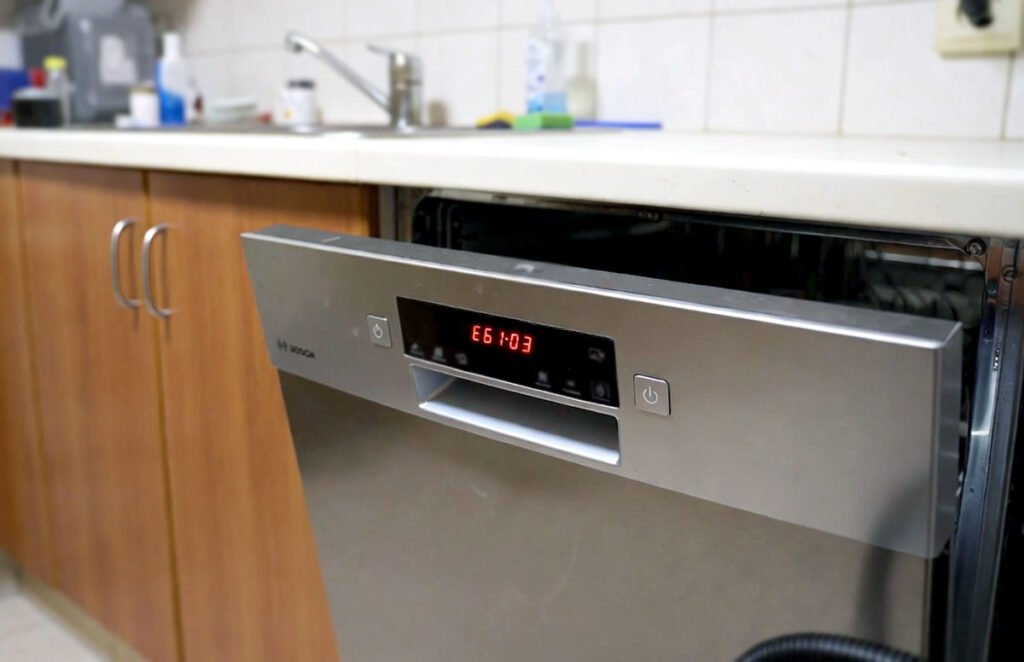
What Does the Bosch Dishwasher Error Code E61-03 Actually Mean?
When your Bosch dishwasher shows this code, it means the water is not leaving. The machine waits for the water level to drop, but nothing happens. Consequently, the sensors get worried and shut everything down. This prevents a messy flood on your kitchen floor.
This specific code is a real headache for most homeowners. It usually points to a physical blockage rather than a simple computer glitch. For instance, a small piece of plastic might be stuck in the drain path. The machine stops because it does not want to burn out the motor.
Understanding the cause is the first step toward a fix. Most of the time, grease or food scraps have bypassed the mesh filter. On the other hand, the pump itself might have an electrical short. Knowing this helps you stop the problem from coming back next week.
- A tiny piece of broken glass is jamming the pump.
- Thick grease has built up inside the drain hose.
- Your garbage disposal is full of old food scraps.
- The drain pump motor has finally burned out completely.
- The hose is pinched behind the dishwasher cabinet wall.
- A small rubber valve is stuck in the closed position.
How to Fix the Bosch Dishwasher Error Code E61-03
Clear the Filter and Sump Area
First, you need to open the door and pull out the bottom rack. Look for the circular mesh filter at the bottom. Reach in and unscrew it by turning it to the left. You will likely find a layer of slime or food bits there. Take it to the sink and give it a good scrub with soap.
Next, look into the hole where the filter sits. There is usually some standing water left behind. You should use a sponge to soak up all that dirty water. Put the water into a bucket until the sump is totally dry. Now, you can see if anything is hiding in the corners.
After that, look for a small plastic cover on the side. This cover protects the pump blades from getting hit. You can usually pop it off with a spoon. Please be very careful during this step. If glass is stuck there, it will be very sharp and dangerous.
Finally, check the little fan blade called the impeller. Try to spin it with your finger. It should move freely without any clicking sounds. If it feels stuck, pull out whatever is blocking it. Once it spins smoothly, snap the cover back on and move to the next step.
- Pull out the filter and wash it with warm soap.
- Use a sponge to remove all the standing water.
- Remove the small plastic pump cover very carefully.
- Make sure the impeller spins without any resistance.
Inspect the Drain Hose for Clogs
If the sump was clean, you need to check the hose. This is the long tube that carries water to the sink. Over time, grease can turn into a thick paste inside. Pull the dishwasher out from the wall just a few inches. Look for any spots where the hose is folded.
Now, go under the sink and find where the hose connects. Use a screwdriver to loosen the metal clamp. Pull the hose off and put it into a bucket. Sometimes, a big clog will be sitting right at the end. You can poke it with a wire to clear it.
In addition, check the connection on your garbage disposal. If you just bought a new disposal, there might be a plug inside. You must knock that plug out for the water to flow. Many people forget this, and it causes an instant error code. It is a very common mistake.
Lastly, make sure the hose has a high loop. This means the hose should go up high before it drops down. This prevents dirty sink water from flowing back into the dishwasher. If the hose is flat, gravity will pull waste back into your clean machine. This simple fix solves many drainage issues.
- Pull the unit out to check for pinched lines.
- Disconnect the hose from the sink or disposal.
- Check the disposal inlet for a plastic knockout plug.
- Ensure the hose is mounted high under the counter.
Test the Drain Pump for Power
Sometimes the problem is electrical rather than a simple clog. You will need to reach the bottom of the machine. Remove the metal plate near the floor to see the guts. Before you touch anything, turn off the power at the breaker. Safety must always come first when working with water.
Next, you will see the drain pump motor. It is a small part with a few wires attached. You can use a multimeter to check for life. Set your meter to the ohms setting. Touch the probes to the two metal terminals on the pump. This tells you if the motor is dead.
If the meter shows a very high number, the pump is broken. The internal copper wires have likely snapped or burned. However, if the motor tests fine, the problem is different. It might be the control board not sending a signal. This is less common but still possible to find.
If you hear a low humming sound during use, the pump is trying. This usually means it is receiving power but cannot turn. It is either jammed or the internal bearings have failed. In this case, the motor is getting tired. Replacing it is the best way to ensure a long-lasting repair.
- Flip the circuit breaker to stay safe from shocks.
- Use a multimeter to test the pump for ohms.
- Listen for a humming sound during the drain cycle.
- Inspect the wiring for any signs of melting.
Replace the Drain Pump Assembly
If your tests show the pump is dead, buy a new one. This repair is actually quite easy for most people. You do not need to take the whole machine apart. Simply find the locking tab on the old pump. Press it down and twist the motor to the left.
The pump should pull right out of its plastic housing. Be ready with a towel because more water will spill. This is normal, so do not panic. Take a moment to wipe the area clean. Make sure no hair or sand is left in the hole. A clean seat is very important.
Then, take your new pump and line up the tabs. Push it in firmly and twist it to the right. You should feel a distinct click when it locks. This click is vital for a good seal. If it is loose, the dishwasher will leak onto your floor. Nobody wants a wet kitchen.
Finally, plug the wires back into the new motor. Make sure they are tight and not touching any metal. Before you finish, run a quick test cycle. Watch the pump as it works to check for leaks. If the error stays away, you have done a great job.
- Twist the old pump to the left to remove.
- Clean the housing so the new seal fits tight.
- Rotate the new pump until it clicks into place.
- Run a short test wash to check for leaks.
Clean the Air Gap If Present
Does your sink have a small chrome cap on top? This is called an air gap. Its job is to keep your drain water separate. However, it often gets filled with food and gunk. If this part is clogged, your dishwasher cannot breathe. It will stop and show the error.
To fix this, just pull the chrome cover off. Underneath, you will see a plastic cap. Unscrew that cap to see the tubes inside. You might see a pile of old rice or grease. Use a small brush to clean it out. It only takes a minute to do.
Next, check the large hose going to the disposal. Sometimes the clog is deep inside that thick tube. You can use a long brush to push the junk through. If the water can move freely, the error will stop. It is a very simple part of the system.
If you do not have an air gap, skip this. Instead, look for a small check valve in the hose. This is a rubber flap that controls water flow. If it gets hard, the pump cannot push it open. Replacing this tiny rubber part is very cheap and easy.
- Pull off the chrome cap on your kitchen sink.
- Clean out any food stuck in the plastic tube.
- Clear the large hose leading to the garbage disposal.
- Check the rubber valve for any stiffness or tears.
Reset the Control Module Memory
Even after the fix, the computer might be confused. It remembers the error and refuses to start. You need to wipe its memory to move on. This is like rebooting your phone when it freezes. It gives the dishwasher a fresh start for the next wash.
The best way is to turn off the power. Go to your breaker box and flip the switch. Wait for at least ten full minutes. This lets the electricity drain out of the board. When you turn it back on, the error should be gone. It is a very effective trick.
You can also use the buttons on the front. Hold the “Start” button for about five seconds. The screen will show a one-minute timer. This starts a short drain cycle to clear the tub. Close the door and let it finish. Once it hits zero, the reset is done.
Now, try to start a normal wash cycle. If the E61-03 code stays off, you are finished. You can finally relax and let the machine do the work. It feels good to solve a problem on your own. Now, go enjoy the rest of your quiet evening.
- Turn off the power at the breaker for ten minutes.
- Hold the Start button until the timer changes.
- Let the one-minute drain cycle finish its job.
- Start a new wash to confirm the fix worked.
How Can I Prevent This Error from Returning?
The best way to avoid this is to change your habits. Stop rinsing your dishes perfectly clean. Modern soap actually needs a little grease to work. However, you must scrape off the big chunks. Hard items like bones or seeds will kill your pump. They get stuck in the blades and cause a break.
Also, you should buy a dishwasher cleaner. Use it once a month on the hottest setting. This breaks down the hidden grease inside the hoses. It keeps the pump running smoothly for a long time. If you have hard water, this is even more important. It prevents rock-like buildup from forming in the tubes.
Finally, watch how much soap you use. Too many bubbles can trick the water sensors. This puts a lot of stress on the drain motor. If the pump has to push foam, it might overheat. Stick to high-quality pods and keep your filters clean. These simple steps will keep your Bosch happy for many years.
- Scrape all hard food and seeds into the trash.
- Use a hot cleaning cycle every single month.
- Do not use too much soap or cheap detergent.
- Clean the mesh filter at least once a week.
- Run the disposal before you start the dishwasher.
- Check the hose for any new kinks or bends.
Final Thoughts
You can definitely do this. The E61-03 error looks scary, but it is just a drainage block. By following these steps, you are saving a lot of money. You are also becoming a pro at maintaining your own home. Take a deep breath, follow the guide, and get that kitchen back in order. You will feel great once the dishes are finally clean again.
| Steps | Difficulty Level | Parts Needed | Pro Tip |
| Filter Cleaning | Low | None | Scrub the mesh with an old toothbrush. |
| Hose Inspection | Medium | Screwdriver | Check the sink connection for big clogs. |
| Pump Testing | High | Multimeter | Always turn off the power first. |
| Pump Replacement | Medium | New Drain Pump | Put a towel down to catch spills. |
Frequently Asked Questions (FAQs)
Is it safe to keep using the dishwasher with an E61-03 error?
No, you should not run the machine at all. The error means the water cannot leave the tub. If you keep trying, the water might overflow onto your floor. Also, the pump motor could catch fire if it gets too hot. It is best to fix it before you try again.
Can I clear the E61-03 code by just hitting the reset button?
The reset button might clear the screen for a minute. However, it will not fix a physical clog. If a bone is stuck in the pump, the code will just come back. You should find the cause of the block first. Only then will the reset actually solve your problem.
Do I need to pull the dishwasher out of the cabinet to fix this?
You might be able to fix it from the front. Most filters and pumps can be reached through the door or the bottom plate. However, if the hose is kinked in the back, you must pull it out. It really depends on where the blockage is hiding in your system.
Is it expensive to replace a Bosch drain pump?
A new pump usually costs between forty and eighty dollars. This is much cheaper than hiring a repair person. Most pros will charge you at least two hundred dollars for this job. Doing it yourself saves you a lot of money. Plus, you will know the job was done right.
Can a clogged garbage disposal cause the E61-03 error?
Yes, this happens all the time in many kitchens. The dishwasher drains through the disposal. If the disposal is full of food, the water has nowhere to go. Always clear out your disposal before you start a load. This is the easiest way to prevent many common error codes.
Do I need special tools to fix this drainage issue?
You only need a few basic tools from your garage. A screwdriver and a pair of pliers are usually enough. If you want to test the motor, you will need a multimeter. These are very cheap at any hardware store. Most of the work is just cleaning and checking parts.
Is a kinked hose a common reason for this code?
It is very common if the machine was recently moved. If you push the dishwasher back too hard, the hose can fold. This acts like a kink in a garden hose. The water cannot get through the tight spot. Always check the hose shape before you buy any expensive new parts.
Can hard water buildup trigger the E61-03 error?
Yes, minerals can build up inside the pump over time. This makes the motor work much harder than it should. Eventually, the motor gets tired and triggers the error code. Using a monthly cleaner will dissolve these minerals. It is a great way to keep your machine running like new.