As an Amazon Associate, I earn from qualifying purchases at no extra cost to you.
KitchenAid Dishwasher Error Code E1 (Fix It Now Like a Pro)
 ByZayyan

Water was already creeping across the kitchen tile when the beeping started. I popped the toe panel off with a quarter inch nut driver, felt around the insulation, and found the float jammed solid with greasy grit. That E1 code was flashing like a warning light on a dash. In this article
The KitchenAid dishwasher error code E1 almost always points to a water fill or drain confusion, not a dead machine. In real homes, it usually comes down to a stuck float, a slow drain path, or a control board getting bad signals from a sensor that is dirty or loose. Fixing it means getting your hands wet, pulling panels, and checking parts in the right order so you do not replace something expensive that was never broken.
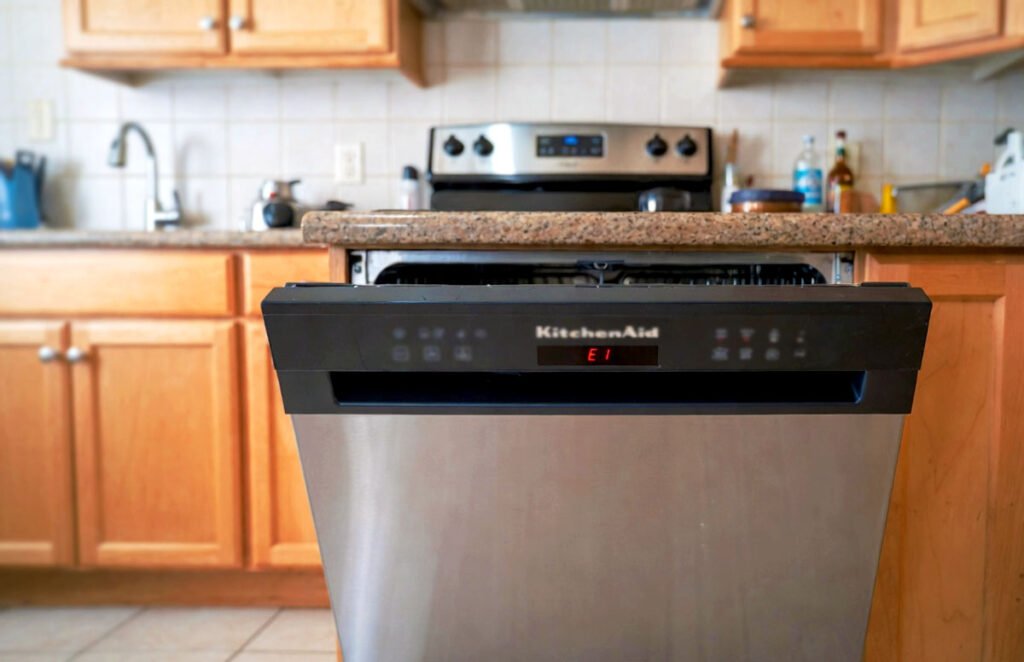
What is the KitchenAid Dishwasher error code E1 and why does it happen?
The E1 code shows up when the dishwasher thinks water is not moving the way it should. Either it believes water is still inside when it should be empty, or it thinks no water is coming in when it should be filling. The control board makes this call based on signals from the float switch, drain pump feedback, and sometimes a pressure sensor tucked into the sump area.
Most of the time, nothing electronic has actually failed. What happens is buildup. Soap scum, hard water scale, or food debris sneaks into places you never see during normal cleaning. I have pulled floats that felt glued in place and drain hoses that looked clear but had a soft clog halfway through that only showed up when flexed by hand.
Another reason this code happens is after a small leak or power glitch. Water in the base pan can trip the float safety, and a quick outage can scramble the control logic just enough to throw an E1 when the next cycle starts. The dishwasher is trying to protect itself, but it ends up confusing the homeowner instead.
- Stuck float switch under the tub
- Drain hose partial blockage
- Water in the base pan triggering safety float
- Dirty or failing drain pump
- Loose wiring at the control board
- Pressure sensor giving false readings
How to Fix Your KitchenAid Dishwasher Error Code E1
Step 1: Kill power and pull the toe panel
Start by shutting off power at the breaker, not just the dishwasher buttons. I have seen these units wake up mid repair. Grab a quarter inch nut driver and remove the two screws holding the toe panel. The insulation pad behind it likes to sag, so keep a hand under it. This gives you access to the base where leaks and float issues hide.
Once the panel is off, slide a flashlight across the bottom pan. You are looking for standing water, rust trails, or white mineral lines. Even a few ounces of water can trip the safety float and cause the E1 code. Dab it up with a towel so you can see if more appears later.
If you find water, do not assume the worst yet. Many times it is from a loose clamp or over sudsing. Dry everything fully, then gently rock the dishwasher forward a few inches to make sure no hidden water is trapped against the back wall.
- Use a quarter inch nut driver
- Always shut off the breaker
- Check for water in the base pan
- Dry everything before moving on
Step 2: Check the float and float switch
Open the dishwasher door and look at the front right corner inside the tub. You will see a small plastic dome or post, that is the float. It should move up and down freely with almost no resistance. If it feels sticky, that is already a problem.
Pull the lower rack out and twist the float counterclockwise to remove it. Underneath is the float stem and opening. This area loves to collect greasy film. Clean it with hot water and a soft brush, no screwdrivers or you will nick the plastic.
Under the tub, directly below that spot, is the float switch. Reach up and feel for a small rectangular switch with two wires. Press it gently, you should hear a clean click. No click usually means replacement, but most times cleaning the float fixes the signal.
- Float should move freely
- Clean with hot water only
- Listen for a click from the switch
- No tools needed inside the tub
Step 3: Inspect the drain hose and air gap
Slide the dishwasher out just enough to reach the drain hose at the sink cabinet. Use pliers to loosen the clamp, then pull the hose free. Have a towel ready, water always spills. Look through the hose and flex it. Soft clogs hide in the bends and look invisible when straight.
If you have an air gap on the sink, pop the chrome cap off and check inside. Food debris here can slow draining just enough to confuse the control board. Clean it out with a bottle brush and rinse.
Before reconnecting, run water through the hose at the sink. It should flow fast and smooth. Reinstall it with the clamp snug but not crushing the hose. A crushed hose will cause the same E1 headache again.
- Remove hose with pliers
- Flex hose to find soft clogs
- Clean sink air gap if present
- Do not overtighten clamps
Step 4: Test the drain pump
With power still off, reach under the dishwasher and locate the drain pump. It is usually held by a twist lock or three Torx T20 screws. Mark the wire positions with tape so they go back correctly. Pull the pump out and check for debris in the impeller.
Spin the impeller with your finger. It should turn smoothly with slight magnetic resistance. Grinding or wobble means the pump is on its way out. A weak pump can still spin but not move water fast enough, triggering E1 during the cycle.
If you have a multimeter, set it to ohms and check resistance across the pump terminals. Most KitchenAid pumps read between 15 and 40 ohms. Anything wildly outside that range means replacement is smarter than guessing.
- Use Torx T20 if screwed in
- Check impeller for debris
- Spin should feel smooth
- Test resistance if possible
Step 5: Look for wiring and control issues
Pull the toe panel area wiring harnesses gently and inspect for corrosion or loose connectors. Pay close attention to the float switch and drain pump plugs. A slightly loose connection can send garbage signals to the control board and throw the E1 code randomly.
Next, remove the inner door panel using a Torx T15 driver. Support the outer panel so it does not drop. The control board sits behind a plastic cover. Look for burn marks, moisture, or swollen components. Do not touch anything metal yet.
Reseat each connector one at a time. This simple step fixes more E1 codes than most people believe. If the board shows visible damage, then replacement is justified, but only after all mechanical causes are ruled out.
- Inspect connectors closely
- Use Torx T15 for door panel
- Reseat plugs carefully
- Replace board only if damaged
Step 6: Reset and test the dishwasher
Put everything back together, restore power, and perform a hard reset. Close the door and press Heated Dry, Normal, Heated Dry, Normal within five seconds. This clears stored faults on many KitchenAid models.
Run a short cycle and listen closely. You want to hear a strong drain at the beginning and end. Watch for any leaks underneath with the toe panel still off. If the cycle completes without E1 returning, you nailed it.
If the code comes back immediately, recheck the float switch and drain pump wiring. At this point, you are down to a sensor or control issue, but at least you know it is not a simple clog hiding somewhere obvious.
- Use proper reset sequence
- Listen for strong draining
- Watch for leaks during test
- Recheck wiring if code returns
How can I prevent KitchenAid dishwasher error code E1 from coming back?
Prevention starts with how you load and wash. Too much detergent or the wrong type creates excess suds that sneak into the base pan. That moisture trips the safety float and sets off the E1 code even though nothing is broken. Stick with pods or measured powder, never free pouring liquid soap.
Once a month, pull the lower rack and clean around the float area. It takes two minutes and saves hours later. Wipe greasy residue before it hardens. Hard water homes should also run a dishwasher cleaner cycle every few months to keep sensors clear.
Finally, pay attention to slow drains. If you notice water sitting in the bottom longer than usual, address it early. A simple hose clean or air gap check can prevent the control board from ever getting confused and flashing that dreaded E1 again.
- Use proper detergent amounts
- Clean float area monthly
- Run cleaner cycles occasionally
- Watch for slow draining
- Avoid overloading dishes
- Check air gap regularly
Final Thoughts
The E1 code feels intimidating, but it is usually the dishwasher asking for a little attention, not a funeral. Take it step by step, get comfortable pulling panels, and trust what you see and feel. Most fixes cost nothing but time and a towel. When the cycle runs quiet again, that relief is earned.
| Steps | Difficulty Level | Parts Needed | Pro Tip |
|---|---|---|---|
| Pull Toe Panel | Easy | Quarter inch nut driver | Keep insulation supported |
| Check Float | Easy | None | Clean gently, no tools |
| Inspect Drain Hose | Medium | Pliers | Flex hose to find hidden clogs |
| Test Drain Pump | Medium | Torx T20, multimeter | Check impeller spin |
| Inspect Wiring | Medium | Torx T15 | Reseat connectors |
| Reset and Test | Easy | None | Leave panel off to watch leaks |
Frequently Asked Questions (FAQs)
Is it safe to run my dishwasher with error code E1 showing?
It is not a good idea to keep running it. The dishwasher is detecting a water handling issue, and continuing can cause leaks or stress the pump. Shut it down, dry any water you see, and diagnose the cause. Running it repeatedly will not clear the code and may create a bigger repair later.
Can error code E1 be caused by using the wrong detergent?
Yes, absolutely. Excess suds from liquid soap or too much detergent can overflow into areas that should stay dry. This trips the safety float and mimics a leak condition. Switching to proper dishwasher detergent and using less often resolves E1 without replacing any parts.
Do I need to replace the control board for an E1 error?
Most of the time, no. Control boards are blamed too quickly. In my experience, mechanical issues like stuck floats, slow drains, or loose wiring cause E1 far more often. Only replace the board after every physical check is completed and verified.
Is it normal to find water under the dishwasher?
A small amount after years of use can happen, but it should never be ignored. Even a shallow puddle can trigger the E1 code. Dry it up, then look for the source during the next cycle. Early detection prevents damage to floors and electronics.
Can a clogged air gap really cause this error?
Yes, it can. A blocked air gap slows drainage just enough to confuse the dishwasher sensors. The machine thinks water is not leaving fast enough and throws E1. Cleaning the air gap is quick and often overlooked.
Do I need special tools to fix error code E1?
No special tools are required. A quarter inch nut driver, Torx T15 and T20 drivers, pliers, and a flashlight handle almost every step. A multimeter helps but is not mandatory for most homeowners.
Is it okay to tip the dishwasher forward during inspection?
Yes, gently tipping it forward can help drain trapped water from the base pan. Just be careful not to strain the water line or drain hose. Always have towels ready and power disconnected first.
Can E1 come back after it is fixed?
It can if the root cause is not fully addressed. Leaving a partially clogged hose or ignoring detergent habits allows the same conditions to return. A thorough clean and small maintenance habits keep the error from reappearing.