As an Amazon Associate, I earn from qualifying purchases at no extra cost to you.
KitchenAid Dishwasher Error Code F8 E4 (Fix It Now Quickly)
 ByZayyan

Water was already creeping across the tile when I dropped my tool bag. The KitchenAid was beeping, flashing F8E4, and the float tray underneath was sloshing like a fish tank. This was not a mystery, it was a flood alert doing its job, and the machine was locked down hard. In this article, I walk you through exactly what that code means, why it happens, and how to fix it without guessing.
The F8E4 error on a KitchenAid dishwasher means water has collected in the base pan and tripped the overflow switch. The fix is not resetting the breaker and hoping. You must find the leak source, dry the pan, and correct the cause. Most often it is a loose inlet hose, warped float, overfilled tub, or a mis-seated door seal. With basic tools, patience, and attention to specific spots most people miss, this is very repairable.
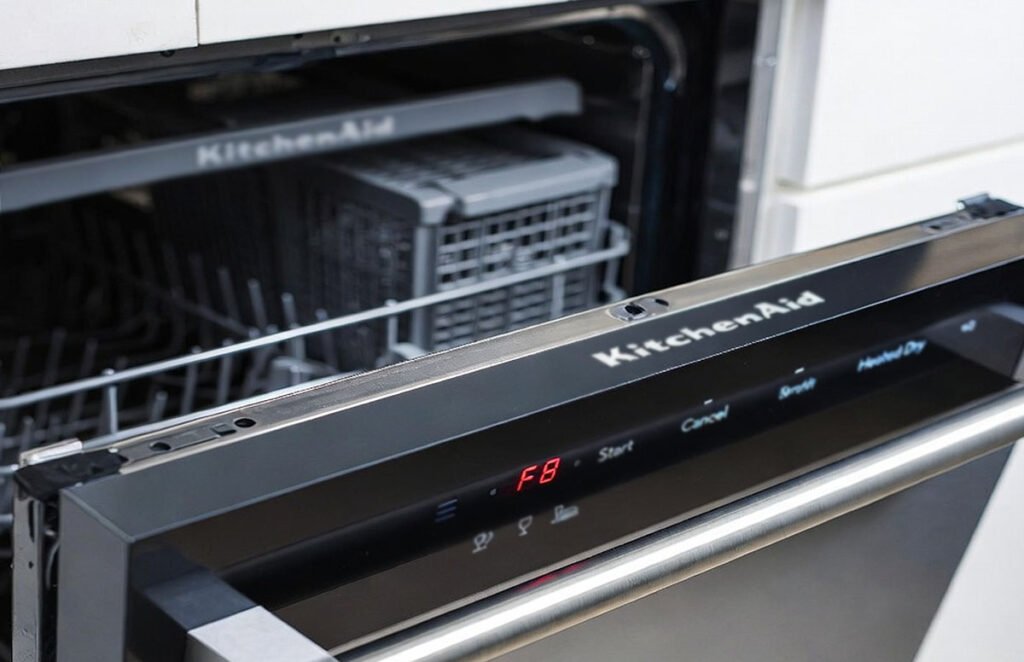
What Is the KitchenAid Dishwasher Error Code F8E4 and Why Does It Happen
The F8E4 code is the dishwasher yelling that water is where it should never be. Under the tub is a shallow metal or plastic pan. In that pan sits a small float switch. When water hits that switch, the control board shuts the machine down immediately. It does this to stop flooding your kitchen, not to annoy you. The dishwasher will not run again until the condition is cleared.
What frustrates people is that the leak is often small and hidden. I have seen a teaspoon per cycle trip this code after a few washes. The dishwasher itself may look dry inside. Meanwhile the base pan is quietly filling. This is why resetting power does nothing long term. The water is still there, and the switch is still triggered.
The reason this happens varies by age and usage. Newer machines often leak from installation issues like hose connections. Older ones develop seal fatigue or mineral buildup that redirects water. High suds from the wrong detergent can also push water past seals. You fix this by being methodical and getting eyes on the base.
- Loose or cracked water inlet hose
- Overfilled tub due to bad float or pressure switch
- Door gasket folded or torn at the bottom corners
- Leaking diverter seal under the sump
- Excess suds from non dishwasher detergent
- Drain hose backflow or siphoning issue
KitchenAid Dishwasher Error Code F8E4 Repair Guide
Step 1 Shut Off Power and Water the Right Way
First things first, kill the power at the breaker, not just the control panel. These machines hold voltage even when off. Next shut off the water supply under the sink. It is usually a quarter turn valve. Grab a flashlight, a T15 Torx driver, and a towel. You will need all three. Pull the dishwasher out slowly, watching the floor for active leaks.
Once the unit is out about a foot, remove the lower toe panel. Two or four T15 screws hold it on. This is where pros look first. Shine the flashlight under the tub. If you see standing water in the base pan, that confirms the F8E4 condition. Do not tip the machine yet. You want to find the source, not just clear the symptom.
Dry the pan with towels or a shop vac. Some models have a foam float on the right side clipped into a small bracket. Make sure it drops freely once dry. If it sticks, the code will return immediately. Only after the pan is dry and the float moves freely should you restore power later.
- Turn off breaker, not just the dishwasher
- Shut off water valve under the sink
- Use a T15 Torx for toe panel screws
- Confirm water in the base pan visually
Step 2 Inspect the Water Inlet and Fill System
The most common leak I see is right where the water line connects to the inlet valve. That valve sits low on the left side behind the toe panel. Use a 5/8 inch wrench to snug the supply line. Do not overtighten. If it spins forever, the ferrule is damaged and needs replacement.
Next inspect the inlet valve body itself. Look for hairline cracks or mineral tracks. White chalky lines mean slow leaks. Follow the black rubber fill hose from the valve up into the tub. Check for splits near clamps. Factory clamps are usually pinch style. If loose, replace with a stainless worm clamp.
Also check the fill level inside the tub. If water is above the heating element after filling, the float assembly inside may be stuck. That causes overfilling and overflow into the base. The float twists out with a quarter turn from inside the tub.
- Check inlet valve connection with 5/8 inch wrench
- Look for mineral trails on valve body
- Inspect rubber fill hose and clamps
- Verify proper fill level inside tub
Step 3 Check the Float Switch and Overflow Path
Inside the tub, usually front right, is the float. Lift it up and down. You should hear a clear click from the microswitch below. If it feels gritty or sticks, pull it out. Soap scum and hard water scale build up here more than people realize. Clean the shaft with vinegar and a nylon brush.
Underneath, trace that float down to the switch. Make sure the switch is dry and mounted securely. I have seen them knocked loose during previous repairs. A crooked switch will false trip. The wiring connector should be tight and corrosion free.
Also inspect the overflow channel molded into the tub. This is where excess water is directed down into the base pan. If that channel is cracked or warped from heat, water will escape too easily. This is less common but worth checking on older units.
- Float should move freely and click
- Clean float shaft with vinegar
- Confirm switch mounting and wiring
- Inspect overflow channel integrity
Step 4 Inspect the Door Gasket and Lower Corners
Open the door and run your fingers along the gasket. Pay special attention to the bottom corners. That is where leaks hide. If the gasket is folded inward or hardened, water will drip straight into the base. Clean it with warm water only, no chemicals.
Close the door slowly and watch the gasket compress. If one side does not seal evenly, the door may be slightly twisted. Check the hinge arms underneath. They should move smoothly and evenly. A bent hinge causes poor sealing and leaks only during wash.
If the gasket is torn or flattened, replace it. It pulls out by hand and presses in starting at the top center. Do not stretch it. Let it sit an hour before running the machine so it can relax into shape.
- Check gasket condition by feel
- Focus on lower door corners
- Inspect hinge arms for symmetry
- Replace gasket if hardened or torn
Step 5 Check the Sump and Diverter Area
This is where many DIY repairs stop, but pros keep going. Remove the lower rack and spray arm. Most KitchenAid models use a T20 Torx for the sump cover screws. Under that cover is the diverter motor and seal. If that seal leaks, water runs straight into the base pan.
Look for signs of moisture or residue around the diverter. Wiggle it gently. It should be firm. A loose diverter leaks under pressure only, which is why the error seems random. Replacing the seal requires removing the motor, but catching it early may mean reseating is enough.
While there, check the sump gasket. Food debris can prevent a proper seal. Clean everything thoroughly before reassembly. Take photos as you go so orientation stays correct.
- Remove spray arm and sump cover
- Inspect diverter seal area
- Check for looseness or residue
- Clean and reseat components carefully
Step 6 Test, Monitor, and Confirm the Fix
Once everything is dry and reassembled, restore water and power. Do not push the dishwasher back yet. Run a quick cycle and watch with a flashlight. Look underneath during fill and wash. This is how techs confirm success. No water should appear in the base.
If the cycle completes without triggering F8E4, cancel and drain. Check the base pan one last time. It should be bone dry. Only then slide the unit back into place and secure it.
If the code returns, you missed a leak or have a faulty switch. At that point, replacing the float switch assembly is the next step. It is inexpensive and accessible from the front on most models.
- Run test cycle with unit pulled out
- Watch fill and wash phases closely
- Confirm base pan stays dry
- Replace float switch if error persists
How Can I Prevent KitchenAid Dishwasher Error Code F8E4 From Coming Back
Prevention starts with using the right detergent. I still see people use sink soap. That creates suds that force water past seals. Always use dishwasher detergent, and less is more. Excess suds are a silent killer of seals and floats over time.
Once a month, pull the toe panel and take a quick look underneath. It takes two minutes and can save you a flood. Check for mineral trails or dampness. Early detection makes this an easy fix instead of a mess.
Finally, keep the door gasket clean and the float moving freely. Hard water areas need extra attention. A quick vinegar wipe every few months prevents buildup that causes sticking and overfilling.
- Use only dishwasher detergent
- Avoid overfilling detergent cup
- Inspect base area monthly
- Clean float and gasket regularly
- Watch for mineral buildup
- Address small leaks immediately
Final Thoughts
The F8E4 code feels dramatic, but it is actually your dishwasher protecting your kitchen. Take it seriously, slow down, and look in the right places. Most fixes cost nothing but time. If you get stuck, it is usually because one small leak was overlooked. Stay patient and methodical, and you will beat it.
| Steps | Difficulty Level | Parts Needed | Pro Tip |
|---|---|---|---|
| Power and Access | Easy | T15 Torx, towel | Always dry the base before testing |
| Inlet Inspection | Easy | 5/8 inch wrench | Look for white mineral trails |
| Float Check | Easy | None | Listen for the click |
| Door Seal Check | Medium | Replacement gasket | Do not stretch new gasket |
| Sump Inspection | Medium | T20 Torx | Take photos before removal |
| Test Cycle | Easy | Flashlight | Watch during fill and wash |
Frequently Asked Questions (FAQs)
Is it safe to keep resetting the dishwasher when F8E4 shows up?
Resetting does not fix the problem and can make it worse. The water is still sitting in the base pan, and repeated cycles can overflow it further. The code will keep coming back until the leak source is fixed and the float switch is no longer triggered.
Is it always a leak when I see F8E4?
Almost always, yes. Very rarely the float switch itself fails electrically, but that is uncommon. In two decades, most F8E4 calls involved real water in the base. Even condensation from heavy suds counts as water to the switch.
Can I tip the dishwasher to clear the code?
You can, but you should not rely on that. Tipping drains the pan and clears the code temporarily. The leak will return on the next cycle. Use tipping only to confirm the diagnosis, not as a repair.
Can a clogged drain cause this error?
Yes, indirectly. A restricted drain can cause water to back up and overfill the tub. That excess water then finds its way into the base pan. Always check the drain hose routing and air gap if equipped.
Do I need to replace the control board for F8E4?
Almost never. The control board is responding correctly to the float switch. Replacing it without fixing the water issue wastes money and time. Focus on the mechanical cause first.
Is it normal to see a little water in the base?
No. The base pan should be dry at all times. Any water there is a problem, even a small amount. The system is designed to trip before a visible flood happens.
Can hard water make this happen more often?
Absolutely. Mineral buildup causes floats to stick, seals to harden, and valves to leak slowly. Hard water areas see this code more frequently unless regular cleaning is done.
Do I need a professional if the diverter seal leaks?
If you are comfortable with Torx drivers and careful disassembly, you can handle it. If not, this is a fair point to call for service. The repair is precise, and mistakes can cause bigger leaks.