As an Amazon Associate, I earn from qualifying purchases at no extra cost to you.
6 Best Robot Vacuum Cleaners (Buying Guide) 2026
 ByZayyan

Picking a robot vacuum is harder than it looks. There are dozens of options, confusing specs, and prices all over the place. You don’t know what’s worth the money and what’s just hype. In this article I will show you the top 6 best robot vacuum cleaners you can actually trust, with honest reviews to help you choose the right one fast.



Top 6 Best Robot Vacuum Cleaners You Can Buy Now
Roborock Q7 M5+ Robot Vacuum – Best Self-Empty Workhorse for Most Homes
The Roborock Q7 M5+ is the kind of vacuum you set up once and basically forget about. It empties itself, maps your home, and keeps a schedule without you lifting a finger. That alone makes it worth considering if you’re tired of babysitting your cleaning gadgets.
Suction power is solid here. Not the strongest on this list, but more than enough for hardwood, tile, and low-to-medium pile carpet. Pet hair? It handles it well. The anti-tangle brush system keeps things clean inside the roller, which saves you from that annoying monthly cleanup job most vacuums demand.
The self-empty base holds weeks of dust and debris. So if you vacuum daily, you still only have to empty the dock bin maybe once a month. That’s a huge deal for anyone with a busy schedule or just a strong distaste for chores.
Navigation is smooth. It uses LiDAR to build a real map of your home, not just random bumbling. You can split rooms, set no-go zones, and run specific areas from the app. Setup takes maybe 20 minutes total.
- Self-emptying base holds debris for weeks
- LiDAR mapping with room and zone control
- Anti-tangle brush roll
- Works well on both hard floors and carpet
- App control is clean and easy to use
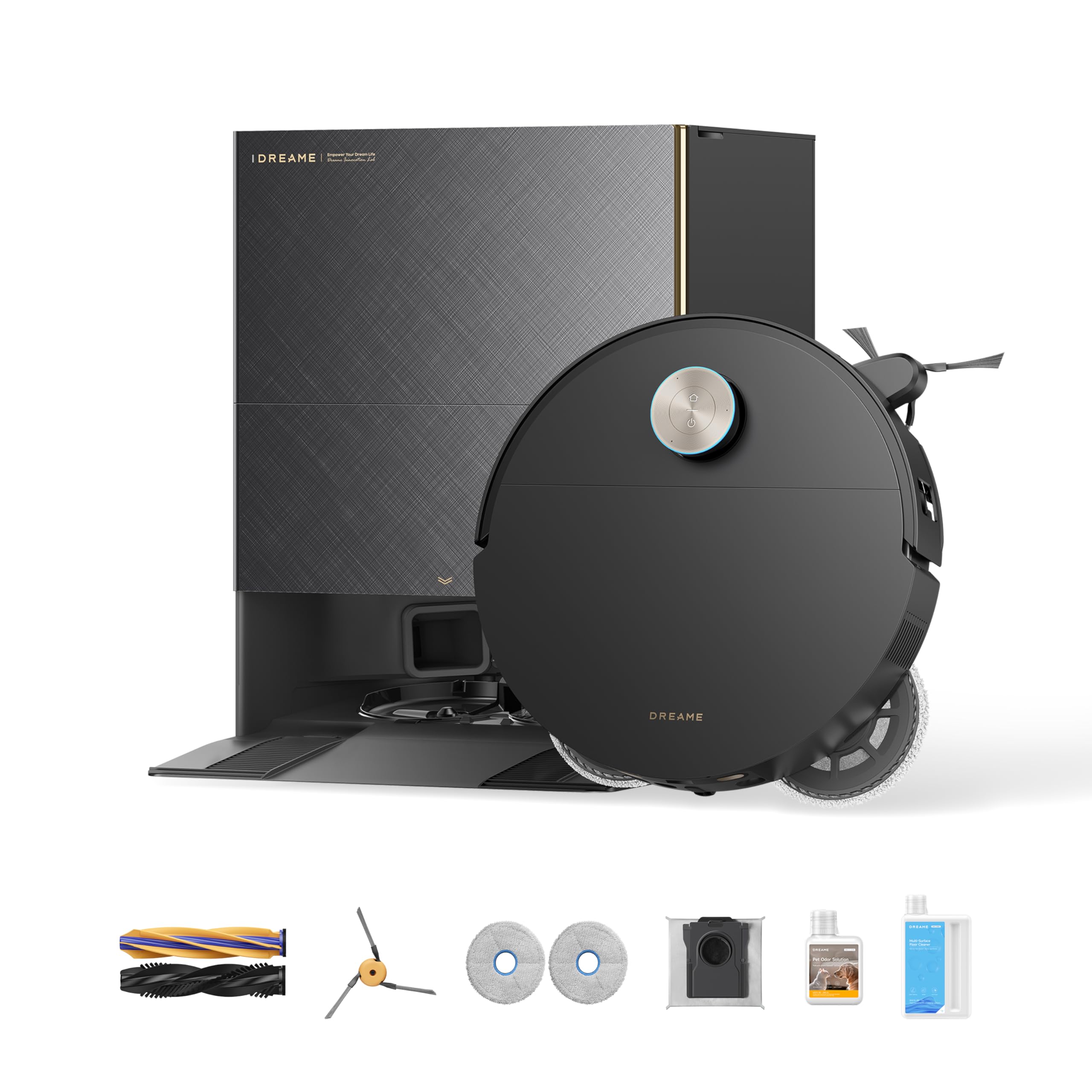
DREAME X60 Max Ultra Complete Robot Vacuum – Best Ultra-Thin All-in-One Beast
The Dreame X60 Max Ultra is one of the thinnest full-featured robot vacuums you can buy right now. It slides under furniture other robots can’t reach. If you have a lot of low-clearance beds or couches, this one’s a serious advantage.
But it’s not just thin. This thing also mops. And not in a lazy drag-a-wet-pad kind of way. It self-refills its water tank, self-cleans the mop pads, and even lifts the mop when it hits carpet. That’s the kind of smart design that makes a real difference in daily use.
Obstacle detection is genuinely impressive. It uses AI to spot things like cables, socks, and shoes, and it goes around them instead of ramming through. Anyone who’s lost a charging cable to a dumb robot vacuum knows how good this feature is.
The base station does a lot of heavy lifting. It handles emptying, water refilling, mop washing, and drying. So the robot stays ready to go without much input from you. You’ll spend maybe five minutes a week on maintenance, if that.
- Ultra-thin profile fits under low furniture
- AI obstacle avoidance for cables, shoes, small objects
- Auto mop lift on carpet
- Full self-cleaning base station
- Self-refilling water tank for mopping
iRobot Roomba Combo 10 Max Robot Vacuum – Best for Brand Trust and Smart Home Integration
iRobot has been doing this longer than almost anyone. The Roomba Combo 10 Max is their top-of-the-line pick right now, and it shows. This thing doesn’t just vacuum. It vacuums and mops, and it’s one of the smartest at knowing when to do which.
The retractable mop pad is the star feature. When the robot hits carpet, the pad pulls up automatically. No wet carpet issues, no babysitting needed. That’s something cheaper combo robots often get wrong, and it makes a real day-to-day difference.
Suction power is excellent. iRobot rates it at their highest level, and you feel it on carpet. Pet hair embedded in rugs comes out with one or two passes. If you have dogs or cats, this one is hard to beat for deep carpet cleaning.
The AutoWash dock washes and dries the mop pad after each use. So you’re not dealing with a gross damp pad sitting in the base for days. It also auto-empties the dustbin. Everything stays clean without you thinking about it.
- Retractable mop lifts automatically on carpet
- AutoWash dock cleans and dries the mop pad
- Auto-empty dustbin included
- Top-tier suction for embedded pet hair
- Deep Alexa, Google, and Apple Home integration
eufy C28 Robot Vacuum – Best Budget-Friendly Combo with HydroJet Mopping
The eufy C28 proves you don’t need to spend a fortune to get something genuinely good. This robot vacuums and mops, empties itself, and even refills its own water tank. At this price range, that’s a lot to offer.
The HydroJet mopping system is what makes the C28 stand out from basic budget options. It sprays water directly onto the floor instead of just dragging a damp cloth. That means better stain lifting and cleaner results on tile and sealed hardwood. It’s a real difference, not a marketing trick.
Zero-tangle tech keeps the brush roll clean. Long hair, pet fur, string, it doesn’t wrap and knot the way cheaper brushes do. That means less time pulling gunk out of the roller and more time actually cleaning. If you have family members with long hair, you’ll appreciate this quickly.
The self-empty and self-refill features mean you’re mostly hands-off. You’ll need to top off the water base occasionally and empty the larger dock bin every few weeks. For the price, this is a genuinely impressive machine that punches well above its cost.
- HydroJet spray mopping for better floor cleaning
- Zero-tangle brush roll design
- Self-emptying and self-refilling base
- Solid navigation on hard floors
- Great value for combo vacuum and mop functions
Lefant M210 Robot Vacuum Cleaner – Best Bare-Bones Pick for Small Spaces
The Lefant M210 is the most affordable robot on this list, and it’s honest about what it is. No mopping, no fancy AI, no self-emptying base. Just a compact robot that vacuums your floors on a schedule and gets out of your way.
It’s surprisingly small. Smaller than most robot vacuums, which helps it get into tight spots and navigate cluttered rooms without getting stuck as often. If you live in a small apartment or studio, this size works in your favor.
Suction is decent for the price. Not a powerhouse, but fine for daily maintenance on hardwood and thin rugs. Think of it like a quick daily sweep rather than a deep clean session. It keeps floors tidy between your real cleaning days.
The biggest thing to know is that it runs on Wi-Fi and has an app, so you can schedule cleanings and start it remotely. It also auto-charges when the battery runs low. For under $100, that’s a solid feature set. Just don’t expect miracles from it.
- Very compact, fits in tight spaces easily
- App and Wi-Fi control with scheduling
- Auto-return to charging dock
- Good for hard floors and thin area rugs
- Great entry-level pick for small homes or apartments
Shark AV2820S PowerDetect Self-Empty Robot Vacuum – Best for Whole-Home Power and Precision
The Shark AV2820S PowerDetect is built for people who want no compromises in cleaning power. It detects the type of floor it’s on and automatically adjusts suction. That’s not a gimmick. It means your carpets get deep-cleaned while your hardwood doesn’t get over-blasted.
It also detects dirt levels in real time. If it senses a heavily soiled area, it slows down and makes extra passes. You end up with a cleaner floor without telling it to do anything. That kind of smart behavior is what separates serious vacuums from basic ones.
The self-empty base holds 60 days of debris. That’s one of the longest capacities on this list. You could go two months without thinking about the dustbin. For anyone who forgets to maintain their devices, or just hates the task, that’s real relief.
Navigation is precise. The PowerDetect system maps rooms in detail and cleans in neat rows instead of random patterns. Less missed spots, better coverage, and it finishes faster too. If you want a robot that cleans like a person would, this is the closest option on the list.
- Auto floor-type detection adjusts suction on the fly
- Dirt detection triggers extra passes in dirty areas
- 60-day self-empty base capacity
- Row-by-row navigation for thorough coverage
- Strong pet hair performance on carpet and upholstery edges
I hope this guide made your decision a lot easier. The right robot vacuum depends on your home, your floors, and how much you want to spend. If you want the most complete hands-off experience, go with the Dreame X60 or Roomba Combo 10 Max. On a budget? The eufy C28 is hard to beat. And if your place is tiny, the Lefant M210 keeps things simple and affordable.
| Product | Best For | Key Feature | Self-Empty |
|---|---|---|---|
| Roborock Q7 M5+ | Most homes, daily use | LiDAR mapping + auto-empty | Yes |
| Dreame X60 Max Ultra | Thin clearance + full mopping | Ultra-thin + AI obstacle avoidance | Yes |
| iRobot Roomba Combo 10 Max | Pet owners + smart home users | Retractable mop + AutoWash dock | Yes |
| eufy C28 | Budget combo cleaning | HydroJet mopping + zero-tangle brush | Yes |
| Lefant M210 | Small apartments, tight budgets | Compact size + app scheduling | No |
| Shark AV2820S PowerDetect | Whole-home power cleaning | Floor detection + 60-day bin | Yes |
Things to Consider Before Buying a Robot Vacuum Cleaner (Complete Guide 2026)
Buying a robot vacuum sounds simple until you’re staring at 40 different options with specs you don’t fully understand. Suction power, mapping tech, mopping, self-empty bases. It gets overwhelming fast.
The good news is that knowing the right things to consider before buying a robot vacuum cleaner makes the whole process much easier. You stop guessing and start picking with confidence.
1. Floor Type in Your Home
Your floor type matters more than almost anything else on this list. A robot that works great on hardwood can completely struggle on thick carpet. And the wrong choice means you’ll spend money on something that barely does the job.
Hard floors like tile, laminate, and sealed wood are easy for most robots. Even budget models handle them well. But carpet is different. Low-pile rugs are fine for mid-range robots, while high-pile or shag carpet needs stronger suction and a motor that doesn’t give up halfway through.
If you have a mix of both, which most homes do, look for a robot with auto floor detection. Models like the Shark AV2820S do this well. They sense the surface and adjust suction automatically, so you get the right power without manually changing settings every time.
- Hard floors work with almost any robot vacuum
- Carpet needs stronger suction, especially thick pile
- Mixed floor homes benefit from auto floor detection
- Check the carpet height rating in the product specs before buying
2. Suction Power and Cleaning Performance
Suction power is measured in Pascals, or Pa. Most people skip this number, but it actually tells you a lot. A basic robot sits around 1,500 to 2,000 Pa. A serious one goes above 5,000 Pa. The difference is real, especially on carpet or pet hair.
But raw suction isn’t everything. Brush roll design matters just as much. A robot with 3,000 Pa and a well-designed brush roll can outperform a 5,000 Pa robot with a poor one. So look at both numbers together, not just the headline suction figure.
Pet owners especially need to pay attention here. Pet hair is heavy, it weaves into carpet fibers, and it wraps around brush rolls. If you have dogs or cats, look for anti-tangle or zero-tangle brush systems. That alone saves you from a frustrating maintenance chore every few days.
- Suction measured in Pascals, higher is better for carpet
- 2,000 Pa is entry level, 4,000+ Pa is strong
- Brush roll design affects real-world cleaning as much as suction
- Pet hair homes need anti-tangle brush rolls specifically
3. Navigation and Mapping Technology
How a robot finds its way around your home changes everything about how well it cleans. There are two main types: random bounce navigation and mapped navigation. One is smart. One is basically luck.
Random bounce robots just go until they hit something, then turn. They cover most of the floor eventually, but they miss spots, repeat areas, and take forever. Mapped robots use LiDAR or cameras to build an actual layout of your rooms and clean in neat rows. They finish faster and miss far less.
LiDAR mapping is more accurate and works in the dark. Camera-based mapping is cheaper but struggles in low light. For most homes, LiDAR is worth the extra cost. You also get features like room zones, no-go areas, and cleaning schedules per room, none of which are possible without a real map.
- Random bounce covers the floor but wastes time and misses spots
- Mapped navigation cleans in rows and finishes faster
- LiDAR works in the dark and maps more accurately
- Mapped robots let you set zones, rooms, and schedules from an app
4. Self-Emptying and Maintenance Features
A lot of people buy a robot vacuum expecting zero effort. Then they find out they have to empty a tiny dustbin every single run. It gets old fast, especially if you run the robot daily or have pets that shed constantly.
Self-emptying bases fix this completely. The robot docks, and a suction system pulls the debris from the robot’s bin into a larger bag in the base. You only deal with that larger bag every few weeks, sometimes every 30 to 60 days depending on the model. That’s the hands-off experience most people actually wanted.
The thing to watch out for is replacement bag cost. Some base stations use proprietary bags that cost $15 to $25 for a pack. Over a year, that adds up. Check before you buy whether the bags are cheap and widely available. A few models use bagless bases with a sealed bin, which is a better long-term deal.
- Tiny built-in dustbins need emptying after every 1 or 2 runs
- Self-emptying bases hold debris for weeks at a time
- Check the cost and availability of replacement bags
- Bagless self-empty bases cost less to maintain long term
5. Mopping Capability and Water Management
If you want a robot that mops too, you need to be more careful about what “mopping” actually means for each model. Some robots just drag a damp pad. That’s barely mopping. It removes light dust and smudges, but it won’t lift real grime or dried spills.
Real mopping robots spray water actively onto the floor and scrub with a rotating or vibrating mop pad. That’s a meaningful difference. The Dreame X60 Max Ultra is a good example. It sprays, scrubs, and even lifts the mop automatically when it detects carpet so your rugs don’t get wet.
Water tank management matters too. Small internal tanks run dry in one room. Larger tanks or auto-refill base stations let the robot mop your whole home in one go. If mopping is important to you, don’t settle for a tiny tank. Check the water capacity spec before you commit.
- Pad-dragging is not real mopping, look for spray and scrub systems
- Rotating or vibrating mop pads clean better than static ones
- Auto mop lift prevents wet carpet, an essential feature for mixed floors
- Bigger water tanks or auto-refill bases cover more floor per session
6. Budget and Long-Term Value
Your budget sets the starting point, but don’t just look at the purchase price. Think about what you’re actually getting and what it’ll cost you over the next two or three years. A cheap robot that needs a new brush roll every three months and replacement filters constantly can end up costing more than a pricier model with better durability.
Entry-level robots under $150 do the basics. They vacuum, they schedule, they auto-charge. But they skip smart mapping, self-emptying, and good obstacle avoidance. Mid-range robots between $300 and $500 hit the sweet spot for most people. You get mapped navigation, decent suction, and usually a self-empty base.
Premium robots above $600 add mopping, AI obstacle detection, self-cleaning mop pads, and smarter automation. They’re worth it if you have a larger home or you genuinely want a hands-off system. But for a small apartment or simple hardwood floors, you don’t need to spend that much at all.
- Under $150 gives you basics with no mapping or self-empty
- $300 to $500 is the sweet spot for most homes
- Above $600 adds mopping, AI avoidance, and full automation
- Factor in replacement parts like filters, bags, and brush rolls
I hope this breakdown takes the confusion out of the process and helps you feel ready to make a smart pick. Knowing the things to consider before buying a robot vacuum cleaner puts you miles ahead of most shoppers. Trust what your home actually needs, not just the flashiest spec on the box.
| Factor | What to Check | Why It Matters | Quick Tip |
|---|---|---|---|
| Floor Type | Check carpet pile height and surface mix | Wrong robot for your floor means poor cleaning | Look for auto floor detection on mixed-floor homes |
| Suction Power | Check Pa rating and brush roll design | Determines real-world cleaning on carpet and pet hair | 4,000+ Pa for carpet, 2,000 Pa is fine for hard floors |
| Navigation Type | LiDAR mapped vs random bounce | Mapped robots clean faster and miss fewer spots | Always choose LiDAR if your budget allows it |
| Self-Emptying Base | Check bin capacity and bag replacement cost | Avoids daily emptying, especially for pet owners | Bagless bases save money on consumables long term |
| Mopping System | Check spray type and water tank size | Pad-dragging is not real mopping, spray systems are | Look for auto mop lift if you have rugs and hard floors |
| Budget and Value | Compare purchase price plus long-term part costs | Cheap robots can cost more over time due to parts | Mid-range $300 to $500 hits the sweet spot for most people |
Frequently Asked Questions (FAQs)
Is it worth buying a robot vacuum with a self-emptying base?
Yes, absolutely. A self-emptying base changes how the whole thing feels to use. Without it, you’re emptying a tiny dustbin every one or two runs. With it, you might go weeks without thinking about it. If you run the robot daily or have pets, the self-empty feature pays for itself in time saved and hassle avoided.
Is it safe to run a robot vacuum while I’m away from home?
Yes, it’s safe for most people. Modern robot vacuums are designed to run unsupervised. They avoid stairs, return to their dock when done, and stop if they get stuck. Just make sure your floor is clear of small objects or cables that could cause a problem. Most users run theirs while at work without any issues.
Can a robot vacuum replace my regular upright vacuum completely?
It can replace most of your regular vacuuming, but probably not all of it. Robot vacuums are great for daily maintenance and keeping floors consistently clean. But for deep cleaning under heavy furniture, stairs, or upholstery, you’ll still want a regular vacuum occasionally. Think of a robot vacuum as a daily helper, not a full replacement.
Can robot vacuums handle pet hair without getting tangled?
Yes, but it depends on the model. Cheaper robots with traditional brush rolls tangle badly with long pet hair. Look for models with anti-tangle or zero-tangle brush designs, like the eufy C28 or Roborock Q7 M5+. These handle pet hair far better and save you from cleaning the brush roll every few days.
Do I need Wi-Fi for a robot vacuum to work?
No, most robot vacuums work without Wi-Fi. They’ll still clean, return to dock, and run on their built-in sensors. But you lose the app control, scheduling from your phone, and smart home integration. If you want to set a schedule or control it remotely, Wi-Fi matters. For basic use, it’s optional.
Can robot vacuums mop and vacuum at the same time?
Yes, combo models can do both at once. But quality varies a lot. Basic combo robots drag a damp pad and call it mopping. Better ones like the Dreame X60 Max Ultra spray water actively and lift the mop on carpet automatically. If mopping matters to you, spend a bit more and get a model with a real mopping system, not just a wet cloth.
Do robot vacuums work on thick carpet?
They work on carpet, but thick or high-pile carpet can be a challenge. Most robot vacuums handle low-to-medium pile carpet well. For very plush or shag rugs, suction often isn’t strong enough to get deep into the fibers. Models like the Shark AV2820S or Roomba Combo 10 Max do the best job on carpet thanks to their stronger motors and floor-detection tech.
Is it hard to set up a robot vacuum for the first time?
Not at all. Most take about 15 to 30 minutes to set up from scratch. You plug in the dock, charge the robot, download the app, and let it do a mapping run. After that first run, you adjust zones, set a schedule, and you’re done. Most people figure it out without reading the manual. If you can set up a streaming app, you can set up a robot vacuum.
Can robot vacuums navigate around furniture and obstacles well?
Good ones, yes. Budget models tend to bump into things and back off. Higher-end models use LiDAR or AI cameras to actually see and go around objects. The Dreame X60 Max Ultra is especially good at avoiding cables and small shoes. If your home has a lot of clutter or irregular furniture, pay more attention to the obstacle avoidance specs before buying.
Do I need to replace parts often on a robot vacuum?
You’ll replace a few things over time. Brush rolls, filters, and side brushes wear out. Most manufacturers sell replacement kits, and they’re usually cheap. A filter might need replacing every two to three months depending on use. Brush rolls last longer, maybe six months to a year. It’s light maintenance overall, much less than a traditional vacuum.