As an Amazon Associate, I earn from qualifying purchases at no extra cost to you.
6 Best Portable Blenders (Buying Guide) 2026
 ByZayyan

Grabbing a smoothie on the go used to mean stopping at an overpriced juice bar. Not anymore. Portable blenders changed everything, but picking the right one feels confusing with so many options out there. In this article I will show you the top 6 best portable blender picks you can actually trust, with honest pros, cons, and everything in between.


Top 6 Best Portable Blenders You Can Buy Now
Oster Blend Active Portable Blender – Best Budget Pick for Daily Use
The Oster Blend Active is one of those blenders that just works. No drama, no learning curve. You fill it, blend it, and drink straight from the bottle. That’s the whole deal, and honestly, that simplicity is what makes it so popular.
The motor is decent for the price. It handles soft fruits, yogurt, and protein powder without any trouble. Frozen fruit is a different story. If you’re someone who loves thick, icy smoothies, this one might struggle a little. But for everyday blending, it gets the job done fast.
The bottle itself is BPA-free and holds 20 oz, which is a solid serving size. It screws onto the base easily and the whole thing feels pretty sturdy in your hand. No wobbling, no leaking when you flip it right-side up to drink.
Battery life is where things get interesting. It’s USB rechargeable, which means you can charge it from your laptop, power bank, or wall adapter. Super convenient. You get around 15 blending cycles per charge, which is more than enough for most people’s morning routine.
- Budget-friendly price
- USB rechargeable
- 20 oz BPA-free bottle
- Great for soft fruits and protein shakes
- Struggles with frozen fruit
- Simple, no-fuss design
Hamilton Beach Mini Cordless Portable Personal Blender – Best for Small Kitchens
Hamilton Beach has been making kitchen stuff forever, and this little blender carries that reliability forward. It’s compact, light, and fits in a bag without taking up much space. If you live in a small apartment or travel a lot, this one makes total sense.
The blending power surprised me. It’s a mini blender, so you might expect it to feel weak, but it handles smoothies pretty well. Spinach, banana, berries, and some liquid blends up smooth in about 30 to 40 seconds. That’s quick. No waiting around, no running late because your blender is still struggling.
One thing to love here is the rechargeable battery. It charges via USB-C, which is great because almost everyone has a USB-C cable lying around now. Battery life is solid too. You get multiple blends before needing to charge again.
The cup capacity is 14 oz, which is on the smaller side. If you like big smoothies, you might want to blend twice. But for a quick pre-workout drink or a single-serve smoothie, 14 oz hits the spot perfectly. Easy to clean too, just rinse and go.
- USB-C charging
- Compact and travel-friendly
- Fast blending for soft ingredients
- 14 oz cup, good for single servings
- Smaller capacity than competitors
- Not ideal for very thick blends
nutribullet NBPB50100K Portable Blender – Best Brand Name You Can Trust
Nutribullet built its whole reputation on blending, and this portable version lives up to that name. It’s smooth, powerful, and feels premium from the moment you pick it up. If brand trust matters to you, this is your blender.
The motor runs strong. Nutribullet designed this to handle tougher ingredients, and it shows. Kale, frozen berries, ice chunks, and dense protein blends all go in without much fuss. You get a consistently smooth result, which is exactly what you want when you’re trying to actually enjoy your drink.
The 28 oz cup is one of the bigger options on this list. That’s a generous serving. Perfect if you skip breakfast and rely on a smoothie to carry you through the morning. The lid seals tight and the whole cup is dishwasher safe, which saves real time every day.
Charging is USB-C and the battery life is impressive compared to budget options. One full charge gets you through a lot of blends. It’s a little pricier than some others here, but you’re paying for quality that actually lasts, not just a pretty design.
- Strong motor handles frozen ingredients
- 28 oz large capacity cup
- Dishwasher safe
- USB-C charging with solid battery life
- Premium feel and build quality
- Higher price point
Ninja BC251NV Blast Max Portable Blender – Best for Frozen Fruit and Tough Ingredients
Ninja makes some seriously powerful kitchen gear, and this portable blender is no exception. The Blast Max lives up to its name. If you love thick, frozen smoothies and don’t want a blender that gives up halfway through, this is the one.
The motor on this thing is noticeably stronger than most portable blenders. Ice goes in, smooth texture comes out. Frozen mango, frozen spinach, and almond butter all blend together without the motor sounding like it’s about to die. That’s honestly rare in a portable blender.
The lid is leakproof and the cup is dishwasher safe. Those two things sound basic, but they matter so much in real life. Nobody wants to open their bag and find a smoothie explosion. The Ninja design takes that seriously, and the seal holds up really well.
At 18 oz, the cup size is solid. Not the biggest on this list, but comfortable for most people. The blender feels well-balanced in your hand and looks clean without being flashy. Battery charges via USB-C and lasts through plenty of blends before needing a top-up.
- Powerful motor, great for frozen fruit
- Leakproof lid design
- Dishwasher safe cup
- USB-C rechargeable
- 18 oz capacity
- Slightly bulkier than ultra-compact options
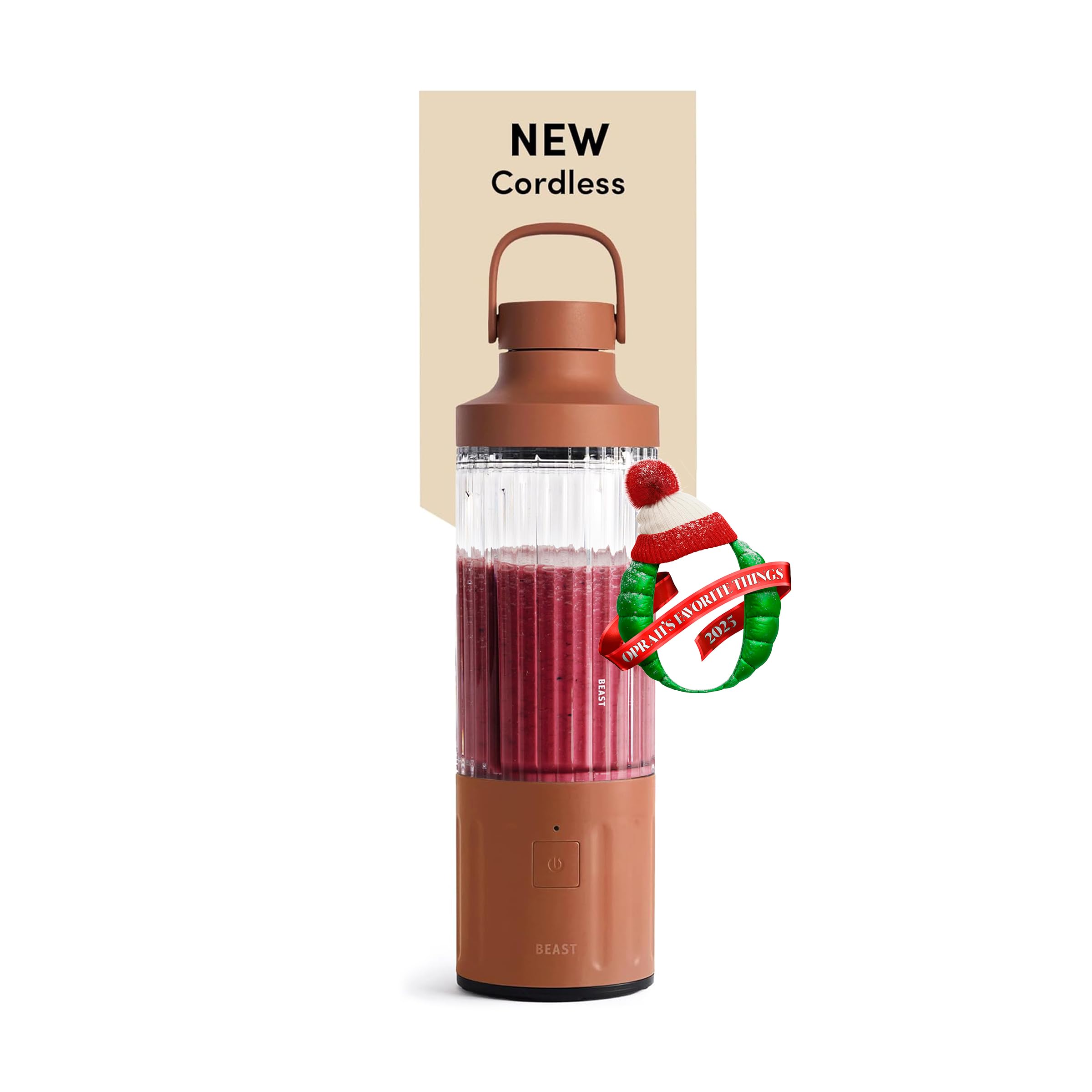
Beast GO Cordless Premium Portable Blender – Best Looking Blender That Actually Performs
The Beast GO is gorgeous. Let’s be real. It looks different from every other portable blender out there, in a really good way. But good looks mean nothing if it can’t blend, and thankfully this one delivers on both fronts.
The motor is strong and quiet. Quieter than you’d expect from something this powerful. That matters if you’re blending at work or in a shared space where you don’t want to disturb everyone around you. It handles smoothies, shakes, and even nut butter-based blends without breaking a sweat.
One standout feature is the self-cleaning mode. You add a drop of soap and some water, press the button, and it cleans itself. Takes about 30 seconds. That’s a game-changer for people who hate dealing with blades and hard-to-reach corners. Simple, effective, and honestly kind of satisfying to watch.
The capacity sits around 22 oz and the cup doubles as your drinking bottle. USB-C charging, premium materials, and a build quality that feels like it belongs at a much higher price. If you want something that looks good on your desk and works great every single day, Beast GO is worth every penny.
- Self-cleaning mode
- Quiet motor
- Premium design and build
- 22 oz capacity
- USB-C charging
- Slightly higher price tag
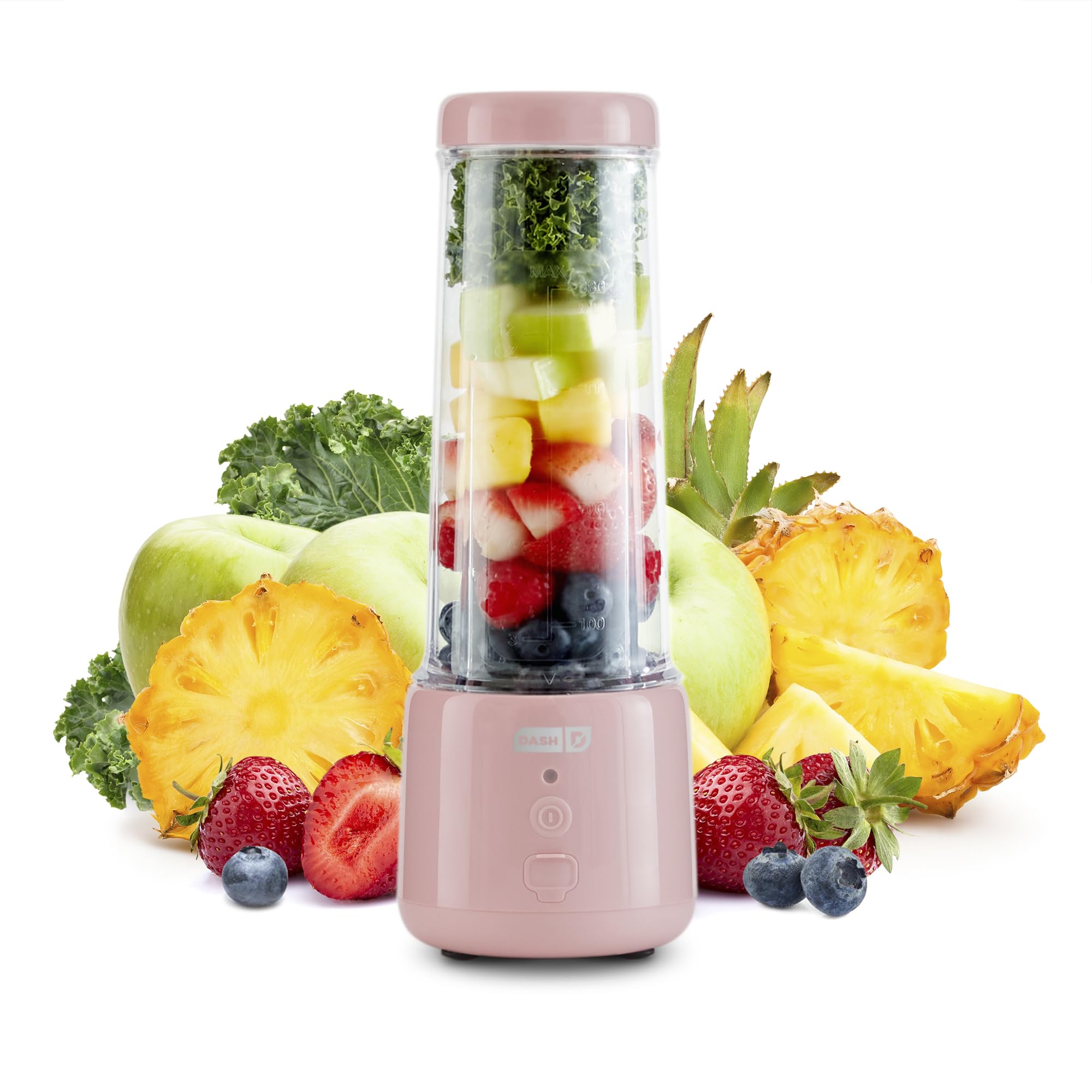
Dash 16 oz Personal Portable Blender – Best for Beginners Who Want Something Simple
Dash makes things simple. That’s their whole thing. And this portable blender is exactly what someone needs when they’re new to blending on the go and don’t want to overthink it. Plug it in, add your stuff, blend, drink. Done.
The 16 oz cup is a comfortable size. Not too big, not too small. You can make a solid single-serve smoothie with room for all your favorite ingredients. The cup fits most standard car cup holders too, which is a nice little detail that matters more than you’d think during a morning commute.
The blending performance is good for soft ingredients. Bananas, berries, spinach, protein powder, and milk all blend up nicely. It’s not going to destroy ice or frozen chunks, so keep your ingredients a bit softer and it’ll perform well every time.
The design is cute and comes in a range of colors, which sounds superficial but actually matters when you want something you’ll actually use every day. It charges via USB and is super easy to clean. Great entry-level option, honest value for the price, and a solid starting point for anyone new to the portable blender world.
- Beginner-friendly design
- 16 oz cup fits car cup holders
- Fun color options
- Easy to clean
- USB charging
- Not ideal for frozen ingredients
I hope this guide made your decision a whole lot easier. Every blender on this list has a real reason to be here. If you’re on a budget, go Oster. Want the most power? Ninja or Nutribullet. Love clean design? Beast GO won’t disappoint. Just starting out? Dash is your friend. Pick what fits your life and start blending. You’ve got this.
| Product | Capacity | Charging | Best For |
|---|---|---|---|
| Oster Blend Active | 20 oz | USB | Budget daily use |
| Hamilton Beach Mini | 14 oz | USB-C | Travel and small kitchens |
| nutribullet NBPB50100K | 28 oz | USB-C | Brand reliability, large servings |
| Ninja BC251NV Blast Max | 18 oz | USB-C | Frozen fruit and tough blends |
| Beast GO Cordless | 22 oz | USB-C | Premium design and performance |
| Dash Personal Blender | 16 oz | USB | Beginners, simple daily use |
Things to Consider Before Buying a Portable Blender (Complete Guide 2026)
Buying a portable blender sounds simple until you’re standing in front of ten options and have no idea which one is actually worth your money. Too weak, too loud, too hard to clean. Bad choices happen fast when you don’t know what to look for.
Knowing the right things to consider before buying a portable blender can save you from a lot of buyer’s regret. Some people grab the cheapest one and wonder why it dies in two weeks. Others overspend on features they never use. Neither feels good. So here’s what actually matters.
Motor Power and Blending Performance
Motor power is the first thing most people ignore and then regret later. A weak motor sounds fine until you toss in some frozen mango and it starts making a grinding noise like something’s about to break. Not fun. The motor is the heart of any blender, and it decides what your blender can and can’t handle.
Most portable blenders fall between 150 and 300 watts. That range matters. At 150 watts, you can blend soft fruits, yogurt, and protein powder just fine. But frozen fruit, kale stems, or ice? That’s where weaker motors give up. If you want thick, icy smoothies, aim for something closer to 250 to 300 watts.
Always check what the motor is rated for, not just the wattage number. Some brands advertise peak power, which is different from continuous power. Continuous power is what keeps running during a full blend cycle. That’s the number you actually care about.
- Look for 250+ watts for frozen ingredients
- Check continuous wattage, not just peak
- Test with your usual ingredients in mind
- Weak motors struggle with ice, nuts, and greens
Battery Life and Charging Type
Battery life is the thing that separates a useful portable blender from a frustrating one. You buy it for convenience. If it dies after three blends and takes four hours to charge, that convenience disappears fast. Real portability means the battery keeps up with your actual lifestyle.
Most good portable blenders give you 10 to 20 blending cycles on a full charge. That sounds like a lot, but if you’re blending twice a day, you’re looking at maybe a week between charges. Some budget models give you half that. Check the manufacturer’s claim and read real user reviews to see if those numbers hold up in the real world.
Charging type matters too. USB-C is the current standard and it’s fast. If you’re still seeing Micro-USB on a blender, that’s a red flag. Micro-USB charges slowly and the cables break easily. USB-C is more reliable and you probably already have a cable lying around.
- Aim for 15+ blending cycles per charge
- USB-C is faster and more convenient than Micro-USB
- Charge overnight so it’s ready every morning
- Check actual user reviews for real battery performance
Cup Size and Capacity
Cup size sounds like a small detail. It’s not. Getting this wrong means blending twice just to finish a single smoothie, or carrying around a cup so big it barely fits in your bag. Neither is ideal. Think about what you actually drink and how much before picking a size.
Most portable blenders range from 14 oz to 28 oz. A 14 oz cup is great if you want a quick pre-workout shot or a small snack shake. A 20 to 22 oz cup hits the sweet spot for most people, enough for a full meal replacement smoothie without being bulky. Go 28 oz if you regularly make big servings or hate refilling.
Also think about the shape. A taller, narrower cup fits car cup holders and standard bag pockets. A shorter, wider cup might not fit your backpack side pocket. Sounds obvious, but people forget this until they’re on a trip trying to stuff a blender somewhere it won’t go.
- 14 to 16 oz for quick, small servings
- 20 to 22 oz for everyday use
- 28 oz for big meals or meal prep
- Check that the cup fits your bag and car holder
Leak-Proof Design and Build Quality
A leaky blender is a disaster. Especially in a bag. One bad seal and your laptop, your notes, your whole morning is ruined. Build quality isn’t just about how premium a blender looks, it’s about whether it holds together when you’re actually using it every day.
Check the lid and seal design carefully. A good portable blender has a tight, twist-lock lid with a silicone gasket that keeps liquid in even if the cup tips over. Some blenders also have a secondary lock or drinking spout cover that adds extra protection. Those little extras matter when you’re moving around.
The blade assembly also tells you a lot about quality. Metal blades hold up longer than plastic ones. The base where the blade meets the cup should feel solid with no wobble. If there’s play in the connection, liquid gets in and ruins the motor over time. A cheap base means a short-lived blender.
- Look for silicone gaskets and twist-lock lids
- Test the seal before your first full blend
- Metal blades last longer than plastic
- Avoid blenders where the blade base feels loose
Ease of Cleaning
Cleaning a blender shouldn’t feel like a project. If it does, you’ll stop using it. That’s just how it works. The harder something is to maintain, the less likely you are to keep up with it. And a blender that sits dirty for days starts growing stuff you really don’t want near your food.
The easiest portable blenders to clean are the ones where the cup, lid, and blade assembly all separate completely. You rinse each piece under warm water and you’re done in 30 seconds. Blenders with complicated parts, hidden crevices, or non-removable blades make cleaning a chore every single time.
Some blenders have a self-cleaning mode where you add water and a drop of soap, run it for 20 seconds, and rinse. That’s genuinely useful for busy mornings. Dishwasher-safe cups are also a big plus. Just confirm the blade assembly is hand-wash only, because dishwashers can dull blades faster than you’d think.
- Choose blenders with fully removable parts
- Self-cleaning mode saves real time
- Dishwasher-safe cups are a huge bonus
- Always clean right after use before residue dries
Noise Level
Nobody warns you about the noise until you’re blending at 6 AM and your roommate or family is shooting you a look from down the hall. Portable blenders vary a lot in how loud they get. Some are surprisingly quiet. Others sound like a small engine revving inside your kitchen.
Noise level usually connects directly to motor power and blade speed. Higher wattage motors tend to run louder. But some brands engineer around this with noise dampening or smarter blade designs. The Beast GO, for example, gets a lot of praise for being noticeably quieter than other high-powered portable blenders on the market.
If you live with other people, work in a shared office, or just hate loud mornings, this one’s worth researching before buying. Search YouTube for blending videos of whatever model you’re considering. Seeing it in action for real is way more useful than any spec sheet number.
- High wattage usually means more noise
- Some brands engineer for quieter operation
- Watch YouTube videos to hear real noise levels
- Consider your environment, home, office, or travel
I hope this breakdown helps you feel confident about the things to consider before buying a portable blender. Don’t rush the decision. A little research now saves you from returning something disappointing next week. The right blender fits your routine, your ingredients, and your life. That blender is out there. Go find it.
| What to Check | Why It Matters | What to Look For | Watch Out For |
|---|---|---|---|
| Motor Power | Determines what ingredients it can handle | 250+ watts for frozen fruit | “Peak watt” claims, not continuous power |
| Battery Life | Affects real daily convenience | 15+ blending cycles per charge | Budget models that die after 5 to 8 blends |
| Cup Capacity | Matches your serving size needs | 20 to 22 oz for most users | Cups that don’t fit bags or cup holders |
| Leak-Proof Design | Protects your bag and belongings | Silicone gasket, twist-lock lid | Loose blade bases and flimsy lid seals |
| Ease of Cleaning | Decides if you’ll actually keep using it | Removable parts, self-cleaning mode | Non-removable blades and hard-to-reach crevices |
| Noise Level | Impacts your home and office environment | Brands known for quieter motors | No noise data on spec sheet, check YouTube |
Frequently Asked Questions (FAQs)
Is it safe to blend hot liquids in a portable blender?
No, you really shouldn’t. Portable blenders are designed for cold or room temperature ingredients. Hot liquids can build up pressure inside the sealed cup, which can cause the lid to pop off or the cup to crack. Stick to cold smoothies, protein shakes, and chilled drinks. If you need to blend hot soups, a countertop blender with a vented lid is the right tool for that job.
Is it worth buying a more expensive portable blender?
Usually, yes. Cheaper blenders cut corners on the motor and blade quality. That means weaker blends, shorter lifespan, and more frustration over time. If you use your blender every day, spending a little more on something like the Nutribullet or Beast GO saves you money in the long run because you won’t be replacing it every few months. You get what you pay for here.
Can I blend frozen fruit in any portable blender?
Not all of them. Some portable blenders have motors strong enough to handle frozen ingredients, like the Ninja Blast Max. Others, like the Dash or Oster, work best with soft fruits and pre-thawed items. If frozen smoothies are your thing, check the motor power before buying. A blender that struggles with frozen fruit will frustrate you every single morning.
Can I take a portable blender on a plane?
Yes, you can. But check the battery capacity first. Most airlines allow lithium-ion batteries in carry-on bags up to a certain watt-hour limit. Most portable blenders fall well within that range. Just make sure it’s in your carry-on and not your checked luggage. And obviously, don’t try to blend anything at 30,000 feet. Store it, don’t use it.
Do I need to add liquid every time I blend?
Yes, always add some liquid. Blending without liquid puts a lot of stress on the motor and blades. It can overheat the motor and give you a chunky, uneven result instead of a smooth blend. Water, milk, juice, coconut water, or any liquid works. Even just a splash helps everything blend smoothly and protects your blender at the same time.
Is it okay to put a portable blender in the dishwasher?
It depends on the model. Some cups, like the Nutribullet, are dishwasher safe. Others aren’t. The blade assembly is almost always hand-wash only because the dishwasher can dull the blades over time. Always check the manual before tossing anything in the dishwasher. When in doubt, just rinse it under warm water right after blending. Easier and faster anyway.
Can a portable blender replace my countertop blender?
For most daily tasks, honestly yes. If your main use is morning smoothies, protein shakes, or single-serve drinks, a portable blender handles all of that just fine. Where it falls short is large batch blending, crushing large amounts of ice, or making things like soup or nut milk in bigger quantities. For everyday single-serve use though, you might not even miss your countertop blender.
Do I need to clean the blender right after using it?
Yes, ideally. The sooner you rinse it, the easier it is to clean. Smoothie residue dries and sticks fast, especially near the blades. A quick rinse right after use takes about 10 seconds. If you wait until later, you’ll be scrubbing much harder. Some blenders like the Beast GO have a self-cleaning mode, which makes this even easier. Clean fast, clean easy.
Is it possible to over-blend in a portable blender?
Yes, and it’s more common than people think. Running the blender for too long at once can overheat the motor, especially on budget models. Most portable blenders work best in short pulses of 30 to 60 seconds, with a brief rest in between if needed. Don’t just hold the button down and walk away. Blend in bursts. Your blender will last much longer that way.
Can I use a portable blender for baby food?
Yes, many parents do exactly this. Portable blenders are great for making small batches of pureed fruits and veggies for babies. Just make sure everything is cooked and soft before blending. Use a model with a strong enough motor to get a fully smooth texture, because chunky baby food isn’t safe for very young babies. The Nutribullet or Ninja are solid choices for this.