As an Amazon Associate, I earn from qualifying purchases at no extra cost to you.
6 Best Japanese Chef Knives (Buying Guide) 2026
 ByZayyan

Picking a good knife is harder than it sounds. There are so many options, and most of them look amazing online but feel wrong the moment you hold them. If you’ve been going back and forth between brands, wondering which one is actually worth your money, you’re not alone. In this article I will show you the top 6 best Japanese chef knife picks that are genuinely worth buying.


Top 6 Best Japanese Chef Knives You Can Buy Now
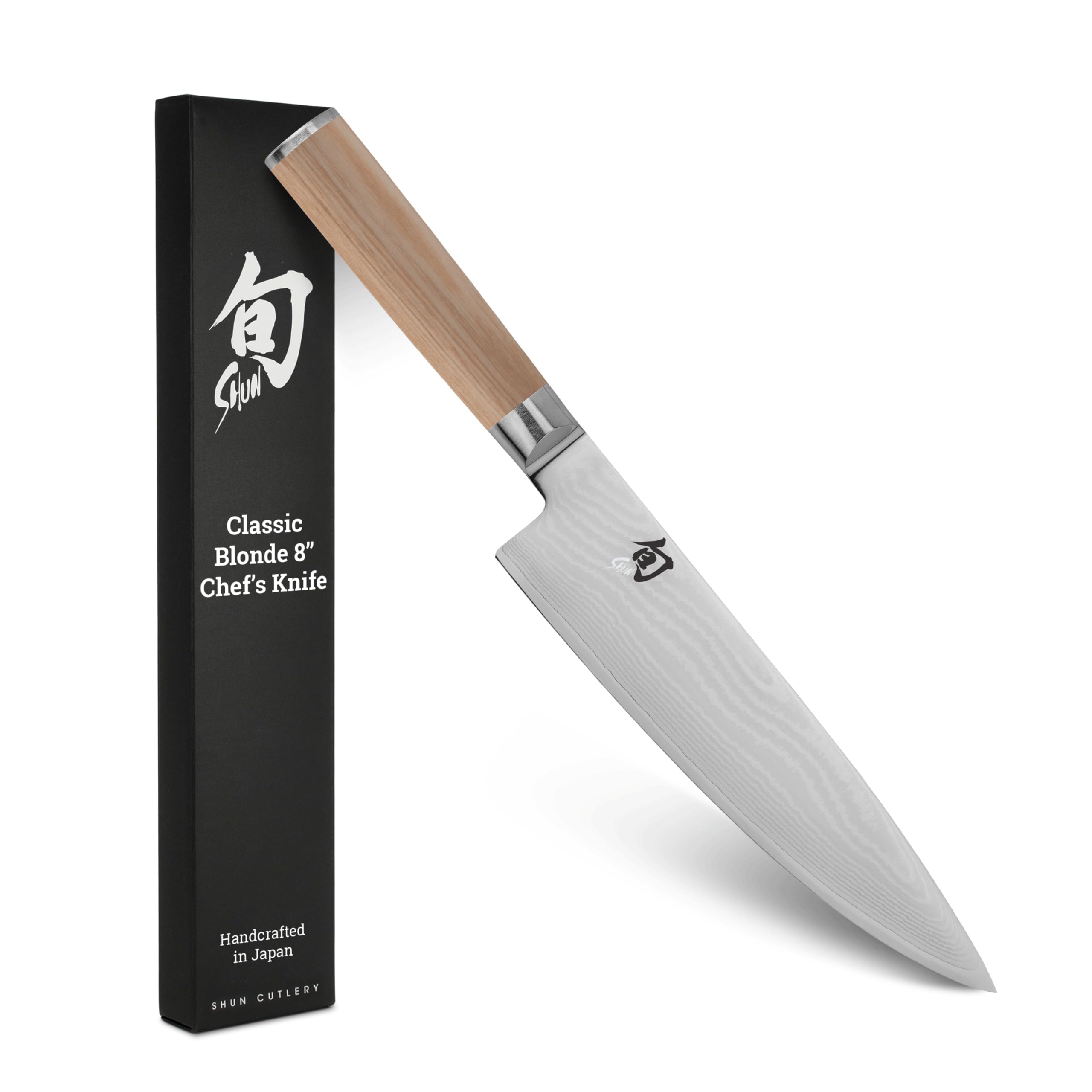
Shun Classic Blonde 8″ Chef’s Knife – Best for Elegant Everyday Use
The Shun Classic Blonde is one of those knives that makes you feel like a better cook the second you pick it up. It has a beautiful blonde PakkaWood handle that feels warm and natural in your hand. Not slippery. Not stiff. Just right.
The blade is VG-MAX steel with 68 layers of Damascus cladding. That’s not just for looks, it actually makes the blade tougher and more resistant to chipping. The edge comes razor sharp at 16 degrees per side, which is sharper than most Western knives you’ve probably used before.
What really sets this knife apart is the balance. It doesn’t feel front-heavy or back-heavy. It sits perfectly in your hand, which matters a lot when you’re chopping vegetables for 20 minutes straight. The D-shaped handle is designed for right-handed users, so keep that in mind if you’re a lefty.
This knife is hand-crafted in Japan by skilled artisans. Shun backs it with a lifetime warranty, which shows they actually stand behind the product. If you want a knife that looks great, performs even better, and lasts decades, the Shun Classic Blonde is a serious contender.
- Blade steel: VG-MAX with 68-layer Damascus
- Edge angle: 16 degrees per side
- Handle: Blonde PakkaWood (D-shaped, right-hand friendly)
- Best for: Home cooks who want professional performance
- Warranty: Lifetime
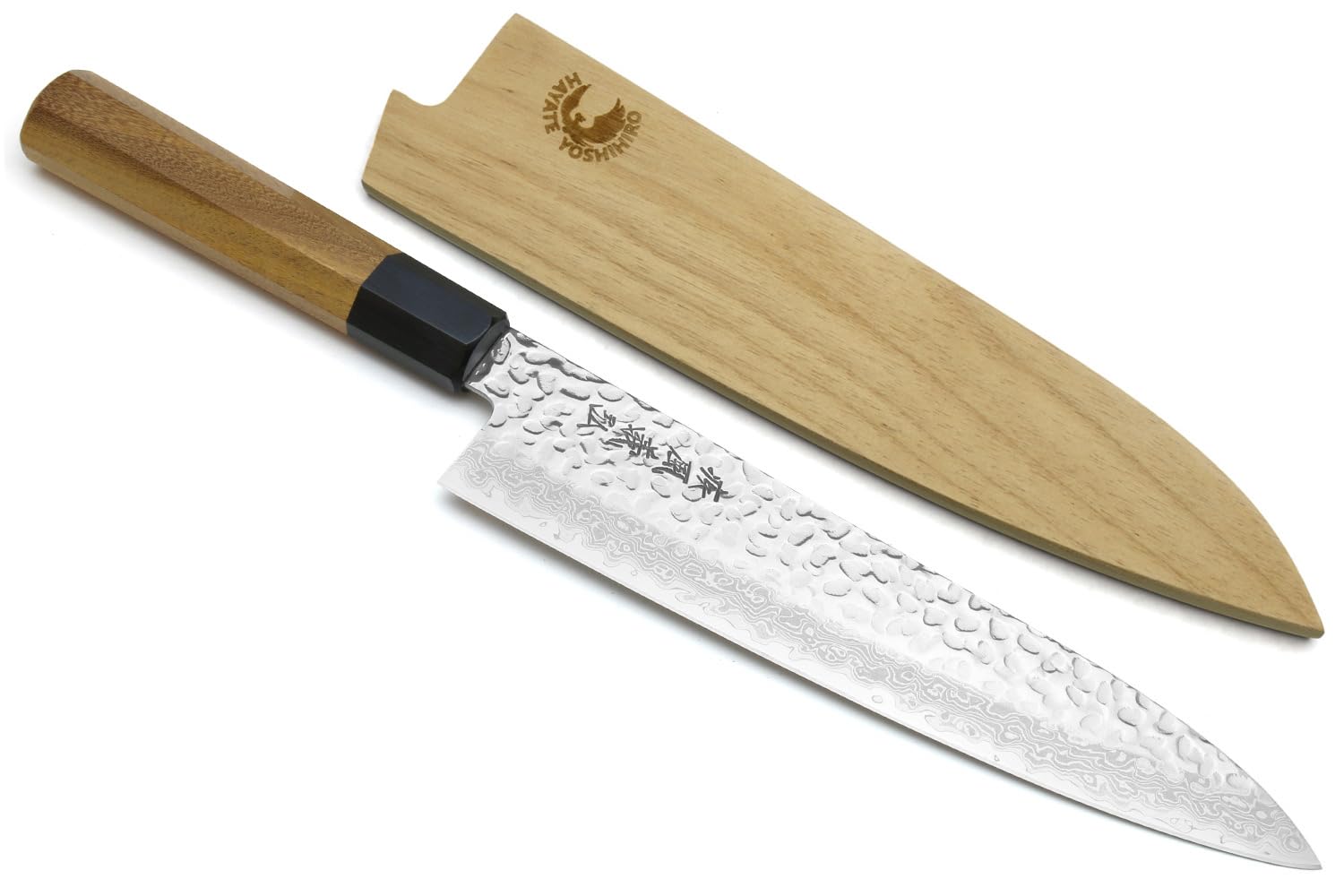
Yoshihiro VG10 46 Layers Hammered Damascus Chef’s Knife – Best for the Serious Home Cook
The Yoshihiro VG10 is the kind of knife that gets passed down through generations. It’s an 8.2-inch gyuto-style blade, hand-hammered with 46 layers of Damascus steel around a VG10 core. That hammered finish isn’t just beautiful, it also reduces food sticking to the blade while you cut.
VG10 is a premium Japanese steel that holds its edge really well. You won’t need to sharpen it every other week. It stays sharp through regular use, and when it does need sharpening, it responds beautifully to a whetstone. This is a knife that rewards people who actually care for their tools.
The octagonal Shitan Rosewood handle feels different from most knives. It’s light, it’s grippy, and it fits naturally in a pinch grip. If you’ve been learning proper knife technique, this handle makes that transition easy. It’s not padded or rubberized, it’s just clean, honest wood.
One honest note: this knife is thin and nimble, which is amazing for precision. But it’s not the knife for breaking down bones or cutting through hard squash. Use it for what it’s made for, and it’ll be one of the best cooking tools you’ve ever owned.
- Blade steel: VG10 core, 46-layer Damascus
- Handle: Octagonal Shitan Rosewood
- Style: Gyuto (Japanese chef’s knife)
- Best for: Precision cutting, proteins, vegetables
- Edge: Hand-sharpened, 3-layer blade construction
Global G-2 8″ Chef’s Knife – Best for Minimalists Who Want Pure Function
Global is a Japanese brand that does things completely differently. No wooden handle. No Damascus layers. No decorative details. Just a seamless, all-stainless steel knife that’s been one of the most popular chef’s knives in the world since the 1980s. And there’s a reason it’s stuck around.
The G-2 is made from CROMOVA 18 steel, which is a high-carbon, high-chromium stainless steel that Global developed specifically for their knives. It holds an edge well and resists rust and staining better than a lot of other Japanese steels. The edge is sharpened at 15 degrees on each side, making it noticeably sharper than a typical German knife.
The handle is hollow and filled with sand to give it just the right weight. That’s a clever design move. It means the knife balances well without being heavy overall. The dimples on the handle give you a secure grip even with wet hands, which is something you’ll appreciate mid-cooking.
Some people find the all-metal handle uncomfortable at first, especially if you’re used to wood or composite handles. Give it a week. Most people adjust, and many say they end up preferring it. It’s also incredibly easy to keep clean, which is a real bonus in a busy kitchen.
- Blade steel: CROMOVA 18 stainless
- Handle: Seamless stainless steel with dimple grip
- Edge angle: 15 degrees per side
- Best for: Minimalists, professional kitchens, easy maintenance
- Origin: Japan (Yoshikin factory, Niigata)
TOJIRO VG10 Professional Chef Knife – Best Budget-Friendly Japanese Knife
TOJIRO doesn’t get talked about enough. It’s a serious Japanese knife brand that’s been making professional-grade blades since 1955. The DP series, which this knife is part of, uses a VG10 core with two outer layers of stainless steel. That’s called a san-mai construction, and it gives you the sharpness of VG10 without the full cost of Damascus cladding.
The blade is ground to about 60 HRC hardness. That’s quite hard for a kitchen knife, which means it holds a very sharp edge for a long time. The grind is thin behind the edge, which is exactly what you want for slicing. You’ll notice the difference immediately if you’re upgrading from a cheaper knife.
The handle is an eco-wood composite that’s smooth, comfortable, and very durable. It’s not as fancy as rosewood or PakkaWood, but it feels solid in hand. The balance point sits right around the bolster, which gives you good control when you’re doing detailed work.
Here’s the honest truth: the TOJIRO DP is one of the best values in Japanese knives. Period. You’re getting professional-level performance at a fraction of what some other brands charge. If you’re newer to Japanese knives and not sure how much you want to spend, start here. You won’t regret it.
- Blade steel: VG10 core, san-mai construction
- Hardness: ~60 HRC
- Handle: Eco-wood composite
- Best for: Budget-conscious buyers, beginners, everyday use
- Origin: Made in Japan, Tsubame-Sanjo region
Miyabi Kaizen II 8″ Chef’s Knife – Best for Those Who Want Art and Performance Together
Miyabi is a German-Japanese collaboration. The knives are made in Seki, Japan, but they’re designed with Zwilling’s precision engineering behind them. The result is something that feels unmistakably Japanese but has a level of quality control that’s hard to beat.
The Kaizen II uses an FC61 steel core, which is a fine-carbide stainless steel that sits at 61 HRC. It’s incredibly sharp out of the box and holds that edge impressively well. The blade is finished with a traditional Honbazuke three-step sharpening process, which gives it a mirror polish and a ridiculously keen edge right from the start.
The handle is G10 Fiberglass with a mosaic pin detail. It’s slightly heavier than a traditional Japanese handle, which some people prefer. If you like a knife with a bit of heft to it, this one feels authoritative without being tiring. The bolster is a three-rivet Western-style setup, making it very comfortable for a full-grip hold.
The blade has 48 layers of Damascus steel wrapped around the core, creating that iconic wavy pattern. It reduces drag while cutting and looks absolutely stunning. If you want a knife you’d be proud to display in your kitchen, the Miyabi Kaizen II is hard to beat on both looks and performance.
- Blade steel: FC61 core, 48-layer Damascus
- Hardness: 61 HRC
- Handle: G10 Fiberglass with mosaic pin
- Sharpening: Honbazuke three-step process
- Best for: Gift-buying, serious home cooks, beauty and function
MAC Knife Professional Series 8″ Hollow Edge Chef’s Knife – Best for Effortless Cutting
MAC knives have a cult following, and once you use one, you’ll understand why. The Professional Series 8″ is light, thin, and incredibly sharp. It’s the kind of knife that makes slicing tomatoes feel almost effortless. No tearing. No dragging. Just clean, confident cuts.
The blade is made from MAC’s proprietary high-carbon steel, heat-treated to around 59-61 HRC. It’s slightly softer than some of the other knives on this list, which means it’s a little easier to sharpen and a bit more resistant to chipping. If you’re someone who doesn’t sharpen often or doesn’t have a lot of whetstone experience, that’s actually a good thing.
The hollow edge dimples along the blade reduce surface contact with food, so things like cucumbers and potatoes slide off instead of sticking. It’s a practical feature, not just a visual one. And the thin spine makes this knife really responsive when you’re doing fine work like julienning herbs or slicing fish.
The handle is a hard black pakkawood resin, comfortable and grippy even with wet hands. The overall feel of this knife is nimble and confident. MAC doesn’t always get the press it deserves, but chefs who know knives often pick MAC over flashier brands. That says a lot.
- Blade steel: MAC proprietary high-carbon stainless
- Hardness: 59-61 HRC
- Handle: Hard black pakkawood resin
- Feature: Hollow edge dimples for reduced food sticking
- Best for: Everyday cooking, easy maintenance, beginners and pros alike
I hope this guide made your decision a whole lot easier. Every knife on this list is genuinely good. The TOJIRO is the smart pick if you’re on a budget. The MAC is great for everyday cooking. The Yoshihiro and Miyabi are for when you want something special. And the Shun and Global are solid all-rounders you’ll use for years. Pick based on how you cook, and you really can’t go wrong.
| Knife | Steel | Hardness | Best For | Handle |
|---|---|---|---|---|
| Shun Classic Blonde | VG-MAX, 68-layer Damascus | ~61 HRC | Elegant everyday use | Blonde PakkaWood |
| Yoshihiro VG10 | VG10, 46-layer Damascus | ~60 HRC | Precision cutting | Octagonal Rosewood |
| Global G-2 | CROMOVA 18 Stainless | ~56-58 HRC | Minimalists, easy care | Seamless stainless steel |
| TOJIRO DP VG10 | VG10, san-mai | ~60 HRC | Budget buyers, beginners | Eco-wood composite |
| Miyabi Kaizen II | FC61, 48-layer Damascus | 61 HRC | Art and performance | G10 Fiberglass |
| MAC Professional | MAC high-carbon stainless | 59-61 HRC | Effortless everyday cutting | Hard pakkawood resin |
Things to Consider Before Buying a Japanese Chef Knife (Complete Guide)
You walk into a kitchen store, or scroll through Amazon at midnight, and suddenly there are 40 knives staring back at you. Different steel types, handle shapes, blade angles, price tags that range from $30 to $400. It’s a lot. And most buying guides just throw specs at you without actually explaining what any of it means for your real life in the kitchen.
That’s what this guide fixes. Knowing the right things to consider before buying a Japanese chef knife saves you from a bad purchase you’ll regret every single time you cook. So let’s break it down, one thing at a time, clearly and honestly.
Steel Type and Hardness
The steel your knife is made from controls almost everything. How sharp it gets, how long it stays sharp, how easy it is to care for. Most Japanese knives use either high-carbon steel or stainless steel, and the choice matters more than most people realize.
High-carbon steel gets incredibly sharp. Sharper than almost anything. But it rusts if you don’t dry it right away. Stainless steel is easier to maintain and resists rust well, but it’s usually a little softer. VG10 is the sweet spot many brands use because it’s stainless but hard enough to hold a great edge for a long time.
Hardness is measured on the Rockwell scale, written as HRC. Japanese knives usually sit between 58 and 66 HRC. Higher HRC means a sharper, longer-lasting edge but also a more brittle blade. Around 60-61 HRC is a great starting point for most people.
- VG10 steel is a great all-around choice
- High-carbon steel is sharper but needs more care
- Aim for 60-61 HRC if you’re unsure where to start
- Higher HRC = sharper but more brittle
Blade Edge Angle
This one surprises a lot of people. Japanese knives are sharpened at a much thinner angle than Western knives. Usually around 15 degrees per side, sometimes even less. That thinner angle is what gives you those incredibly clean, precise cuts.
Western knives are typically sharpened at 20-25 degrees per side. That extra angle makes them more durable for heavy use, but you give up some sharpness. Japanese knives go the other direction. They trade a little toughness for a lot more precision, and for most kitchen tasks, precision wins.
If you switch from a Western knife to Japanese for the first time, you’ll feel it immediately. Tomatoes, onions, fish, herbs. Everything slices easier. The catch is you need to sharpen at that same angle to maintain it. Get the wrong sharpening tool and you’ll undo the edge pretty fast.
- Japanese knives: 15 degrees per side is standard
- Western knives: 20-25 degrees per side
- Thinner angle = sharper but needs proper sharpening
- Never use a standard pull-through sharpener on a Japanese knife
Handle Shape and Material
The handle is where your hand lives. You’re going to hold this thing for 20 minutes straight some nights. If it doesn’t feel right, you’ll dread picking it up. So handle choice is personal, but there are smart guidelines to follow.
Japanese knives come in two main handle styles. Western-style handles are the rounded, ergonomic shape most people already know. Japanese-style handles, called Wa handles, are typically octagonal or D-shaped and made from wood. Wa handles are lighter, which makes the knife feel more blade-forward and responsive in your hand.
For materials, pakkawood and Micarta are popular synthetic options that hold up well in wet conditions. Real wood looks beautiful but needs more care. If your hands get sweaty or wet while cooking, go for a handle material that’s grippy even when damp. Micarta is excellent for this.
- Western handles: familiar, rounded, easy to grip
- Wa handles: lighter, traditional, very responsive
- Micarta and pakkawood handle wet conditions well
- Try holding a knife before buying if you can
Blade Length
Eight inches is the most popular size and for good reason. It’s long enough to handle big vegetables like butternut squash or a large cabbage, but short enough that you stay in control. Most home kitchens are perfectly set up for an 8-inch chef’s knife.
If you have smaller hands or a smaller cutting board, consider a 6 or 7-inch knife. Going smaller isn’t a weakness. It just means you have more control over shorter strokes. Some of the best prep cooks I’ve seen use a 6-inch blade for everything.
Going bigger, like 10 inches, makes sense if you’re breaking down large fish or working with really big cuts of meat regularly. But for everyday home cooking, that extra length can actually slow you down. Stick with 8 inches as your default unless you have a specific reason to go longer or shorter.
- 8 inches is the best all-around size for most people
- 6-7 inches works great for smaller hands or smaller boards
- 10 inches suits large proteins and professional kitchens
- Longer isn’t always better. Control matters more.
Single Bevel vs. Double Bevel
This one confuses a lot of beginners, but it’s actually pretty simple once you see it. A double bevel knife is sharpened on both sides of the blade, like a V shape. Most knives are double bevel. A single bevel knife is only sharpened on one side, creating a flat back and angled front.
Single bevel knives are traditional Japanese tools used mainly for sashimi, sushi, and very precise cutting tasks. They can achieve an absolutely insane level of sharpness, but they’re harder to use and harder to sharpen. Left-handed cooks also need to specifically look for left-handed single bevel knives, which are harder to find.
For most people, a double bevel Japanese knife is the right call. You get excellent sharpness and precision without the steep learning curve. Single bevel is for people who are already comfortable with Japanese knives and want to go deeper into traditional techniques.
- Double bevel: sharpened both sides, works for everyone
- Single bevel: one side only, traditional, very specialized
- Beginners should always start with double bevel
- Left-handed? Be careful with single bevel knives
Budget and Value
Price doesn’t always mean quality, but in Japanese knives, it usually does reflect the steel and craftsmanship. Under $50 and you’re likely getting a soft, budget steel that dulls fast. Between $80 and $150 is the sweet spot for most home cooks. That range gives you real VG10 steel, a good handle, and a knife that will last years.
Above $200 you start paying for hand-forged craftsmanship, premium Damascus patterns, and rare steel types. These knives are exceptional. But they’re not necessary unless you cook seriously and want something truly special. TOJIRO sits in the affordable range and performs way above its price. Miyabi and Shun are in the premium tier and earn it.
Watch out for knives priced cheaply but marketed as “Japanese style.” Real Japanese steel, made in Japan, costs a certain amount to produce. If something seems too good to be true at $25, the steel quality just isn’t there. Spend a little more and you’ll stop replacing knives every year.
- Under $50: budget steel, short lifespan
- $80-$150: excellent range for home cooks
- $200+: premium craftsmanship, special steels
- “Japanese style” isn’t the same as made in Japan
I hope this breakdown of the most important things to consider before buying a Japanese chef knife makes your decision feel less overwhelming. There’s no perfect knife for everyone. But there is a perfect knife for you. Match the steel, handle, and budget to how you actually cook, and you’ll end up with something you reach for every single day.
| Factor | What to Look For | Why It Matters | Quick Tip |
|---|---|---|---|
| Steel Type | VG10, high-carbon, or stainless | Controls sharpness, edge retention, and rust resistance | VG10 is the best all-around starting point |
| Hardness (HRC) | 60-61 HRC for most people | Higher HRC = sharper edge but more brittle | Don’t chase the highest HRC if you’re a beginner |
| Blade Angle | 15 degrees per side for Japanese knives | Thinner angle gives cleaner, more precise cuts | Never use a pull-through sharpener on these |
| Handle Type | Wa (Japanese) or Western style | Affects balance, grip comfort, and control | Hold it before buying if you can |
| Blade Length | 8 inches for most home cooks | Longer isn’t always better, control matters most | Go 6-7 inches if you have a smaller cutting board |
| Budget Range | $80-$150 for best value | Price usually reflects real steel and build quality | Avoid knives marketed as “Japanese style” under $30 |
Frequently Asked Questions (FAQs)
Is it hard to learn how to use a Japanese chef knife?
Not really. The main adjustment is the angle. Japanese knives are sharpened at a steeper angle (around 15-16 degrees per side) compared to Western knives. This makes them sharper but also means you need to be a bit more careful. With a few hours of practice and some basic knife skills, most people adapt quickly and wonder why they ever used anything else.
Is it okay to put a Japanese chef knife in the dishwasher?
No, please don’t. Ever. Dishwashers are rough on any good knife, but they’re especially damaging to Japanese blades. The high heat and harsh detergents break down handle materials and can cause the blade to corrode or chip. Always wash your Japanese knife by hand with warm water and mild soap, then dry it right away. It takes 10 seconds and keeps your knife in great shape.
Can I use a Japanese chef knife to cut bread or frozen food?
You can cut bread with it if the knife has a long enough blade, but it’s not ideal. Japanese knives have thin, hard edges that aren’t made for sawing motions. Frozen food is a definite no. Cutting anything frozen can chip or crack the blade instantly. Use a dedicated bread knife for bread and let frozen food thaw before you touch it with your Japanese knife.
Can I sharpen a Japanese chef knife with a regular honing steel?
No, not a regular one. A smooth or ridged steel honing rod can damage a hard Japanese blade. If you want to maintain the edge between sharpenings, use a ceramic honing rod instead. It’s much gentler on the fine edge. For actual sharpening, a whetstone is the best tool. Many Japanese knife owners use a 1000/3000 grit combination stone for regular maintenance.
Do I need a special cutting board for Japanese knives?
Yes, the cutting surface matters more than people think. Use a wooden cutting board or a soft plastic board. Avoid glass, ceramic, marble, or stone surfaces. These will destroy your edge fast. Wood and soft plastic are forgiving on the blade and actually help maintain sharpness longer. End-grain wooden boards are especially good because the knife slips between the wood fibers instead of cutting across them.
Do I need to oil my Japanese chef knife?
If your knife has a carbon steel blade, then yes, a light coat of food-safe mineral oil or camellia oil after each use helps prevent rust. If it’s stainless or high-carbon stainless, you don’t need to oil it regularly, but it still makes sense to keep it dry and stored properly. A knife block or magnetic strip works well. Avoid storing knives loose in a drawer where blades can knock against each other.
Is it worth spending more on a high-end Japanese knife?
For most home cooks, yes. A good Japanese knife changes how cooking feels. Prep work gets faster and easier. You waste less food because your cuts are cleaner. And a quality knife, when cared for properly, can last 20 or 30 years. That makes the cost per use incredibly low. You don’t have to spend $300, but going past the $80-100 mark gets you into seriously good territory.
Can a beginner use a Japanese chef knife safely?
Absolutely. In fact, some people find it easier to learn proper technique on a Japanese knife because the sharpness encourages you to use less force. The key is to respect the blade. Keep your fingers curled when you chop (the “claw grip”), go slow at first, and never rush. Most beginners who switch to a quality Japanese knife say they actually become more confident in the kitchen, not less.
Is it better to buy one great knife or a full set?
One great knife beats a full set of mediocre ones every time. Most professional chefs use two or three knives for 90% of their cooking. An 8-inch chef’s knife handles almost everything. If you’re just starting out, buy one really good Japanese chef knife and learn it well. Add a paring knife and bread knife later if you need them. Quality over quantity, always.
Do Japanese chef knives chip easily?
They can if you’re not careful. The hardness that makes them so sharp also makes the edge a little more brittle than softer Western knives. Avoid cutting through bones, frozen food, or hard-shelled foods. Don’t scrape the blade sideways across a cutting board. Store it properly so it doesn’t knock against other utensils. Follow those rules and chipping is rarely an issue.