As an Amazon Associate, I earn from qualifying purchases at no extra cost to you.
6 Best Professional Chef Knife (Buying Guide) 2026
 ByZayyan

Choosing a blade feels like picking a partner for your kitchen adventures. You might struggle with heavy handles that tire your wrist or dull edges that crush your tomatoes instead of slicing them. In this article I will show you the top 6 best professional chef knife options to help you prep like a pro.


Top 6 Best Professional Chef Knife You Can Buy Now
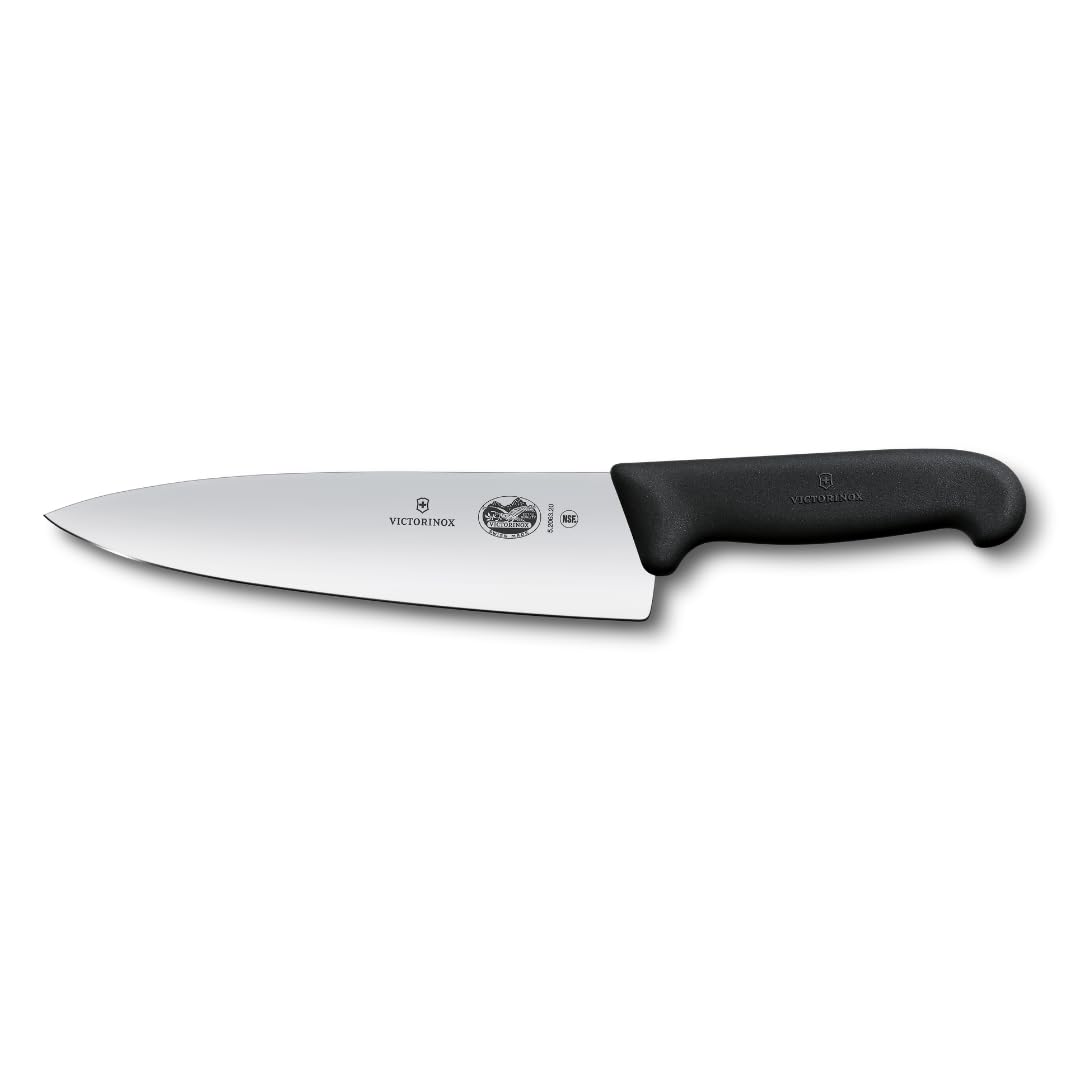
Victorinox 8 Inch Fibrox Pro Chef’s Knife – Best for Budget Professionals
This is the workhorse of the culinary world. I used this knife during my first year in a busy bistro because it is practically indestructible. The handle is made of a non slip material called Fibrox which stays grippy even if your hands are covered in chicken fat or water.
The blade is made of high carbon stainless steel. It is not the hardest metal out there, but that is actually a good thing for beginners. You can sharpen it easily on a cheap stone. It takes a beating and keeps on performing day after day without chipping.
You will love how light it feels in your hand. It does not have a heavy bolster, so you can use the entire length of the blade for chopping. It feels balanced and agile. This makes it perfect for long shifts where you have to dice fifty pounds of onions.
The price point is the real winner here. You get a professional tool for the cost of a few pizzas. It is the best entry point for anyone starting their journey. You do not have to worry about breaking it or ruining a fancy finish while you learn.
- Non slip handle grip
- Lightweight design
- Easy to sharpen
- Amazing price value
Miyabi Birchwood SG2 Japanese Chef’s Knife – Best for Ultimate Precision
If you want a piece of art that also cuts like a laser, this is it. The blade features a core of SG2 micro carbide powder steel. This metal is incredibly hard, which means it stays sharp for a very long time. It feels like sliding through butter when you cut.
The exterior has a beautiful 100 layer Damascus pattern. It looks stunning under kitchen lights. The handle is made of Karelian birchwood, which is a prized material in Japan. It feels warm and organic in your palm. The D shaped handle fits perfectly for right handed users.
Precision is the main focus here. The edge is hand honed using a traditional three step process. You can achieve paper thin slices of radish or fish with almost no effort. It is a delicate tool meant for someone who respects their equipment and knows how to maintain it.
You should be careful with the edge because it is quite thin. It can chip if you hit a bone or a frozen piece of meat. This is a knife for fine work and showcase cooking. It makes every task feel special and elevated when you pull it out.
- Extreme edge retention
- Beautiful Damascus finish
- Traditional birchwood handle
- Incredible slicing power
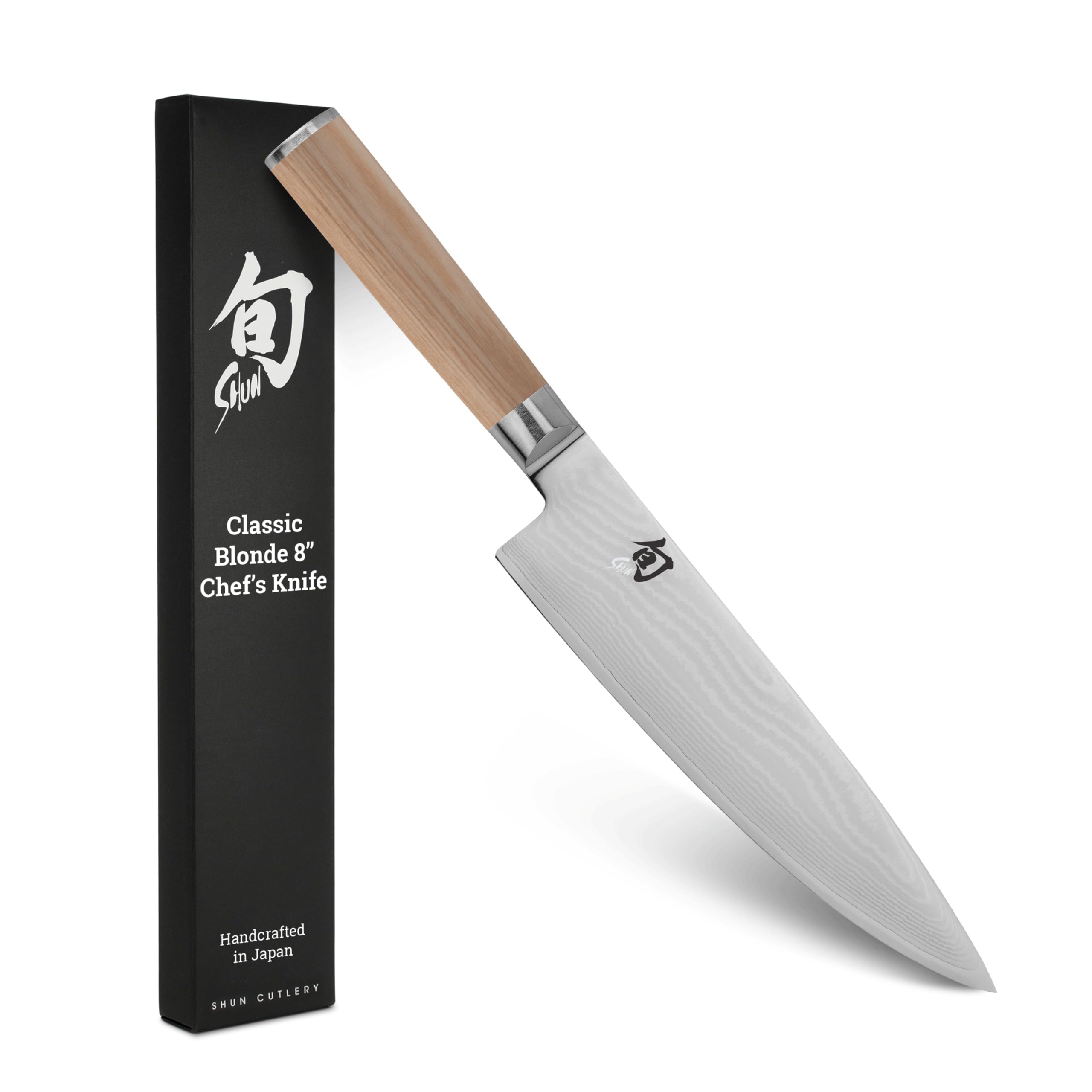
Shun Classic Blonde 8-inch Chef’s Knife – Best for Stylish Versatility
The Shun Classic is a staple in many high end kitchens for a reason. This blonde version features a light colored PakkaWood handle that looks modern and clean. It is a Japanese style blade but it has a bit more belly than a traditional gyuto.
The blade uses VG-MAX steel which is a proprietary blend known for being very tough. It resists corrosion well and holds a wicked edge. You get 68 layers of Damascus cladding which helps food slide off the blade. It prevents that annoying sticking when you chop starchy potatoes.
It feels very nimble and quick. The bolster is shaped so you can use a comfortable pinch grip. This gives you more control over the tip of the knife. It is great for detail work like mincing garlic or shallots. You get the best of both worlds here.
One thing to watch is the angle of the edge. It is sharpened to 16 degrees which is much steeper than a German knife. You need to be mindful of your technique. However, once you get used to the lightness, you will never want to go back.
- Modern blonde handle
- VG-MAX steel core
- Great for pinch grips
- Excellent food release
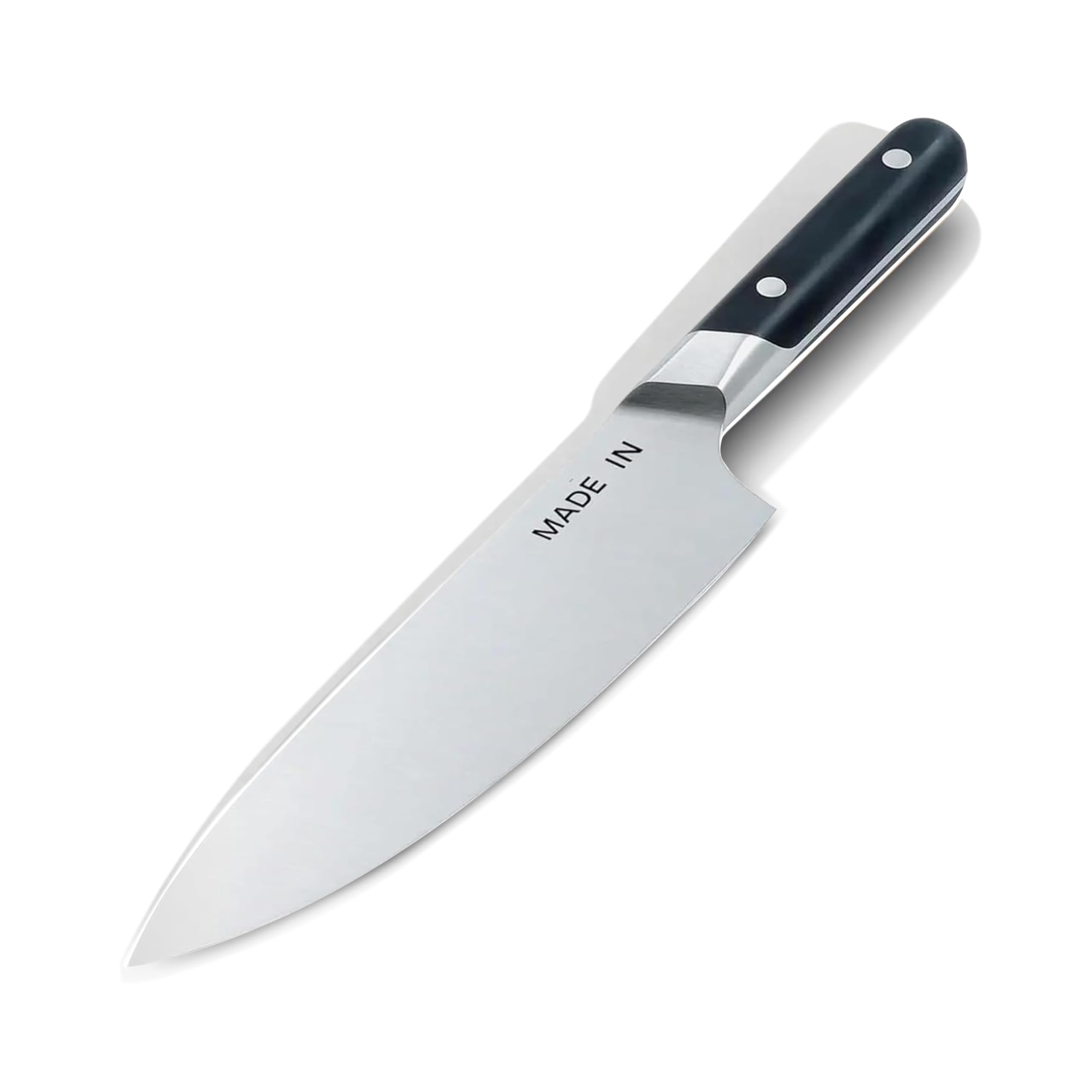
Made In Cookware 8-inch Chef Knife – Best for Modern Durability
This knife comes from a brand that works directly with professional chefs to design their gear. It is fully forged from a single piece of nitrogen treated metal. This process makes the steel much stronger and more resistant to stains. It feels incredibly solid.
The balance point is right at the bolster. When you hold it, the knife feels like an extension of your arm. It has a full tang, meaning the metal goes all the way through the handle. This adds weight and stability when you are cutting through thick vegetables like butternut squash.
The handle is made of a synthetic material that won’t crack or warp over time. It is designed to be comfortable for all hand sizes. You can tell they put a lot of thought into the ergonomics. It feels modern and looks sleek on a magnetic knife strip.
It arrives incredibly sharp right out of the box. The edge is a hybrid between French and Japanese styles. It has enough of a curve to rock back and forth, but it is also flat enough for push cutting. It is a great all rounder for any home cook.
- Nitrogen treated steel
- Full tang construction
- Perfectly balanced
- Hand crafted in France
Misono UX10 Chef’s Knife – Best for Professional Kitchens
The UX10 is often called the holy grail for professional line cooks. It uses a special Swedish stainless steel that acts like carbon steel. You get the sharpness and ease of honing without the rust issues. It is a serious tool for serious people.
The design is quite understated. It does not have flashy patterns or wood handles. It uses a durable composite handle and a nickel silver bolster. This knife is built for performance rather than looks. It can handle the heat and moisture of a professional kitchen without a problem.
The blade has an asymmetrical grind. This means one side is flatter than the other, which helps with tracking. It makes straight cuts much easier to achieve. You will notice how much more control you have when slicing through a large roast or a stack of herbs.
It is very thin behind the edge. This reduces friction as you cut through dense items. It feels very sharp and aggressive in a good way. If you want a knife that just works and will last a lifetime, this is the one to get.
- Swedish stainless steel
- Asymmetrical edge grind
- High stain resistance
- Professional grade balance
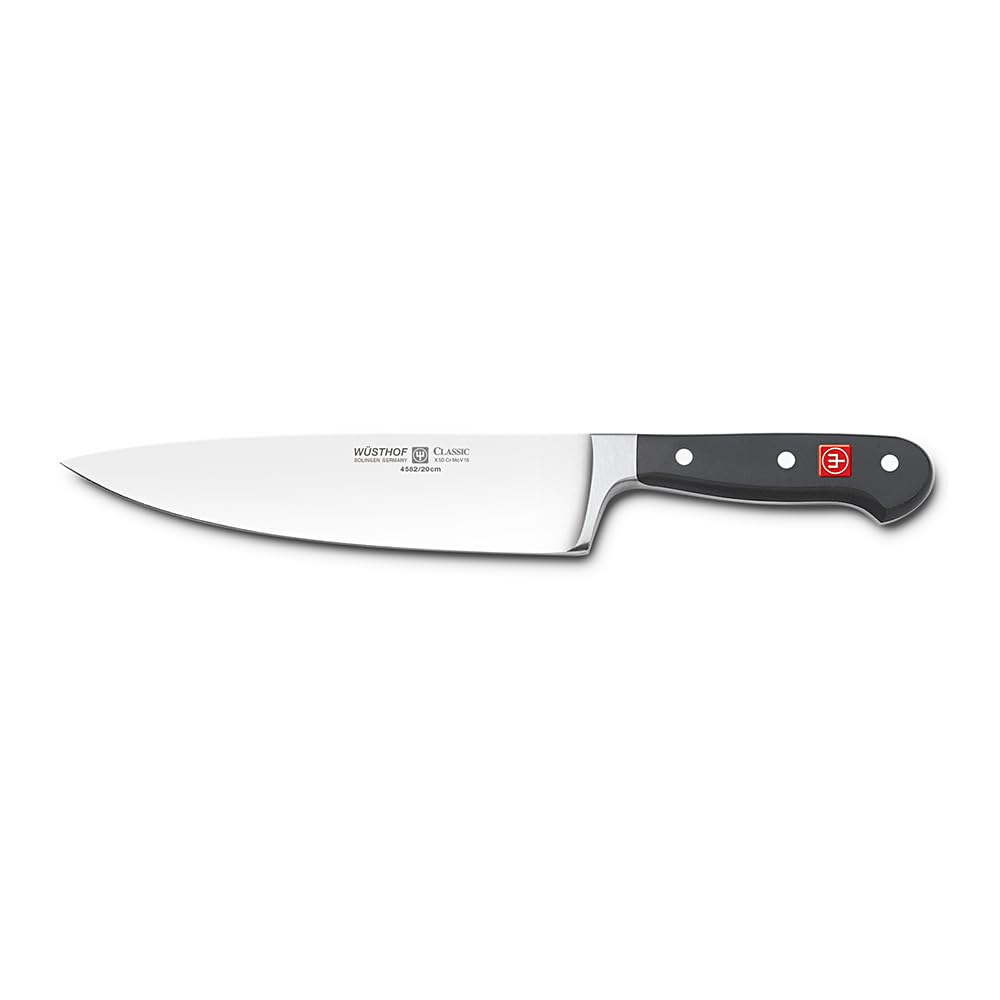
WÜSTHOF Classic 8 Inch Chef’s Knife – Best for Heavy Duty Tasks
This is the classic German knife that most people imagine when they think of a chef knife. It is heavy, sturdy, and reliable. It features a full bolster, which acts as a finger guard. This makes it very safe for people who are still working on their knife skills.
The blade is forged from a single piece of high carbon steel. It is designed to be tough. You can use this knife to split a chicken or chop through heavy root vegetables without worrying about the edge. It is a tank that can handle almost any task.
The handle is triple riveted for maximum durability. It has a traditional look that never goes out of style. The weight of the knife does most of the work for you. You don’t have to press down hard because the gravity of the blade helps the cut.
It stays sharp for a long time and is easy to maintain with a honing rod. While it isn’t as laser thin as the Japanese options, it is much more forgiving. This is the knife you buy once and pass down to your kids. It is a kitchen legend.
- Full finger guard bolster
- Heavy duty forging
- Triple riveted handle
- Traditional German style
I hope this list helps you find your perfect kitchen companion. Choosing the top 6 best professional chef knife options wasn’t easy, but these blades really stand out. Pick the one that fits your hand and your cooking style. A good knife makes cooking more fun and much safer. Trust your gut, grab a sharp blade, and start making something delicious today.
| Product Name | Blade Material | Style | Best Feature |
| Victorinox Fibrox | Stainless Steel | Western | Non slip handle |
| Miyabi Birchwood | SG2 Powder Steel | Japanese | Extreme sharpness |
| Shun Classic | VG-MAX Steel | Japanese | 68 layer Damascus |
| Made In Chef Knife | Nitrogen Steel | Hybrid | Forged durability |
| Misono UX10 | Swedish Steel | Japanese | Professional balance |
| Wüsthof Classic | High Carbon Steel | German | Heavy duty bolster |
Things to consider before buying professional chef knife: A Guide to the Perfect Blade
Finding the right blade can feel like a chore when you are staring at a wall of shiny steel. You might feel overwhelmed by the high prices or the technical talk about metal types and handle shapes. I remember my first real kitchen job where I used a dull, heavy knife that made my hand ache after only an hour of prep.
You deserve a tool that feels like a natural extension of your arm rather than a heavy burden. Identifying the things to consider before buying professional chef knife will save you from wasting money on a flashy tool that does not actually work for you. Let’s look at what really matters when you are picking out your next favorite kitchen partner.
The Balance and Weight of the Blade
The way a knife feels in your hand is the most important factor for any cook. You want to find a blade where the weight is distributed evenly between the handle and the metal. If the knife feels too heavy at the tip, it will pull your wrist down and make you feel tired during long sessions of dicing vegetables.
A heavy knife can be helpful when you are cutting through thick items like pumpkins or large roasts because the weight does the work for you. However, a lighter knife offers much more control and speed for delicate tasks like mincing herbs or shallots. You should hold the knife at the bolster to see if it tips forward or back.
Try to find a middle ground that matches your physical strength and your typical cooking style. I personally prefer a slightly heavier German blade for heavy duty tasks and a feather light Japanese blade for fine work. Your choice depends on whether you value raw power or surgical precision when you are standing at your cutting board.
- Check the balance point at the bolster.
- Match the weight to your hand strength.
- Consider your most common cutting tasks.
The Type of Steel and Edge Retention
Steel is not just steel when it comes to high end cutlery. You will mostly choose between stainless steel and carbon steel options. Stainless steel is great because it does not rust or stain easily, which is perfect if you tend to leave your tools in the sink for a few minutes after cooking.
Carbon steel is a favorite for many pros because it can be sharpened to an incredibly fine edge. It stays sharp for a very long time, but it requires much more care because it can rust if you leave it wet. You will see it develop a dark patina over time, which many chefs think looks quite beautiful and professional.
You should also look at the hardness of the metal, often measured on the Rockwell scale. Harder steel stays sharp longer but can be brittle and prone to chipping if you hit a bone. Softer steel is tougher and more durable for daily beating, but you will need to hone it much more frequently to keep it performing well.
- Stainless steel for easy maintenance.
- Carbon steel for the sharpest edge.
- Harder steel stays sharp but can chip.
Handle Comfort and Grip Material
The handle is your primary connection to the blade, so it needs to feel secure even when your hands are wet or greasy. Many professional knives use synthetic materials like Fibrox or Pakkawood because they provide a non slip surface. These materials are also very durable and will not crack or warp like natural wood sometimes does.
You should pay attention to the shape of the handle and how it fills your palm. Some people love a traditional round or D shaped Japanese handle, while others prefer the contoured grip of a Western style knife. If the handle is too small, you will find yourself gripping too tightly, which leads to painful cramps and blisters.
Think about how you hold your knife, especially if you use a pinch grip where your thumb and index finger choke up on the blade. A smooth transition between the handle and the metal is vital for comfort. If there are sharp edges or gaps at the bolster, they will rub against your skin and cause irritation over time.
- Prioritize non slip materials for safety.
- Test the handle size against your palm.
- Look for smooth transitions at the bolster.
The Blade Length and Profile Shape
Most professional chef knives come in lengths between eight and ten inches. An eight inch blade is the standard because it is long enough to handle almost anything but short enough to keep you in total control. If you have very large hands or a massive cutting board, you might find a ten inch blade more efficient.
The profile or the curve of the edge also changes how you cut. A blade with a deep curve or belly is designed for a rocking motion, which is great for chopping piles of parsley or cilantro. A flatter profile is better for a push cut or a draw cut, which is common in Japanese style cooking.
You should pick a shape that matches the way you naturally move your arm. If you like to rock the knife back and forth, a German style blade will feel much more natural. If you prefer to slice straight down, look for a flatter French or Japanese profile. This choice will define your entire rhythm in the kitchen.
- Eight inches is the most versatile length.
- Curved blades are better for rocking.
- Flatter blades excel at straight slicing.
Forged Versus Stamped Construction
Forged knives are made from a single piece of red hot steel that is hammered into shape. This process creates a stronger blade that usually features a bolster, which is the thick part where the blade meets the handle. These knives feel more substantial and typically last a lifetime if you treat them with a bit of respect.
Stamped knives are cut out of a large sheet of steel, much like a cookie cutter. In the past, these were seen as cheap or low quality, but modern technology has changed that. Many high end stamped knives are now incredibly sharp, lightweight, and affordable. They are a great choice if you want a professional tool without the heavy price tag.
You need to decide if you want the heft and status of a forged blade or the agility and value of a stamped one. Forged blades often have a better balance, but stamped blades can be much easier to use for long periods. Both can be professional grade, so don’t let the manufacturing method be your only deciding factor.
- Forged knives offer weight and strength.
- Stamped knives are lighter and affordable.
- Both can achieve professional sharpness.
Ease of Maintenance and Sharpening
Every knife will eventually get dull, no matter how much you paid for it. You need to consider how easy it will be for you to bring that edge back to life. Some high end Japanese steels are so hard that they require special whetstones and a lot of patience to sharpen correctly at home.
If you are not interested in learning the art of the whetstone, look for a knife that can be handled by a local professional sharpener. Some serrated or uniquely ground blades are much harder to service. A simple, classic edge is usually the easiest to maintain with a basic honing rod and an occasional trip to a pro.
You should also think about how the knife reacts to your kitchen environment. If you live in a humid area or near the ocean, a high carbon blade will rust faster than you think. Choosing a knife that fits your lifestyle and your willingness to clean up will ensure your tool stays in top shape for years to come.
- Check if you can sharpen it yourself.
- Consider the local professional services.
- Match the steel to your cleaning habits.
I hope you feel more confident about choosing your next kitchen tool. Buying a blade is a personal journey, and taking time to weigh the things to consider before buying professional chef knife will lead you to a better experience. A great knife makes every meal easier to prepare and every minute in the kitchen more enjoyable.
| Feature To Check | Action For You | Why It Matters | Expert Pro Tip |
| Hand Feel | Hold it in a pinch grip | Prevents hand fatigue | Avoid handles with sharp edges |
| Blade Material | Check for “High Carbon” | Determines sharpness | Stainless is best for busy homes |
| Maintenance | Buy a ceramic honing rod | Keeps the edge straight | Hone your knife before every use |
| Board Safety | Buy a wood cutting board | Protects the sharp edge | Never cut on glass or stone |
| Blade Length | Start with 8 inches | Most versatile for all tasks | Test the fit on your board first |
| Tang Type | Look for “Full Tang” | Ensures better durability | Full tang means steel goes to the end |
Frequently Asked Questions (FAQs)
Is it worth spending more on a professional knife?
Yes, it is definitely worth the investment if you cook often. A high quality blade stays sharp longer and feels better in your hand. This reduces fatigue and makes your prep work much faster. You also save money in the long run because a good knife can last for decades.
Can I put these knives in the dishwasher?
You should never put a professional knife in the dishwasher. The high heat and harsh detergents can ruin the handle and dull the blade. The clanking against other dishes can also cause chips in the metal. Always hand wash your knives with warm soapy water and dry them immediately.
Do I need a honing rod for my new knife?
Yes, you should use a honing rod regularly to keep the edge straight. Honing does not remove metal, but it realigns the microscopic teeth on the blade. This keeps the knife feeling sharp between actual sharpening sessions. It is a simple habit that extends the life of your edge.
Is it hard to sharpen a Japanese knife?
It can be a bit tricky at first because of the steep angles. Japanese knives often use harder steel that requires a whetstone rather than a pull through sharpener. However, with a little practice, you can learn to do it yourself. Many people find the process very relaxing and rewarding.
Do I need different knives for meat and vegetables?
You do not strictly need different knives, but it can help. A chef knife is designed to be an all purpose tool for both tasks. However, if you do a lot of heavy butchery, you might want a sturdier German blade. For fine vegetable work, a thinner Japanese blade is usually better.
Can a dull knife be more dangerous than a sharp one?
Yes, a dull knife is actually much more dangerous to use. When a blade is dull, you have to apply more pressure to cut through food. This increases the chance of the knife slipping and hitting your hand. A sharp knife bites into the food easily and gives you more control.
Is it okay to use a glass cutting board?
You should avoid glass or stone cutting boards at all costs. These materials are much harder than the steel in your knife. Cutting on them will dull your blade almost instantly and can even cause the edge to roll or chip. Stick to wood or high quality plastic boards.
Do I need an 8 inch knife or a 10 inch one?
An 8 inch knife is the standard size for most home cooks and pros. It is long enough to handle large items but short enough to be easy to control. A 10 inch knife is great for big tasks but can feel unwieldy in a small kitchen. Start with the 8 inch.
Can I use my chef knife to cut through bone?
You should not use most chef knives to cut through thick bones. While a heavy German knife might handle small poultry bones, it is not a cleaver. Using a fine Japanese blade on bones will almost certainly cause the edge to chip. Use a dedicated bone saw or cleaver instead.
Is it normal for my carbon steel knife to change color?
Yes, it is completely normal for carbon steel to develop a patina over time. This dark gray or blue tint actually protects the metal from deeper rust. It shows that the knife is being used and cared for. Many chefs actually prefer the look of a well seasoned blade.