As an Amazon Associate, I earn from qualifying purchases at no extra cost to you.
6 Best Chest Freezers (Buying Guide) 2026
 ByZayyan

Finding the right freezer is harder than it looks. You search online, see a hundred options, and suddenly you’re more confused than when you started. Size, brand, price, features — it’s a lot. In this article I will show you the top 6 best chest freezer picks that actually deliver, so you can stop guessing and just buy with confidence.


Top 6 Best Chest Freezers You Can Buy Now
Igloo 5.0 Cu Ft. Upright Deep Freezer Chest — Best for Small Spaces with Big Storage Needs
If you’ve got a small apartment or a tight laundry room, this Igloo is the one. It packs 5 cubic feet of freezing space into a surprisingly compact body. You won’t have to sacrifice a whole corner of your home just to store some extra groceries.
The adjustable thermostat gives you real control. Whether you’re freezing fresh meat or just storing some ice cream and leftovers, you can dial it in to exactly where you need it. That kind of flexibility matters more than people realize, especially through seasons when temperatures shift.
The removable basket inside is a nice touch. You get to organize your stuff instead of just throwing everything in and digging around every time. The free-standing design also means you can place it almost anywhere without worrying about clearance issues on the sides.
For the price, this is a solid pick. It’s quiet, it cools down fast, and it doesn’t eat up a ton of electricity. If you’re a first-time freezer buyer or just need something dependable for everyday use, the Igloo 5.0 is a smart starting point.
- 5.0 cubic feet of storage
- Adjustable thermostat
- Removable storage basket
- Free-standing design
- Compact and apartment-friendly
- Energy efficient
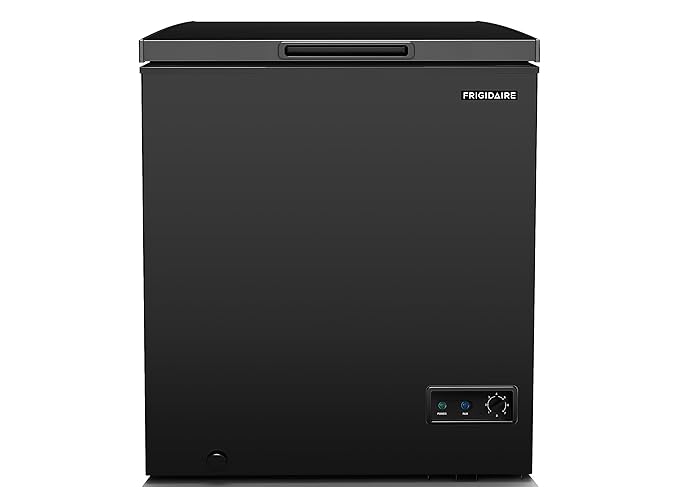
FRIGIDAIRE EFRF5003-BLACK Chest Deep Freezer — Best Garage-Ready Freezer for Year-Round Use
Frigidaire has been making appliances for decades and this freezer shows exactly why people keep coming back to the brand. The EFRF5003 is built to work in your garage, and it actually means it. A lot of freezers claim to be “garage-ready” and then fail when the temperature dips too low. This one keeps running.
The adjustable thermostat lets you fine-tune the cold level, which is great when you’re storing a wide variety of food. Got some bulk chicken from the warehouse store? Bags of frozen veggies? Maybe some homemade soup you batch-cooked on Sunday? This freezer handles all of it without breaking a sweat.
The black finish looks clean and modern. It doesn’t scream “I’m an appliance.” It blends in, whether you put it in the garage, basement, or kitchen corner. The removable storage basket helps you keep things organized so you’re not constantly fishing around for what you need.
What really stands out is the reliability. Frigidaire freezers tend to last a long time. You’re not buying this for a year, you’re buying it to use for the next decade. That peace of mind is worth every penny, especially if you buy in bulk or grow your own food.
- Garage-ready performance
- Adjustable thermostat
- Sleek black design
- Removable storage basket
- Built for long-term reliability
- Works in extreme temperatures
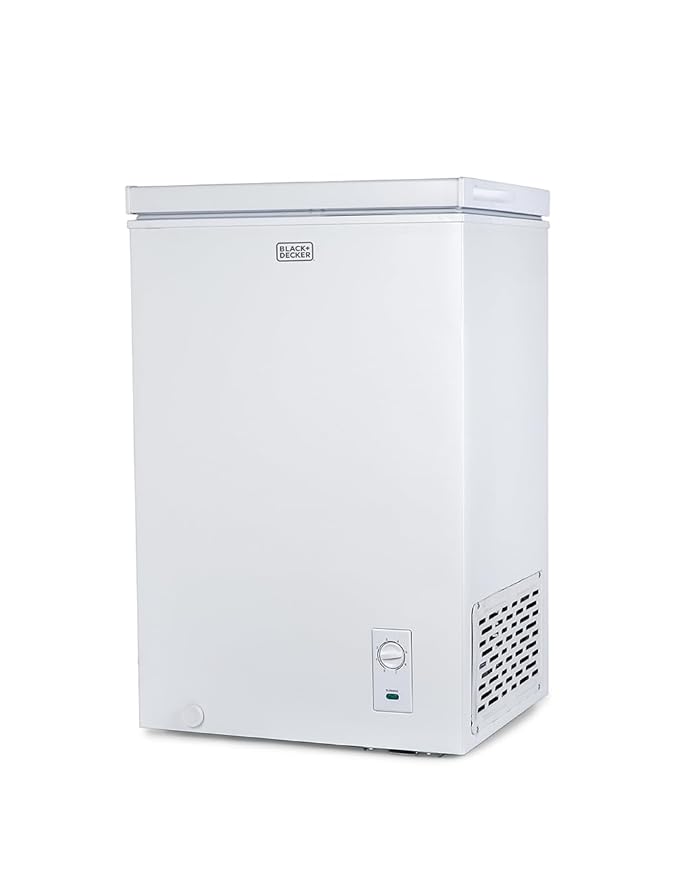
BLACK+DECKER 2.0 Cu. Ft. Compact Chest Freezer — Best Tiny Freezer for Dorms and Studios
Don’t let the small size fool you. This BLACK+DECKER compact freezer punches above its weight. At just 2 cubic feet, it fits in dorm rooms, studio apartments, offices, and even under a counter. If you need a secondary freezer without taking up real estate, this is your answer.
It keeps food frozen solid, which sounds basic but honestly isn’t always guaranteed with super compact units. Some tiny freezers struggle to maintain consistent temperatures. This one holds steady, which means your frozen meals stay safe and your ice cream stays scoopable.
The design is clean and unobtrusive. It’s not going to clash with whatever setup you’ve got going on. The lid opens easily, the interior is simple to wipe down, and the removable basket helps you access smaller items without digging. Small detail, but it saves you frustration on busy mornings.
For someone who doesn’t cook in bulk but still wants the option to freeze a few things, this is perfect. Maybe you meal prep two or three days at a time. Maybe you just want to store some frozen fruit for smoothies. This BLACK+DECKER handles that without wasting energy on space you don’t need.
- 2.0 cubic feet, ultra compact
- Consistent temperature performance
- Clean, simple design
- Removable basket for organization
- Great for dorms, studios, offices
- Energy conscious size
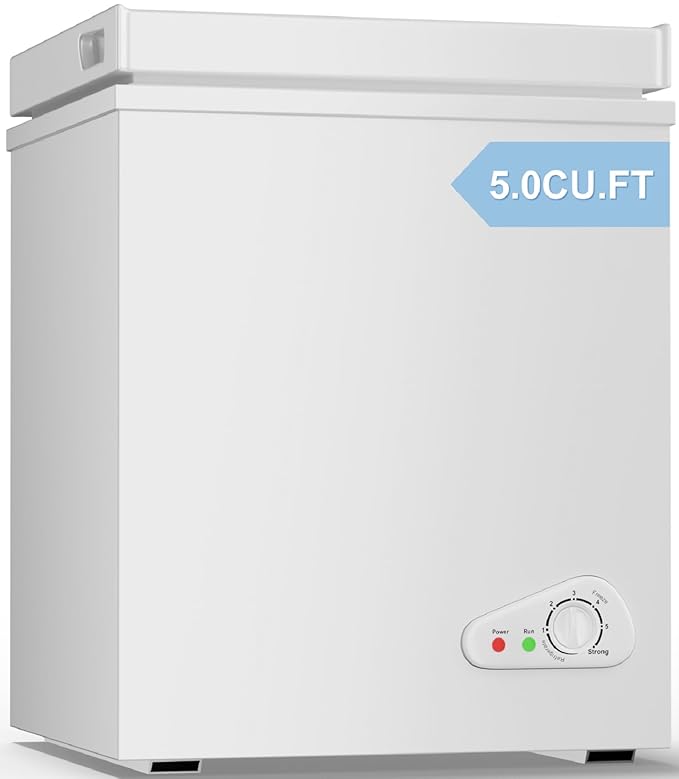
TABU 5.0 Cubic Feet Chest Freezer — Best Budget Pick with Surprising Quality
TABU isn’t a name you hear every day, but this freezer deserves more attention. For the price, you’re getting a genuinely capable machine. The 5.0 cubic feet of space is plenty for a small family or someone who likes to stock up when things go on sale.
The adjustable thermostat works well across a wide temperature range. You can push it colder for long-term meat storage or keep it at a lighter freeze for things like bread and pre-cooked meals. That kind of range is honestly what separates a good freezer from a frustrating one.
The removable basket is included, which is a win at this price point. You can actually stay organized instead of treating the whole freezer like a grab-bag. The freestanding design means you’ve got placement options too. Garage, basement, spare room — it works in all of them.
What surprises people about the TABU is how quiet it runs. Budget appliances sometimes come with a hum or a rattle that drives you crazy over time. This one stays quiet, which matters especially if it’s near a living space. For value-first shoppers who don’t want to compromise too much, TABU is a genuinely good call.
- 5.0 cubic feet capacity
- Wide-range adjustable thermostat
- Removable storage basket
- Freestanding and flexible placement
- Surprisingly quiet operation
- Excellent value for the price
Hamilton Beach HBFRF2129 21 Cu Ft Chest Freezer — Best Large Capacity Freezer for Families and Bulk Buyers
This is the big one. At 21 cubic feet, the Hamilton Beach HBFRF2129 is built for people who are serious about stocking up. Big families, hunters, gardeners who freeze their harvest, people who buy half a cow from a local farm — this is the freezer for you.
The garage-ready design is a major selling point. It keeps working even when outdoor temperatures go to extremes. That means you can leave it in the garage all year without worrying about it failing on you during a cold snap in January or a heat wave in July.
Inside, you’ve got enough room to actually organize things properly. No more cramming stuff in and hoping it fits. The wire basket helps you separate items and keep things accessible. White finish keeps it looking clean and works well in most spaces.
Hamilton Beach is known for making reliable appliances, and this freezer lives up to that reputation. When you’re storing a significant amount of food, you need something you can trust. Power outages happen, temperatures fluctuate, and life throws curveballs. A dependable large freezer gives you a real safety net for your household food supply.
- Massive 21 cubic feet capacity
- Garage-ready for year-round use
- Wire storage basket included
- White finish, clean look
- Handles extreme temperature ranges
- Ideal for bulk buyers and large families
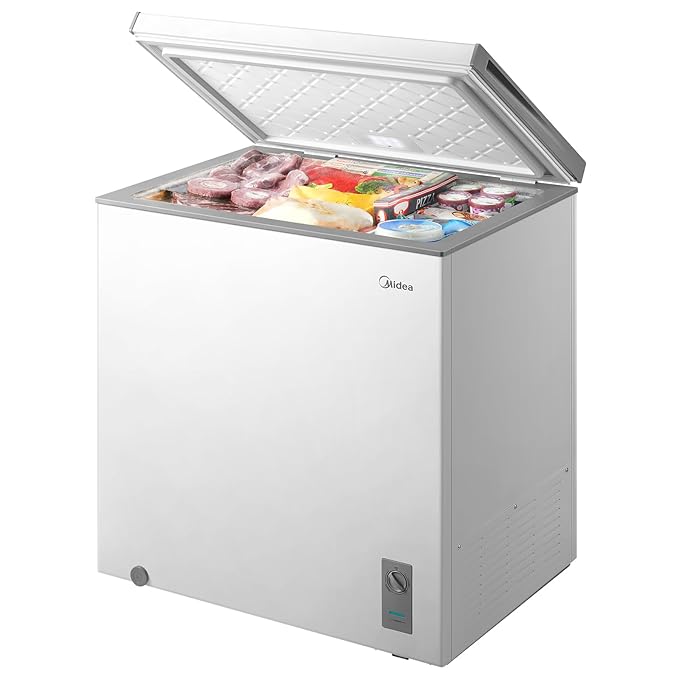
Midea MERC07C4BAWW Chest Freezer — Best Mid-Size Freezer for Everyday Households
Midea has quietly become one of the most trusted appliance brands in the market, and this 7 cubic foot freezer is a great example of why. It’s the right size for most households. Not too big, not too small. Just right for a couple or a small family who wants extra freezer space without going overboard.
The temperature control is easy to use and actually accurate. You set it, it holds it. That consistency is what keeps your food safe over months of storage. And yes, it matters — especially when you’re freezing meat or anything that could go bad fast if the temperature creeps up.
The white finish is classic and blends into most home environments. The interior layout gives you good depth without feeling like you’re reaching into a black hole every time you want something from the bottom. The removable basket at the top makes it easy to grab smaller, everyday items quickly.
Midea also gets points for energy efficiency. This freezer doesn’t run your electricity bill up the wall. For something you’re going to leave running 24/7, 365 days a year, that ongoing cost really adds up. Choosing an efficient model like this one saves you real money over time. A solid, dependable everyday freezer that just works.
- 7 cubic feet, ideal everyday size
- Accurate and consistent temperature control
- Energy efficient operation
- Removable storage basket
- Classic white finish
- Reliable Midea quality
I hope this guide made your decision a whole lot easier. The right chest freezer really depends on your space, your household size, and how much you like to stock up. If you’re going big, go Hamilton Beach. Need something small? BLACK+DECKER has you covered. On a budget? TABU is worth your attention. Whatever you pick from this list, you’re making a solid choice. Go ahead and grab it.
| Product | Capacity | Best For | Key Feature |
|---|---|---|---|
| Igloo 5.0 Cu Ft Upright Deep Freezer | 5.0 cu ft | Small spaces, apartments | Compact free-standing design |
| Frigidaire EFRF5003-BLACK | 5.0 cu ft | Garage use, year-round reliability | Garage-ready performance |
| BLACK+DECKER 2.0 Cu Ft Compact | 2.0 cu ft | Dorms, studios, offices | Ultra compact size |
| TABU 5.0 Cubic Feet Chest Freezer | 5.0 cu ft | Budget shoppers | Quiet, value-packed performance |
| Hamilton Beach HBFRF2129 | 21 cu ft | Large families, bulk buyers | Massive capacity, garage-ready |
| Midea MERC07C4BAWW | 7 cu ft | Everyday households | Energy efficiency and consistency |
Things to Consider Before Buying a Chest Freezer: A Complete Guide for 2026
Buying a chest freezer sounds simple until you’re actually standing in front of a dozen options with no idea what separates a good one from a waste of money. Size, capacity, energy use, placement — there’s a lot going on, and picking the wrong one can cost you for years.
The good news is, once you know what to look for, the decision gets way easier. Here are the most important things to consider before buying a chest freezer, so you walk away confident instead of confused.
1. How Much Storage Space Do You Actually Need
This is the first question to answer, and most people get it wrong. They either buy too small and regret it immediately, or they buy a massive unit that sits half-empty for years. Both feel bad.
A general rule: plan for about 1.5 cubic feet of freezer space per person in your household. So a family of four needs roughly 6 cubic feet at minimum. But if you buy meat in bulk, grow your own food, or meal prep heavily, go bigger. You’ll fill it faster than you think.
Also think about what you’re actually storing. Bulky items like whole turkeys, large cuts of meat, or big containers need more room than frozen meals and veggie bags. Picture your typical grocery haul, then size up from there.
- 1.5 cu ft per person is a solid starting point
- Add extra space if you buy in bulk or meal prep
- Think about item sizes, not just item count
- Going slightly bigger is almost always the right call
2. Where Are You Going to Put It
Before you buy anything, figure out exactly where the freezer is going to live. Measure that space. Seriously, grab a tape measure right now. A freezer that doesn’t fit through your door or bumps into the wall isn’t useful, it’s frustrating.
Most people put chest freezers in garages, basements, or utility rooms. These are great spots, but they come with a catch. If your garage gets very cold in winter or very hot in summer, you need a unit that’s rated for those temperature swings. These are called “garage-ready” models, and the difference matters a lot.
Standard freezers can actually stop working properly if the surrounding temperature drops too low. The compressor gets confused and shuts off. That means your food thaws without you knowing. Not a situation you want to discover after a week away.
- Measure your space before ordering, every time
- Check for garage-ready rating if it’s going outside or in a garage
- Leave a few inches of clearance on all sides for airflow
- Basements tend to be the most stable environment
3. Energy Efficiency and Running Costs
Here’s something people almost never think about until they see their electricity bill. A chest freezer runs 24 hours a day, 7 days a week, every single day of the year. Even a small efficiency gap adds up to real money over time.
Look for the Energy Star certification. It means the unit meets a standard for energy use set by the EPA. An Energy Star freezer can use up to 10 to 15 percent less electricity than a non-certified model. Over five years, that difference is not nothing.
You can also estimate the annual running cost yourself. Check the product listing for the kWh per year number. Multiply that by your electricity rate per kWh. Most chest freezers land somewhere between 200 and 400 kWh per year. That gives you a real number to compare across models.
- Look for the Energy Star label, always
- Check the kWh/year figure on the product listing
- Calculate annual cost using your local electricity rate
- Chest freezers are already more efficient than uprights, but efficiency still varies
4. Manual Defrost vs. Auto Defrost
Almost every chest freezer you’ll find is manual defrost. That means frost builds up inside over time, and you have to defrost it yourself once or twice a year. It sounds annoying, but there’s actually a reason most chest freezers are built this way.
Manual defrost is more energy efficient. Auto defrost cycles use heating elements to melt frost regularly, which uses extra electricity. For a freezer running constantly, that adds up. Manual defrost models also tend to maintain more consistent temperatures, which is better for long-term food storage.
The actual defrost process takes a few hours. You unplug the unit, move your food to a cooler, let the ice melt, wipe it out, and plug it back in. Do it once a year and you’re good. It’s not as bad as it sounds once you’ve done it.
- Most chest freezers are manual defrost, and that’s fine
- Manual defrost is more efficient than auto defrost
- Plan to defrost once a year, maybe twice if it frosts up fast
- Auto defrost chest freezers exist but are less common and pricier
5. Temperature Range and Control
Not all freezers cool the same. Some hold a narrow temperature range, some go much colder, and some are more precise than others. Depending on what you’re storing, this actually matters more than most people realize.
For general food storage, 0°F is the standard safe temperature. But if you’re storing ice cream long-term, you want it colder, around negative 10°F. If you’re doing any kind of meat curing or specialized food prep, the temperature control has to be accurate and reliable.
Check whether the freezer has a dial thermostat or a digital one. Dial thermostats are simple and durable, but less precise. Digital controls let you set an exact temperature, which is great if you care about precision. Either works fine for everyday use, but digital is worth it if you’re storing valuable food.
- Standard safe storage temp is 0°F
- Go colder for ice cream or long-term meat storage
- Digital thermostats are more precise than dial thermostats
- Look for a wide temperature range if your storage needs vary
6. Interior Features and Ease of Use
The inside of a chest freezer matters more than people expect. The basic box design means you have to reach in to get things, and without any organization, it turns into a frozen chaos pit pretty fast.
Most models come with at least one removable wire basket that sits near the top. This is where you keep things you grab often, like frozen vegetables, breakfast items, or snacks. Everything else goes below. It’s a simple system, but it works well if you actually use it.
Also check the lid. Does it open smoothly? Does it stay open on its own, or do you have to hold it? A lid that slams shut on your arm while you’re digging around is genuinely annoying. Some higher-end models have a lid that stays propped open. Small detail, big quality-of-life difference.
- Look for at least one removable wire basket
- Consider adding extra bins or baskets to stay organized
- Test whether the lid stays open, this matters more than you’d think
- A drain plug makes cleaning way easier, look for it
I hope this breakdown takes the guesswork out of what are the real things to consider before buying a chest freezer. Match the size to your household, check the placement requirements, and don’t ignore the energy costs. Pick a model that fits your life and your space, and it’ll serve you well for a decade or more.
| Factor | What to Check | Why It Matters | Pro Tip |
|---|---|---|---|
| Capacity | 1.5 cu ft per person minimum | Too small means constant frustration | Size up if you bulk buy or meal prep |
| Placement | Measure space, check clearance | A bad fit wastes money and causes damage | Leave 3 inches on all sides for airflow |
| Garage-Ready Rating | Check product specs for temperature range | Standard freezers can fail in extreme temps | Look for models rated 0°F to 110°F ambient |
| Energy Efficiency | Look for Energy Star certification | Runs 24/7, so efficiency equals real savings | Multiply kWh/year by your rate for annual cost |
| Defrost Type | Manual vs. auto defrost | Affects efficiency and maintenance schedule | Manual defrost = more efficient, plan for yearly defrost |
| Temperature Control | Dial vs. digital thermostat | Accuracy affects food safety and quality | Go digital if you’re storing meat or specialty items |
| Interior Features | Number of baskets, layout depth | Poor organization makes a freezer a nightmare | Add extra storage bins after purchase if needed |
| Lid Design | Check if lid stays open independently | A slamming lid is a safety and convenience issue | Look for models with lid support built in |
Frequently Asked Questions (FAQs)
Is it okay to put a chest freezer in the garage?
Yes, absolutely, but check the specs first. Not all freezers are built to handle the temperature swings that happen in a garage. Models labeled “garage-ready” are specifically designed to work in environments where temperatures get very cold in winter or very hot in summer. The Frigidaire and Hamilton Beach on this list are both great garage options.
Is it worth buying a large chest freezer if I live alone?
It depends on your habits. If you cook in big batches, buy meat in bulk, or grow your own vegetables, a larger freezer pays for itself fast. But if you just want to freeze a few meals here and there, a smaller model like the BLACK+DECKER 2.0 cu ft makes more sense and costs less to run month after month.
Can a chest freezer help me save money on groceries?
Yes, and more than you might expect. When you have extra freezer space, you can buy proteins and staples in bulk when they’re on sale and store them for months. Over a full year, that kind of buying strategy can save a household hundreds of dollars. The upfront cost of the freezer often pays itself back pretty quickly.
Can I use a chest freezer as my only freezer?
You can, and a lot of people do. Chest freezers are actually more energy efficient than upright freezers and they hold temperature better during power outages. The only real downside is organization — you have to dig a bit to find things. Using baskets and storage bins inside helps a lot with that problem.
Do I need a special outlet to run a chest freezer?
Most chest freezers in this list run on a standard 120V household outlet. You don’t need any special wiring or electrical upgrades. Just plug it in, give it a few hours to reach the right temperature, and you’re good to go. Always check the product specs to confirm, but for home use, standard outlets work fine.
Do I need to defrost a chest freezer manually?
Most chest freezers are manual defrost. That means frost will build up over time and you’ll need to defrost it every year or so. It sounds like a hassle, but manual defrost models are actually more energy efficient than auto-defrost ones. Set aside a few hours once a year, move your food to a cooler, and it’s done.
Is it safe to store meat in a chest freezer for months at a time?
Yes, when stored correctly. Meat stored at 0°F or below stays safe indefinitely from a food safety standpoint, though quality does decline after a few months. Wrap everything tightly to prevent freezer burn. Vacuum sealing is the gold standard. Properly stored ground beef lasts 3 to 4 months, while whole cuts can last up to a year.
Can I keep a chest freezer outside on a covered porch?
It’s possible, but you need to be careful. Humidity, rain, and extreme temperature swings can shorten the life of a freezer not designed for outdoor use. A covered, protected porch is better than open exposure, but it’s still riskier than keeping it indoors or in a garage. If you must go this route, make sure the unit is specifically rated for it.
Is it better to buy a chest freezer or an upright freezer?
Chest freezers win on efficiency and capacity per dollar. They use less electricity, hold temperature longer when the power goes out, and generally last longer. Upright freezers are easier to organize and access. If energy savings and storage volume are your priorities, go chest. If convenience and easy access matter more to you, go upright.
Do I need to leave space around a chest freezer for ventilation?
Yes. You need some clearance around the unit, usually a few inches on the sides and back. This lets heat escape properly and keeps the compressor from overworking. Check your specific model’s manual for the exact clearance requirements. Blocking ventilation can reduce efficiency and shorten the life of the appliance significantly.