As an Amazon Associate, I earn from qualifying purchases at no extra cost to you.
Best Air Conditioner for Bedroom 2026 (Buying Guide)
 ByZayyan

Summer nights can be brutal. You’re lying there, sweating, flipping your pillow every five minutes hoping the other side is cooler. It’s not. Finding the right AC feels overwhelming with so many options out there. But don’t worry. In this article I will show you the top 6 best air conditioner for bedroom picks that actually work, so you can finally sleep like a human being.



Top 6 Best Air Conditioners for Bedroom You Can Buy Now
Amazon Basics 5,000 BTU Window Air Conditioner, The Best Budget Pick
Let’s start with the one that won’t hurt your wallet. The Amazon Basics 5,000 BTU window AC is made for small bedrooms, maybe up to 150 square feet. If your room is roughly the size of a standard guest room, this one will cool it down without any drama.
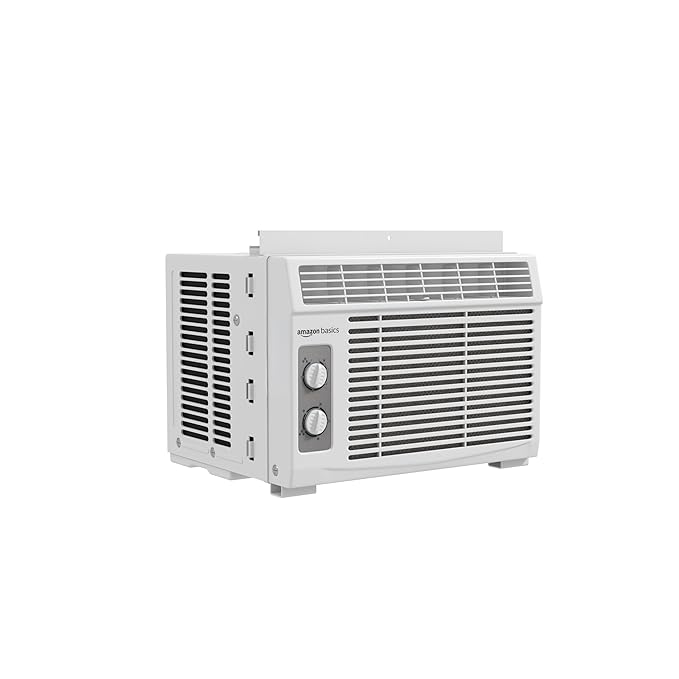
The controls are mechanical, meaning you get a dial, not a touchscreen. Some people love that. No app, no Wi-Fi, no Bluetooth. Just turn the knob and feel the cool air. It’s refreshingly simple, and honestly, that’s sometimes exactly what you need.
It fits standard double-hung windows, and the installation is pretty beginner-friendly. Most people get it set up in under 30 minutes. It comes with a window mounting kit, so you’re not scrambling for extra parts. That’s a win right there.
One thing to know: this is a basic unit. Don’t expect smart features or a sleep mode. But for the price, it cools your room well, runs quietly enough for sleep, and gets the job done every single summer night.
- BTU: 5,000
- Room size: Up to 150 sq ft
- Controls: Mechanical dial
- Installation: Easy, beginner-friendly
- Best for: Small bedrooms on a tight budget
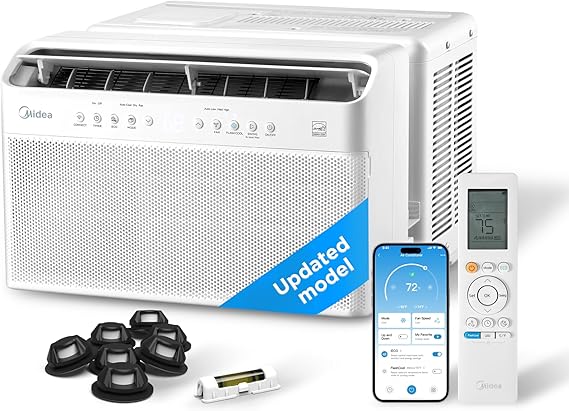
Midea 8,000 BTU U-Shaped Air Conditioner, The Best for Open Windows
This one is genuinely clever. The Midea U-shaped AC wraps around your window sash, so you can still open and close your window even while the AC is running. That’s huge if you like fresh air in the morning but cool air at night.
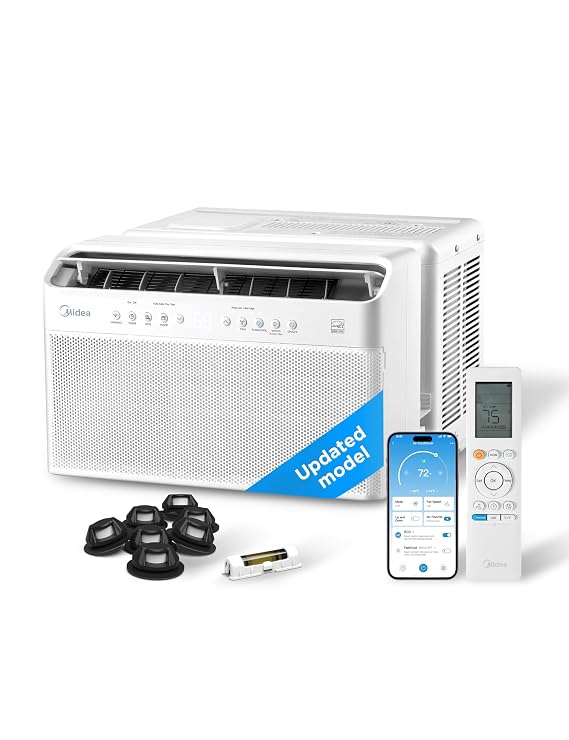
The inverter technology means the compressor doesn’t just stop and start constantly. It speeds up and slows down based on what the room actually needs. That keeps the temperature steady and cuts your electricity bill over time. Real energy savings, not just a marketing claim.
At 8,000 BTU, it handles rooms up to 350 square feet with ease. Big bedroom? No problem. It’s also surprisingly quiet. Midea says it runs as low as 32 decibels, which is barely above a whisper. Light sleepers, take note.
It connects to your phone via the Midea Air app, so you can schedule it, control it remotely, and even set a sleep mode. The installation is a bit different from regular window units because of the U-shape, but the instructions are clear and most people manage just fine.
- BTU: 8,000
- Room size: Up to 350 sq ft
- Controls: App + remote
- Noise level: As low as 32 dB
- Best for: People who want fresh air and cool air at the same time
Frigidaire 5,000 BTU Window-Mounted Air Conditioner, The Best Compact Option
Small room, small AC, big relief. The Frigidaire 5,000 BTU mini compact is built for bedrooms that don’t need a powerhouse. If your room is around 100 to 150 square feet, this little unit will cool it down fast and keep it that way.
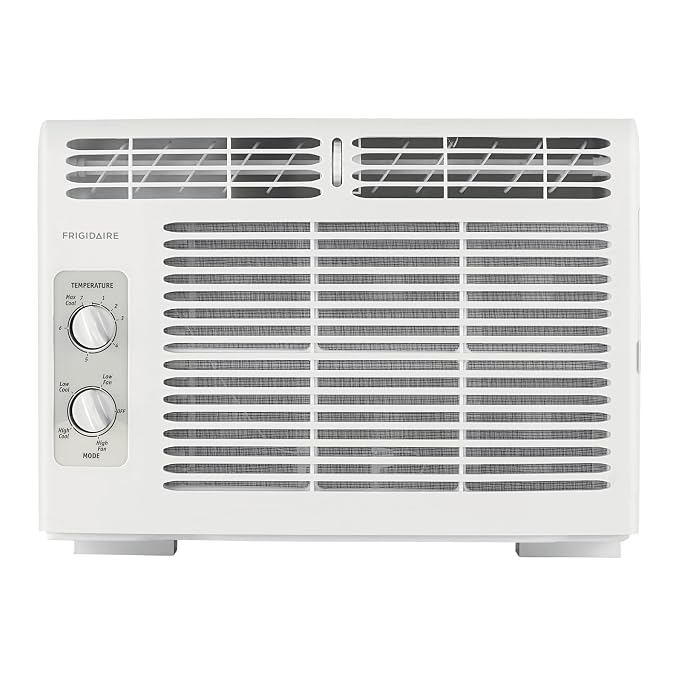
What makes Frigidaire stand out here is reliability. This brand has been making air conditioners for decades. You know what you’re getting: a well-built unit that cools efficiently and doesn’t quit on you after one summer. That kind of trust matters when you’re making a purchase.
The mechanical controls are easy to use. Two knobs, a few fan speed settings, and an adjustable thermostat. Nothing confusing. Your parents could figure it out. Installation fits most standard windows and takes maybe 20 to 30 minutes.
It’s not the flashiest AC on this list, but flash doesn’t cool your room. This one does the job well, stays quiet enough at night, and costs less than most options. Sometimes the most reliable choice is also the most boring one, and that’s perfectly fine.
- BTU: 5,000
- Room size: Up to 150 sq ft
- Controls: Mechanical
- Brand reliability: Very high
- Best for: Small bedrooms where simplicity matters
LG 6,000 BTU Window Air Conditioner, The Best Everyday Performer
LG makes solid stuff, and this 6,000 BTU window AC is a good example of that. It sits right in the sweet spot between too small and too powerful. Perfect for bedrooms up to 260 square feet. Most standard bedrooms fall right in that range.
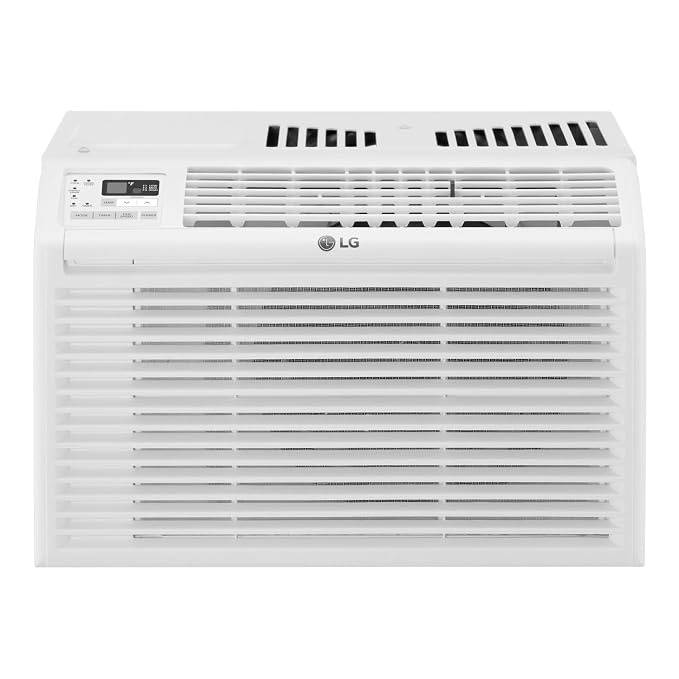
It has a washable filter, which is something a lot of people overlook when buying an AC. You don’t want to keep buying replacement filters every season. Pull this one out, rinse it off, put it back. Done. That saves you money and keeps the airflow strong.
The unit has three cooling speeds and three fan speeds. So you can set it exactly how you like it. Not too cold, not too warm. LG also built in a 24-hour timer, which is super helpful. Set it to cool the room before you even get home.
It’s not a smart unit, no Wi-Fi here, but it does come with a remote control. That’s enough for most people. The installation is standard, and LG includes a full window mounting kit. Quiet, reliable, and built to last more than just one summer.
- BTU: 6,000
- Room size: Up to 260 sq ft
- Filter: Washable and reusable
- Timer: 24-hour
- Best for: Mid-sized bedrooms where performance matters
Hisense 8,000 BTU Smart Inverter Window Air Conditioner, The Best Smart Pick
If you want your AC to work with your phone, your voice, and your schedule, the Hisense 8,000 BTU smart inverter is the one. It connects to Wi-Fi, works with Alexa and Google Assistant, and you can control it from anywhere with the app.

The inverter tech here does the same thing as the Midea, it adjusts cooling power based on the room’s needs instead of running at full blast all the time. That means lower energy bills and more consistent temperatures. Your room doesn’t swing between freezing and warm, it stays just right.
Hisense designed this one with a slim profile, which is great for windows with limited depth. The louvers move in multiple directions so you get better airflow coverage across the room. For a bigger bedroom, that matters a lot.
Sleep mode is built in, and it gradually adjusts the temperature through the night. It starts a bit cooler and warms up slightly toward morning, matching how your body naturally sleeps. That’s smart engineering that you’ll actually feel. Rooms up to 350 square feet are no problem for this one.
- BTU: 8,000
- Room size: Up to 350 sq ft
- Smart features: Wi-Fi, Alexa, Google Assistant
- Sleep mode: Yes, automatic
- Best for: Tech lovers who want full control
GE 6,000 BTU Window Air Conditioner, The Best All-Rounder
GE has been in homes for generations, and this window AC lives up to that name. The 6,000 BTU unit is a solid all-rounder for bedrooms up to 250 square feet. Not too big, not too small, just right for most people.
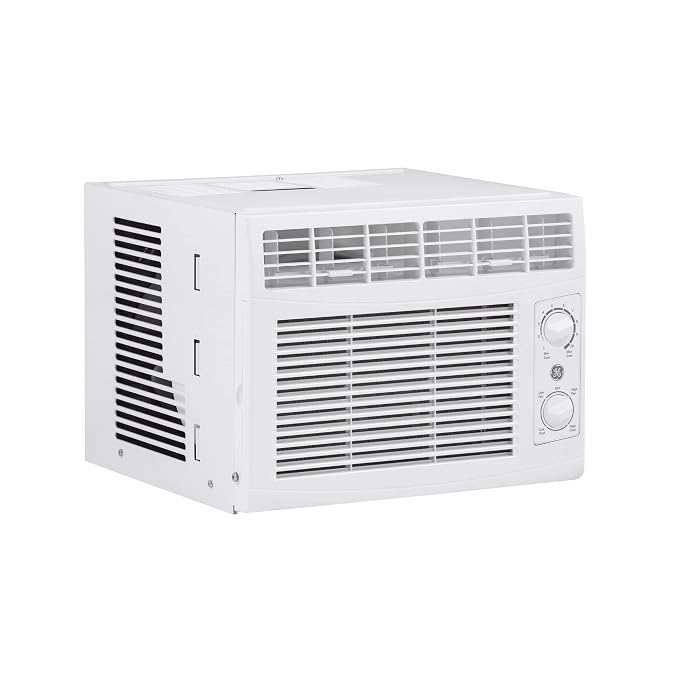
What stands out here is the installation kit. GE includes everything you need right in the box. The side panels, mounting hardware, all of it. No surprise trips to the hardware store. If you’ve never installed a window AC before, GE makes it as painless as possible.
The unit has three cooling speeds and a mechanical thermostat. Easy to understand, easy to use. There’s also a sleep mode setting that lets the unit run a bit warmer through the night, which is better for sleeping and also saves energy. Smart little feature.
GE builds this one to last. The build quality feels solid, and the brand backs it with good customer support if anything ever goes wrong. For a bedroom AC that works well, costs fairly, and lasts more than a season, this is a really dependable choice you won’t regret.
- BTU: 6,000
- Room size: Up to 250 sq ft
- Installation kit: Fully included
- Sleep mode: Yes
- Best for: First-time buyers who want something reliable and easy
I hope this guide helped you find the right AC for your bedroom. Whether you want something basic and budget-friendly like the Amazon Basics, or something smart and quiet like the Hisense inverter, there’s a perfect match on this list for you. Measure your room, check your window size, and pick the one that fits your life. Cool nights are closer than you think.
| Product | BTU | Room Size | Smart Features |
|---|---|---|---|
| Amazon Basics 5,000 BTU | 5,000 | Up to 150 sq ft | None |
| Midea 8,000 BTU U-Shape | 8,000 | Up to 350 sq ft | App + Remote |
| Frigidaire 5,000 BTU | 5,000 | Up to 150 sq ft | None |
| LG 6,000 BTU | 6,000 | Up to 260 sq ft | Remote + Timer |
| Hisense 8,000 BTU Smart | 8,000 | Up to 350 sq ft | Wi-Fi, Alexa, Google |
| GE 6,000 BTU | 6,000 | Up to 250 sq ft | Sleep Mode |
Things to Consider Before Buying Air Conditioner for Bedroom: A Complete Guide
Buying a bedroom AC sounds simple. You pick one, plug it in, and cool down. But a lot of people rush this decision and end up with a unit that’s too loud, too weak, or way too expensive to run every month. That’s a frustrating and costly mistake.
Knowing the right things to consider before buying air conditioner for bedroom can save you money, bad nights of sleep, and the headache of returning something that just didn’t work. Here’s what actually matters.
Room Size and BTU Rating
BTU stands for British Thermal Unit. It basically tells you how much cooling power an AC has. The bigger your room, the more BTU you need. Getting this wrong is one of the most common mistakes people make.
Too little BTU and your AC runs all night without ever really cooling the room down. Too much and it cools too fast, shuts off early, and leaves the air feeling humid and clammy. Neither situation is good for sleeping.
A rough guide: 5,000 BTU covers up to 150 square feet. 8,000 BTU handles around 350 square feet. Measure your room before you buy anything. Length times width gives you the square footage. That number tells you exactly where to start.
- Measure your room before shopping
- Match BTU to square footage as closely as possible
- Avoid oversized units, they create humidity problems
- Small rooms need 5,000 to 6,000 BTU, larger rooms need 8,000 or more
Window Type and Size
Most window ACs are built for double-hung windows, the kind that slide up and down. If your bedroom has a different style, like casement windows that crank open sideways, a standard unit simply won’t fit properly. This catches a lot of people off guard.
Check your window width before buying. Most units need a window opening between 23 and 36 inches wide. Some larger units need even more space. Always check the product specs and compare them to your actual window measurements before you order anything.
Also look at the window sill depth and how far the unit will stick out both inside and outside. In some apartments, there are rules about how far an AC can protrude. Worth checking before you commit.
- Measure your window width, height, and sill depth
- Standard units fit double-hung windows only
- Casement windows need special vertical AC models
- Check building rules if you live in an apartment
Energy Efficiency and Running Costs
The sticker price of an AC is only part of the story. The real cost is what it adds to your electricity bill every month. An inefficient unit can cost you way more over one summer than a slightly pricier efficient model would.
Look for the EER or CEER rating on the unit. Higher numbers mean better efficiency. Inverter ACs are especially efficient because they adjust their speed based on how much cooling is actually needed. They don’t just blast at full power and shut off. They stay steady, which saves energy.
If you run your AC every night for four or five months a year, that efficiency gap adds up fast. A unit with a CEER of 12 will cost noticeably less to run than one with a CEER of 9. Do the math before you buy.
- Check the EER or CEER rating before buying
- Higher rating means lower monthly bills
- Inverter models save the most energy over time
- Calculate your estimated running hours per season
Noise Level
This one matters more than most people realize. A loud AC in a small bedroom is miserable. You’re trying to sleep and all you hear is a rattling, humming machine three feet away. Not great.
Noise is measured in decibels (dB). Most window ACs run between 50 and 60 dB on high. That’s roughly the noise level of a normal conversation. Some units, especially inverter models, run as low as 32 to 42 dB on low settings. That’s barely noticeable.
If you’re a light sleeper, or if you share your bedroom with a baby or a partner who wakes easily, go for a unit that lists its noise level clearly. Brands like Midea and Hisense publish these numbers. If a product page doesn’t mention noise at all, that’s often not a good sign.
- Look for noise ratings under 50 dB for bedroom use
- Inverter ACs are generally quieter
- Check reviews specifically for noise complaints
- Sleep mode settings usually run quieter than standard modes
Smart Features vs. Simple Controls
Some ACs connect to Wi-Fi, work with Alexa or Google Assistant, and let you control everything from your phone. Others have two knobs and that’s it. Neither is wrong, it just depends on what you actually want.
Smart features are genuinely useful if you want to set a schedule, cool the room before you get home, or adjust the temperature without getting out of bed. But they also add cost. And if the app is poorly designed or the Wi-Fi drops, it becomes more frustrating than helpful.
Simple mechanical controls are reliable. Nothing to update, nothing to pair, nothing to troubleshoot. For a lot of people, especially those who just want to cool a room and sleep, that’s plenty. Ask yourself honestly how much you’ll actually use smart features before paying extra for them.
- Smart ACs work well if you want scheduling and remote control
- Mechanical controls are more reliable and easier to use
- Voice control (Alexa, Google) is a nice bonus, not a necessity
- Don’t pay for features you won’t use regularly
Installation and Maintenance
Installing a window AC isn’t complicated, but it does take some planning. Most units come with a mounting kit, side panels, and basic hardware. A standard installation takes about 20 to 45 minutes. You’ll want a second person to help lift the unit into place safely.
Check if the unit requires a standard 115V outlet or a special 230V one. Most bedroom ACs under 8,000 BTU run on standard outlets. Larger units sometimes don’t. Plugging into the wrong outlet is a real problem, so don’t skip this check.
Maintenance is also part of the long-term picture. Washable filters are a huge plus because you just rinse them every few weeks instead of buying replacements. Also check that the unit has a drain system or drainage hole so water doesn’t build up inside. A little upkeep goes a long way.
- Confirm your outlet voltage before buying
- Look for washable and reusable filters
- Check that a mounting kit is included in the box
- Plan for a helper on installation day, heavy units need two people
I hope this breakdown helps you feel ready to make a smart choice. Keeping all these things to consider before buying air conditioner for bedroom in mind, you won’t just buy an AC. You’ll buy the right one for your space, your habits, and your budget. Take your time, measure twice, and pick confidently.
| What to Check | Why It Matters | What to Do | Watch Out For |
|---|---|---|---|
| Room Size (sq ft) | Determines the BTU you need | Measure length x width before shopping | Oversized units cause humidity buildup |
| Window Type | Standard units only fit double-hung windows | Check if your window slides up and down | Casement windows need special AC models |
| BTU Rating | Too low won’t cool, too high creates dampness | Match BTU to room size closely | Don’t guess, always measure first |
| EER/CEER Rating | Higher rating means lower electricity bills | Look for CEER of 10 or above | Low-rated units cost more to run monthly |
| Noise Level (dB) | Loud units ruin sleep | Look for units under 50 dB for bedrooms | Avoid products that don’t list noise levels |
| Smart vs. Simple Controls | Affects usability and price | Choose based on how you actually live | Don’t pay for app features you won’t use |
| Outlet Voltage | Wrong voltage causes safety issues | Confirm 115V or 230V before buying | Never assume, always check the label |
| Filter Type | Affects maintenance cost and effort | Choose washable filters when possible | Disposable filters add ongoing cost |
Frequently Asked Questions (FAQs)
Is it okay to run a window AC all night in the bedroom?
Yes, it’s totally fine. Most modern window ACs are designed to run for long periods safely. Just make sure the filter is clean and the unit has proper airflow around it. Using a sleep mode or timer is a smart move because it helps the unit run efficiently and keeps your electricity bill from climbing too high overnight.
Is it better to get a higher BTU for a small bedroom?
Not necessarily. Bigger isn’t always better with air conditioners. If you buy a unit that’s too powerful for your room, it cools the space too fast, shuts off before removing humidity, and leaves the air feeling damp and clammy. Match the BTU to your room size as closely as you can. A 5,000 BTU unit is usually enough for rooms under 150 square feet.
Can I install a window AC by myself?
Yes, most window ACs are built for DIY installation. They come with mounting hardware and clear instructions. Standard double-hung windows work best. You’ll need a second pair of hands to lift the unit safely, especially for 8,000 BTU models that are heavier. Budget about 20 to 45 minutes for the whole process. It’s not complicated.
Can a window AC cool more than one room?
Technically, yes, but not well. A window AC is designed to cool the room it’s installed in. If your bedroom door is open and there’s good airflow, it might help the hallway a little. But don’t rely on it to cool your whole apartment. For that, you’d need a more powerful system or multiple units placed strategically.
Do I need a dedicated power outlet for my bedroom AC?
For smaller units like 5,000 to 6,000 BTU models, a standard 115V outlet usually works fine. But you should avoid plugging other high-draw appliances into the same circuit. For 8,000 BTU units, check the label carefully. Some require a dedicated outlet. Running too many things on one circuit can trip breakers and cause frustrating interruptions.
Is it worth paying more for an inverter AC?
If you run your AC a lot, yes, it’s worth it. Inverter ACs adjust their compressor speed instead of cycling on and off constantly. That means steadier temperatures, less noise, and lower energy bills over time. The upfront cost is higher, but if you’re cooling your bedroom every single night through a long summer, you’ll likely make that money back pretty quickly.
Do window ACs need maintenance during summer?
Yes, a little. Clean the filter every two to four weeks during heavy use. A clogged filter makes the unit work harder and cool less effectively. Also check that the drainage hole at the back isn’t blocked, since water needs somewhere to go. A quick visual check every few weeks keeps everything running smoothly and extends the life of your unit.
Can I use a smart AC without a smartphone?
Yes. All the smart ACs on this list still come with a physical remote control. You don’t need the app to use them. The app just adds extra convenience like scheduling and voice control. If you prefer to keep things simple, just use the remote. The core cooling function works perfectly fine without ever downloading anything.
Is a used window AC a good idea?
It’s risky. You don’t know how hard the previous owner ran it, whether the refrigerant is low, or if the compressor is struggling. A used unit might work fine for one season and then give out right when you need it most. If budget is the main concern, look for a new budget unit like the Amazon Basics or Frigidaire instead. New gives you a warranty and peace of mind.
Do window ACs work in casement windows?
Standard window ACs are built for double-hung windows that slide up and down. Casement windows that crank open to the side are a different story. Most regular units won’t fit properly. If you have casement windows, look specifically for casement or vertical window AC models. They’re less common but they do exist and are designed exactly for that window style.