As an Amazon Associate, I earn from qualifying purchases at no extra cost to you.
Best Microwaves for the Money (Buying Guide) 2026
 ByZayyan

Picking a microwave sounds easy. Until you’re staring at 40 options on Amazon and have no idea which one won’t die in six months. Most people overspend on features they never use, or go too cheap and end up with uneven heating and a loud, rattling mess. In this article I will show you the top 6 best microwaves for the money so you buy smart the first time.



Top 6 Best Microwaves for the Money You Can Buy Now
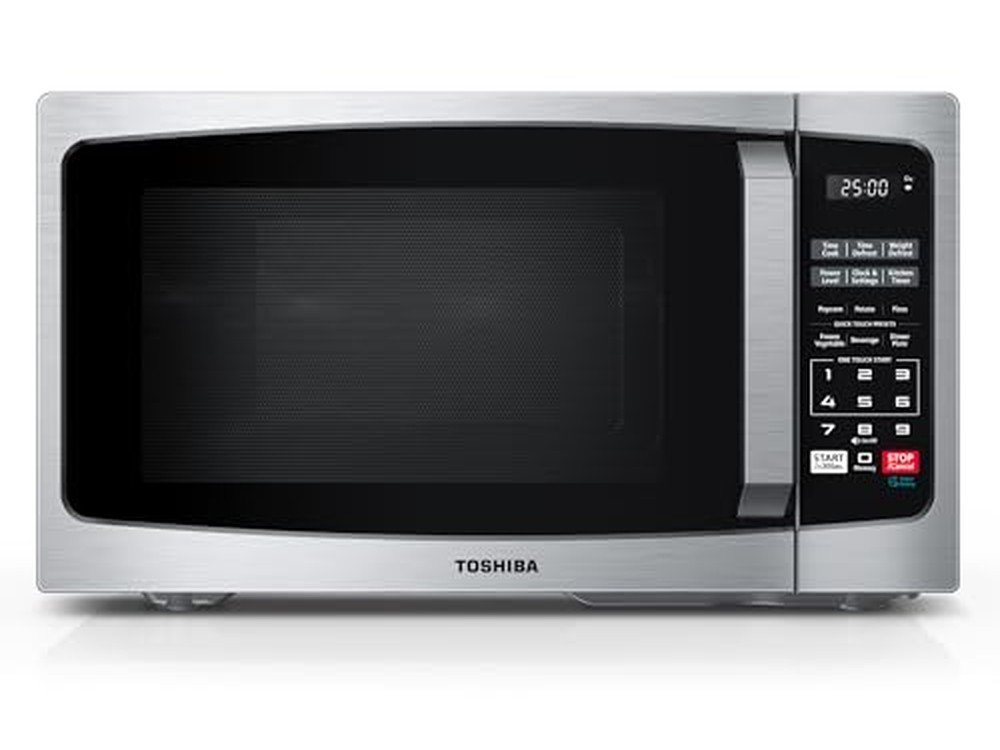
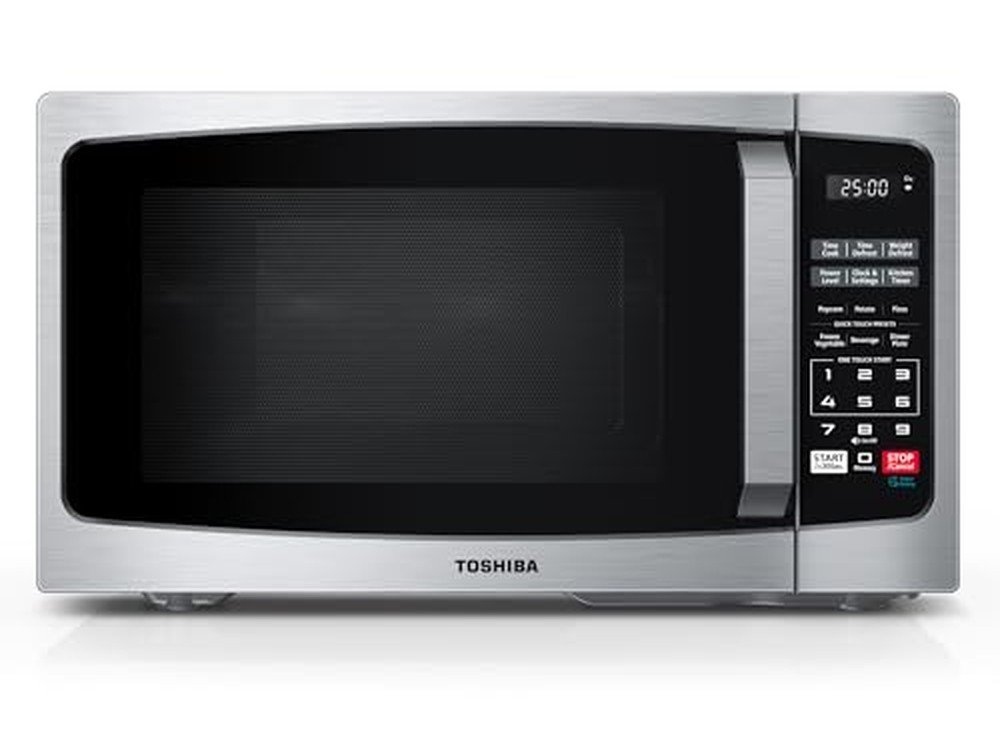
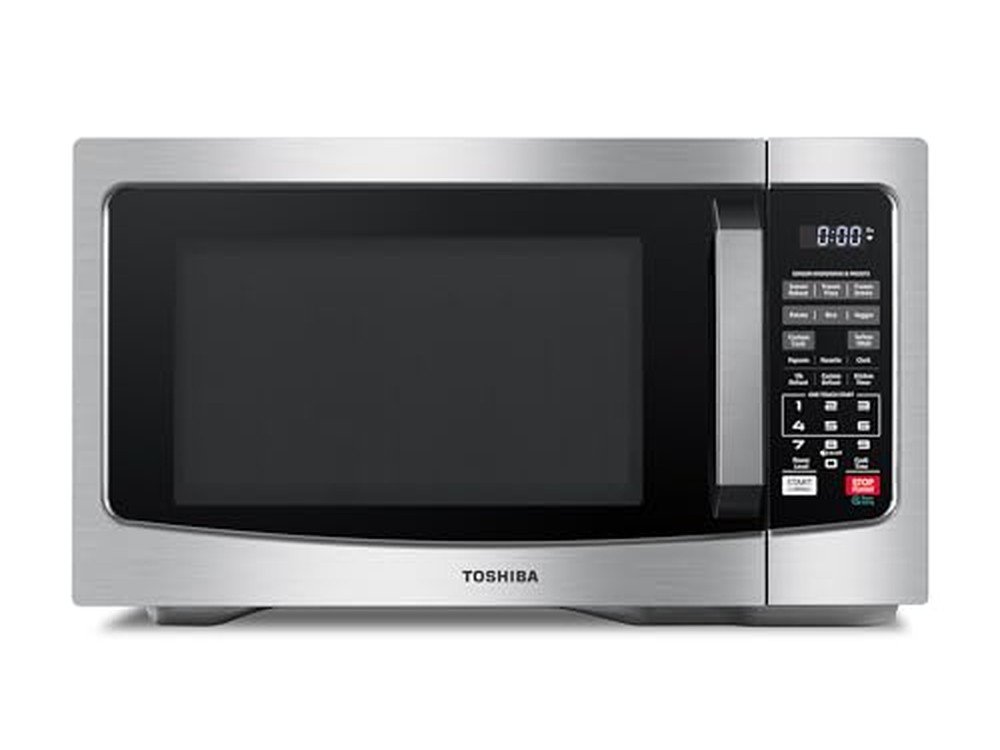
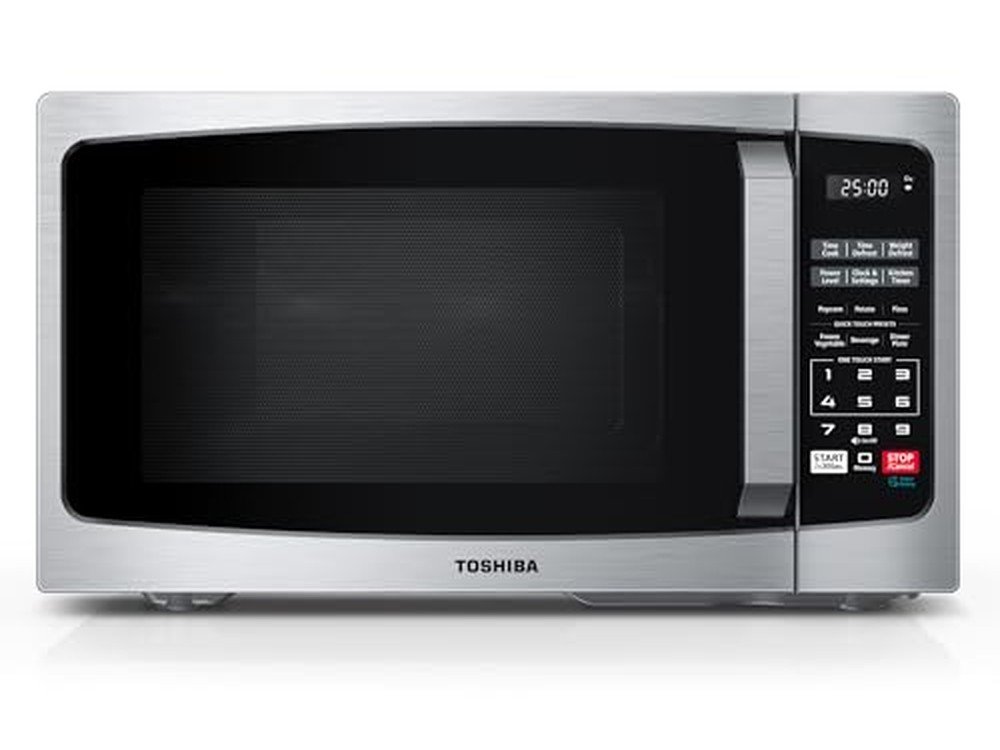
TOSHIBA EM131A5C-BS Countertop Microwave Oven – Best Overall Value
The Toshiba EM131A5C-BS is the one I keep recommending to people. It hits 1100 watts, which is more than enough for everyday cooking. You can defrost, reheat, and cook with speed, and the food actually heats evenly because of the smart sensor. That sensor detects steam from your food and auto-adjusts the time and power. No more overcooked edges with a cold center.
The interior is stainless steel, and it’s easy to wipe down. At 1.2 cubic feet, you can fit a standard dinner plate inside without any awkward tilting. The turntable spins smoothly and the door has a soft-close feel that holds up well after months of use. The controls are simple, with a number pad and one-touch buttons for common tasks like popcorn, pizza, and frozen veggies.
One thing I like about this model is the sound control feature. You can mute the beeping. If you’ve ever nuked leftovers at midnight and woken up the whole house, you know exactly why this matters. It also has an ECO mode that cuts standby power when you’re not using it.
At this price point, it’s hard to beat. You get solid power, smart heating, and a clean design. Perfect for a family kitchen or a studio apartment.
- 1100 watts of cooking power
- Smart sensor for auto-adjusted cook time
- Mute function for the beeping
- ECO mode to save standby energy
- 1.2 cubic feet interior, fits standard dinner plates
COMFEE’ EM720CPL-PMB Countertop Microwave Oven – Best Budget Pick
If your budget is tight but you still want something reliable, this is the one. The Comfee EM720CPL-PMB runs at 700 watts and has a 0.7 cubic foot cavity. Smaller than most, sure, but perfect for a dorm room, office break room, or a single person’s kitchen. It heats a mug of soup or a small bowl of oatmeal with no issue.
The design is clean and compact. It takes up minimal counter space, which is actually a big deal if your kitchen feels crowded already. There are five power levels, so you’re not stuck choosing between “off” and “full blast.” The timer goes up to 30 minutes, and the door has a push-button release that feels surprisingly solid for this price.
It also comes with multiple one-touch cooking presets. Six of them, covering things like pizza, beverage, and potato. You don’t have to guess the time or power level. Just press one button and let it go. Setup is fast, the instructions are clear, and it works right out of the box.
The honest downside? It’s not the best for larger meals or thick cuts of meat. But for basic everyday heating tasks, it punches well above its price tag. A great first microwave for someone just moving out.
- 700 watts, ideal for small spaces
- 0.7 cubic feet compact size
- Five power levels
- Six one-touch preset buttons
- Simple push-button door release
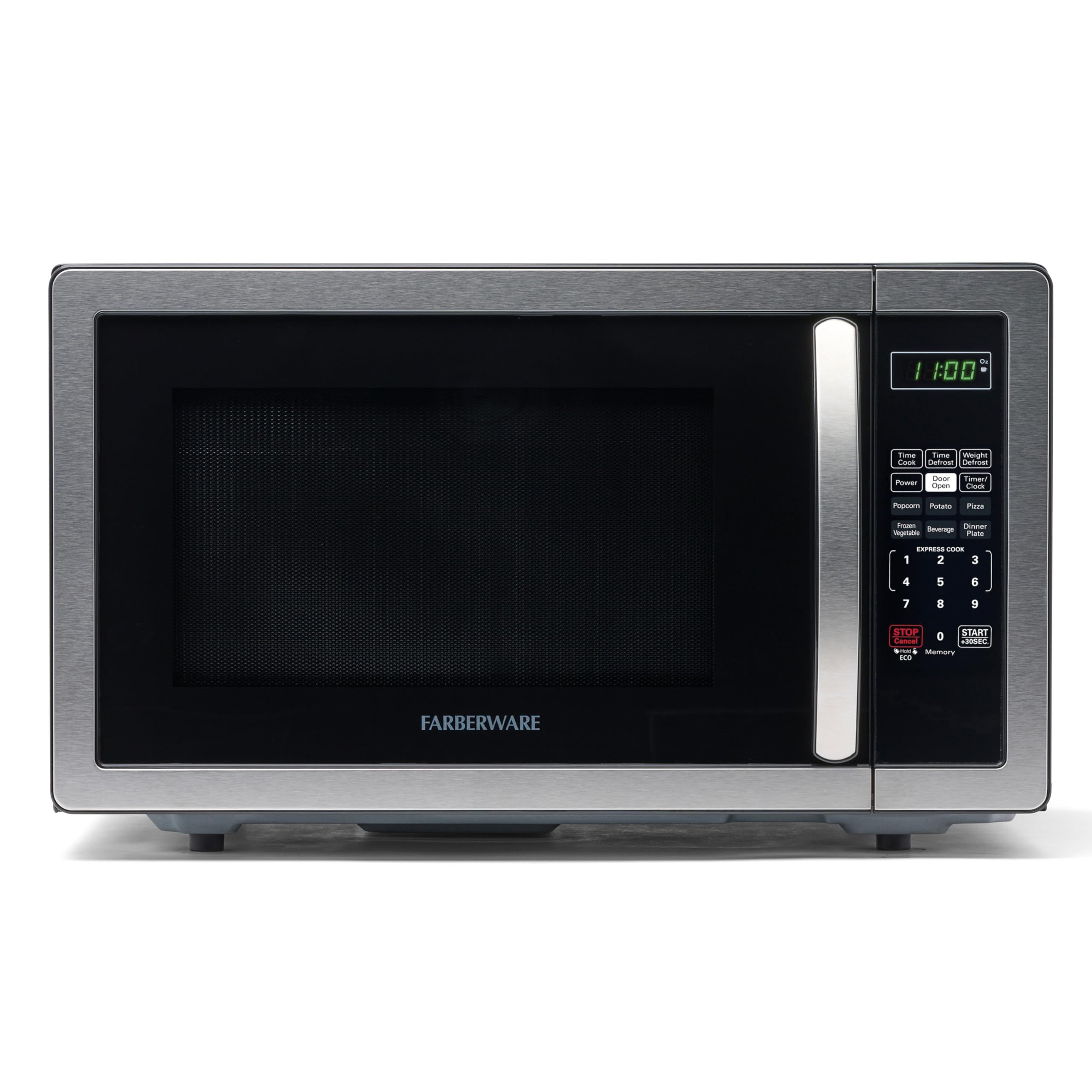
Farberware 1000 Watts Countertop Microwave Oven – Best Mid-Range Pick
The Farberware FMO11AHTBKB gives you that sweet spot between price and capability. At 1000 watts and 1.1 cubic feet, it handles most household cooking needs without taking up too much space or costing too much money. It’s a step up from budget models but still very affordable for most people.
The 10 power levels give you real control over how your food heats. That matters more than people think. Butter melts differently than soup. Fish needs less power than chicken. With only two or three levels, you’re always guessing. With ten, you actually dial it in. The defrost settings also work by weight, so you enter the food weight and it figures out the time automatically.
The interior has a removable glass turntable that’s dishwasher safe. That’s a small thing, but cleaning a microwave is one of those tasks people dread. Being able to pull the turntable out and toss it in the dishwasher makes life easier. The outer casing comes in a stainless steel look that fits most kitchen styles.
What stands out is how consistent it heats. No hot spots on the edges and cold center. Just even, steady heating throughout. For a family that reheats food daily, this reliability is the main selling point.
- 1000 watts, strong mid-range power
- 10 power levels for precise heating
- Weight-based auto defrost
- Dishwasher-safe glass turntable
- Stainless steel exterior design
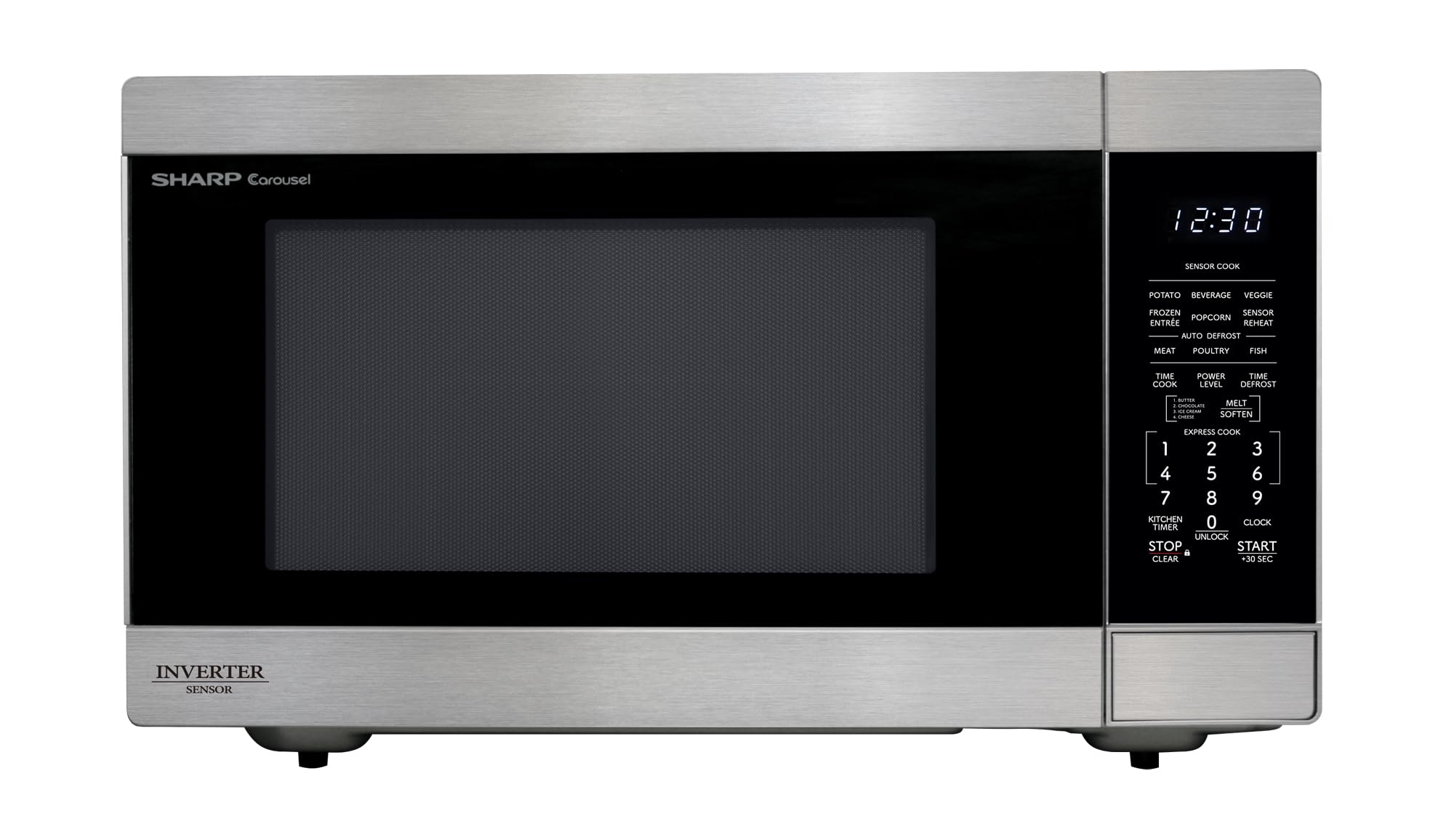
SHARP 1200 Watt Countertop Microwave Oven – Best for Power and Speed
This one is for people who want fast. The Sharp ZSMC2266KS runs at 1200 watts, which is about as high as residential countertop microwaves go. That extra power means shorter cook times and quicker reheating, which adds up when you’re cooking for a family or just always in a rush. You’ll notice the difference right away coming from a 700 or 1000-watt model.
At 2.2 cubic feet, this is a big microwave. You can fit a large casserole dish or a whole rotisserie chicken inside without any trouble. It has a removable turntable and the cavity is tall enough that you don’t have to contort your container to get it to spin properly. That alone saves frustration on a daily basis.
The control panel has 13 auto-cook menu options. Popcorn, frozen pizza, potato, soup, and more. Each one is preset with the right time and power, so you just press and go. The keypad is responsive and the digital display is bright and easy to read even from across the kitchen. It also has a child lock, which is something parents with curious kids appreciate.
The only real trade-off is size. This model takes up real counter space. But if you have the room and cook frequently, the speed and capacity make it worth every inch.
- 1200 watts, fastest option on this list
- 2.2 cubic feet, extra-large interior
- 13 auto-cook presets
- Child safety lock
- Bright, easy-to-read digital display
Emerson MW7601SL Countertop Microwave Oven – Best for Simple Use
Not everyone needs a microwave loaded with presets and sensor technology. Some people just want something that heats food without any fuss. The Emerson MW7601SL is exactly that. Simple, functional, and reliable. No overthinking required.
It runs at 700 watts with 0.7 cubic feet of interior space. The controls are as basic as it gets. A dial for time, a dial for power, and a start button. No digital display to confuse things. No complicated menu to scroll through. Just set the power, set the time, and press start. If you’ve helped an elderly parent or grandparent use a microwave and watched them struggle with the buttons, this is the model you get them next time.
The build quality feels solid for the price. The door latch is firm, the turntable runs quietly, and the exterior doesn’t show fingerprints easily. The chrome accent on the handle adds a small touch of style that keeps it from looking completely plain. It fits easily on a small countertop or inside a cabinet nook.
The Emerson is also one of the lightest models on this list, which makes moving it around easy. Good for dorms, guest kitchens, or anyone who just needs a simple, no-drama appliance that works every day.
- 700 watts, basic daily heating power
- Dial controls, no complicated digital menu
- 0.7 cubic feet compact size
- Quiet turntable operation
- Lightweight and easy to move
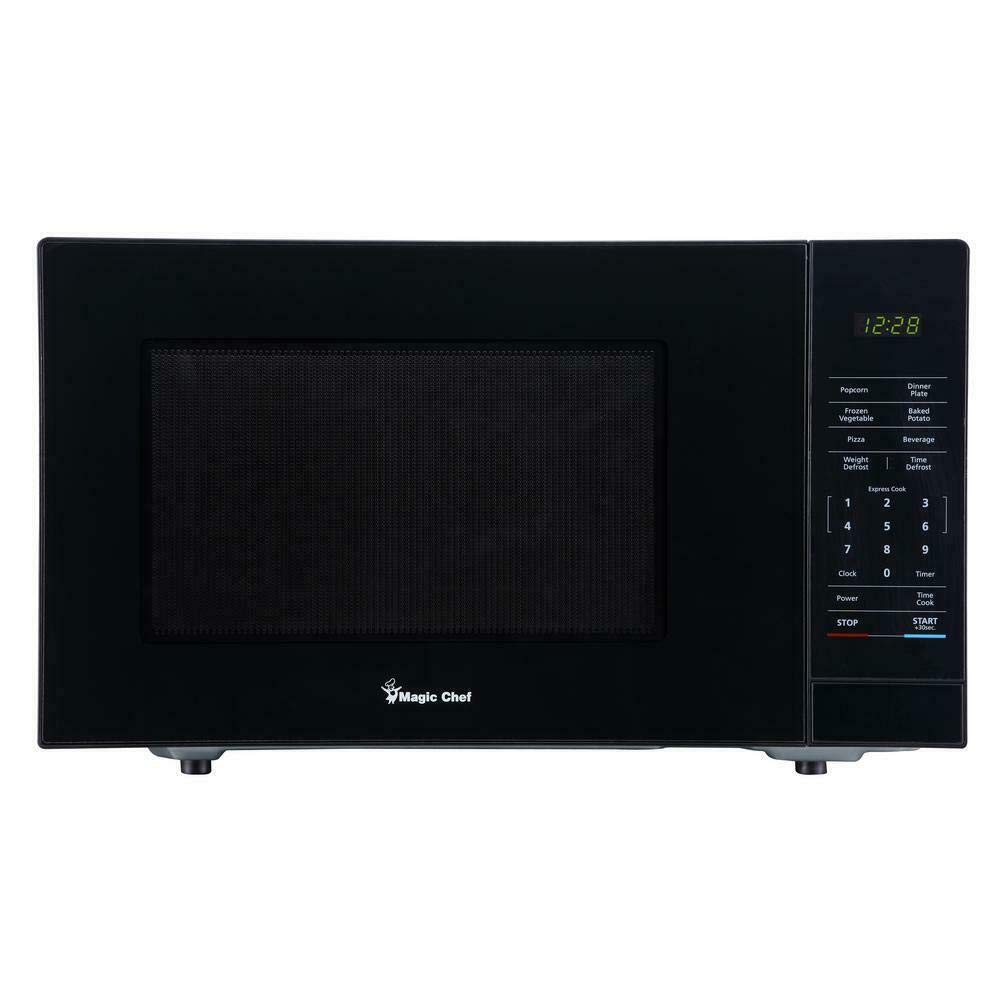
Magic Chef HMM1110B Countertop Microwave – Best for Everyday Family Use
The Magic Chef HMM1110B sits right in the middle of this list in the best way. It’s not the cheapest, not the most powerful, but it gets daily use right. At 1000 watts and 1.1 cubic feet, it covers reheating leftovers, cooking frozen meals, defrosting meat, and everything else a family does with a microwave on a regular weekday.
The six one-touch cooking programs handle the most common tasks automatically. You press “popcorn” and it figures out the rest. Same for beverages, pizza, frozen dinners, and a couple more. It also has a 30-minute timer and a kitchen timer function built in, which is something you don’t always get on basic models. That timer function turns the microwave into a handy cooking aid even when you’re not using it to heat food.
The interior is spacious enough to spin a wide dinner plate, and the stainless steel look fits in with most kitchens. The controls have a clean layout and the buttons respond well without being overly sensitive. It’s the kind of microwave you set up once and forget about, because it just works.
Magic Chef has been around for decades, and this model shows why people keep coming back to the brand. It’s honest about what it is. A solid everyday microwave at a fair price.
- 1000 watts, good everyday cooking power
- Six one-touch programs for common tasks
- Built-in kitchen timer function
- 1.1 cubic feet, fits standard dinner plates
- Clean stainless steel exterior look
I hope this guide makes your decision a lot easier. If you want the best all-around pick, go with the Toshiba. Need something budget-friendly? The Comfee or Emerson won’t let you down. Cooking for a big family and need speed and space? The Sharp is worth the investment. Whatever you pick from this list, you’re getting solid value. Stop overthinking it and go enjoy your food hot.
| Product | Wattage | Capacity | Best For | Key Feature |
|---|---|---|---|---|
| Toshiba EM131A5C-BS | 1100W | 1.2 cu ft | Overall best value | Smart sensor + mute function |
| COMFEE’ EM720CPL-PMB | 700W | 0.7 cu ft | Budget buyers | Compact size, 6 presets |
| Farberware FMO11AHTBKB | 1000W | 1.1 cu ft | Mid-range shoppers | 10 power levels, weight defrost |
| Sharp ZSMC2266KS | 1200W | 2.2 cu ft | Speed and capacity | Fastest heating, largest interior |
| Emerson MW7601SL | 700W | 0.7 cu ft | Simple, no-fuss use | Dial controls, lightweight |
| Magic Chef HMM1110B | 1000W | 1.1 cu ft | Everyday family use | Built-in kitchen timer |
Things to Consider Before Buying Microwaves for the Money (Complete Guide 2026)
You walk into a store or scroll through Amazon, and suddenly there are 50 microwaves staring back at you. Different wattages, different sizes, different prices. It gets confusing fast. And the worst part? Most people just grab whatever looks decent and hope for the best.
But buying a microwave without thinking it through means you could end up with one that’s too big for your counter, too weak for your food, or packed with features you’ll never touch. Knowing the right things to consider before buying microwaves for the money saves you from that mistake and gets you something you’ll actually be happy with every single day.
Wattage: The Number That Actually Controls Your Food
Wattage is basically your microwave’s engine. The higher it is, the faster and more evenly your food heats. A 700-watt microwave will get the job done, but it takes longer and sometimes leaves cold spots. A 1000 to 1200-watt model heats faster and more consistently. That difference matters most when you’re reheating a thick piece of chicken or defrosting a dense frozen meal.
If you’re a single person just warming up coffee or soup, 700 watts is plenty. But if you cook for a family, or you hate waiting around, go for at least 1000 watts. The heating time difference between 700 and 1100 watts can be 30 to 60 seconds per item. Every. Single. Time.
Watch out for microwaves that advertise high wattage but don’t maintain it consistently. Some budget models drop power during longer cook cycles. Read real user reviews, not just the spec sheet, before you buy.
- 700W works for basic solo use
- 1000W is the sweet spot for most households
- 1200W is best for speed and family-size meals
- Avoid models that list high wattage but have poor user feedback on heating
Interior Size: Make Sure Your Plates Actually Fit
This one sounds obvious, but people get it wrong all the time. A microwave with 0.7 cubic feet looks fine on the outside, but try fitting a standard 10-inch dinner plate inside and it won’t spin properly. That means uneven heating and a lot of frustration. Always check the interior dimensions, not just the overall unit size.
For one or two people, 0.7 to 0.9 cubic feet works well. For a family or if you regularly heat large dishes, aim for 1.2 cubic feet or more. The Sharp model on most buying guides has a 2.2 cubic foot cavity, which sounds huge, but it’s genuinely useful when you’re fitting a casserole dish or a large bowl of pasta.
Also think about height clearance inside the cavity. Some tall containers, like a large soup mug or a tall glass, won’t fit in shorter microwaves. Measure what you normally heat before you shop.
- 0.7 cubic feet: compact, good for singles or dorms
- 1.0 to 1.2 cubic feet: the standard for most homes
- 1.5 cubic feet and up: for families or frequent cooking
- Always check interior height, not just capacity
Power Levels: More Options Mean Better Control
Most people use microwaves on full power for everything. But that’s actually one of the reasons food comes out rubbery or overcooked. Lower power levels exist for a reason. Melting butter needs about 30 percent power. Defrosting meat works best at 50 percent. Reheating delicate leftovers like fish or rice does better at 70 percent.
A microwave with only three power levels gives you very little control. One with ten levels lets you match the power to the food. That’s a real difference in quality. Think about reheating a slice of lasagna at full power versus 70 percent. One gives you burnt edges and a cold center. The other heats it through evenly.
When you’re comparing models, look past the wattage and check how many power levels it offers. Budget microwaves sometimes cut corners here. It’s a small detail that has a big daily impact.
- 3 to 5 power levels: limited, not ideal
- 6 to 8 levels: decent for most users
- 10 levels: the best option for full control
- Match power level to food type for better results every time
Preset Programs: Helpful or Just Marketing?
Every microwave advertises preset cooking programs. Popcorn, pizza, potato, beverage, frozen dinner. Sounds useful. And honestly, for the most common tasks, they are. You press one button and it figures out the time and power automatically. That’s genuinely convenient when you’re tired and just want your food hot.
But watch out for microwaves that advertise 20 or 30 presets. Most of those extra programs are things you’ll never use. Preset number 17 for “shellfish reheating” is not going to change your life. What you actually need are the core six to eight presets that cover your daily routine.
Also, presets work best when you follow the portion guidelines. If a program says it works for a three-ounce bag of popcorn and you throw in a five-ounce bag, it’ll burn. The preset is calibrated to a specific amount. Keep that in mind so you don’t blame the microwave when it’s really a portion mismatch.
- Six to eight presets cover most daily needs
- More than ten presets is usually just filler
- Check that presets match the foods you actually eat
- Follow the portion size each preset is calibrated for
Turntable Quality: The Part Most People Ignore
The turntable is doing quiet, important work every time you heat something. It rotates your food so the microwaves hit it from all angles. Without that rotation, you get hot spots on one side and a cold center on the other. A good turntable runs smoothly, quietly, and handles heavier dishes without straining.
Cheap turntables wobble, squeak, or stop spinning when a heavier dish sits on them. That’s a daily annoyance. The glass plate should feel solid and sit flush on the roller ring underneath. If it rattles or wobbles when you spin it by hand in the store, that’s a red flag.
Also check whether the turntable is dishwasher safe. Cleaning a microwave is already one of those chores people put off. If you can just pull the turntable out and toss it in the dishwasher, you’re much more likely to actually keep the microwave clean.
- Glass turntable should feel solid, not wobbly
- Dishwasher-safe turntables make cleaning easy
- Avoid models with noisy or uneven turntable rotation
- Test the spin by hand if you’re buying in a store
Build Quality and Long-Term Reliability: Buy Once, Not Twice
A microwave that costs a little more and lasts eight years is a better deal than a cheap one you replace after two. This is where brand reputation actually matters. Toshiba, Sharp, Farberware, and Magic Chef have been around long enough that you can find real user reviews from people who’ve owned their models for three, four, or five years.
Look at the door latch specifically. The door is the part that takes the most wear on any microwave. It opens and closes dozens of times a day. A flimsy latch that feels loose after a few months is a sign the whole unit won’t hold up. Same goes for the keypad, especially on models with membrane-style buttons that can stop responding over time.
Stainless steel interiors are easier to clean and resist staining better than painted ones. The exterior finish matters too, but mostly for looks. Just make sure whatever model you choose has a solid physical feel and real user reviews that mention durability, not just first impressions.
- Check door latch quality before buying
- Stainless steel interior lasts longer and cleans easier
- Read reviews from users who’ve had the model for 1 or more years
- Brands with long track records are generally safer bets
I hope these things to consider before buying microwaves for the money give you a real edge the next time you shop. You don’t need to overthink it, but a few minutes of checking wattage, size, and build quality can save you from a frustrating purchase. Buy with purpose and you’ll get a microwave that works well for years.
| Factor | What to Check | Recommended Range | Watch Out For |
|---|---|---|---|
| Wattage | Power output listed in specs | 1000W to 1200W for most homes | Models that drop power during longer cook cycles |
| Interior Size | Cubic feet and actual interior dimensions | 1.0 to 1.2 cu ft for households | Capacity listed without interior height or width |
| Power Levels | Number of selectable power settings | 8 to 10 levels for best control | Budget models with only 3 to 5 levels |
| Preset Programs | Number and type of one-touch programs | 6 to 8 programs covering daily tasks | Overcrowded preset menus with rarely used options |
| Turntable Quality | Glass plate feel, rotation smoothness, dishwasher safe | Solid glass plate, quiet rotation | Wobbly or noisy turntables under heavier dishes |
| Build Quality | Door latch, button response, interior material | Stainless steel interior, firm latch | Membrane keypads that fade, loose doors after light use |
| Brand Reputation | Years on market, volume of long-term user reviews | Established brands with 3 plus year reviews | New or unknown brands with only short-term feedback |
| Size and Fit | Exterior dimensions vs your counter space | Measure counter before buying | Units that look compact outside but are even smaller inside |
Frequently Asked Questions (FAQs)
Is it worth spending more on a higher-watt microwave?
Yes, in most cases it is. A 1200-watt microwave heats food significantly faster than a 700-watt one. That time difference adds up every day. If you’re cooking full meals or feeding a family, the extra wattage saves you real time. But if you’re just heating soup or coffee solo, a 700-watt model works perfectly fine and costs less upfront.
Is it safe to run a microwave with nothing inside?
No, you should never do this. Running a microwave empty can damage the magnetron, which is the component that generates the heat. Without food or water to absorb the microwaves, the energy bounces around and gets absorbed by the appliance itself. Even a short empty run can shorten the life of your microwave significantly. Always put something in there, even just a cup of water.
Can I use metal containers in any of these microwaves?
No. Metal blocks and reflects microwaves, which causes arcing, sparks, and can damage the appliance. That includes aluminum foil, stainless steel bowls, and containers with metallic trim or lids. Always use microwave-safe glass, ceramic, or plastic containers. If a container doesn’t say “microwave safe” on the bottom, don’t risk it. It takes two seconds to check and saves you from a potential fire.
Can I reheat pizza in a microwave and keep it crispy?
Sort of. Standard reheating makes pizza soggy because the moisture has nowhere to go. But there’s a trick: put a glass of water in the microwave with the pizza slice. The water absorbs some of the microwave energy and keeps the cheese from going rubbery. You won’t get it as crispy as an oven or air fryer, but it’s much better than soggy. A lower power level and longer time also helps.
Do I need a turntable in my microwave?
Yes, for most people it really matters. The turntable rotates food so it heats more evenly from all sides. Without it, you’d get hot spots and cold centers constantly. Some higher-end models replace the turntable with a different even-heating system, but for any model on this list, the turntable is doing real work. Keep it clean and make sure it spins freely every time you use the microwave.
Is it okay to use a microwave every day for cooking?
Absolutely. Microwaves are designed for daily use and can handle it for years. The key is not misusing them, like running them empty, using non-safe containers, or overloading them with dense frozen blocks without defrosting first. With normal use and basic care, a good microwave can easily last 8 to 10 years. The ones on this list all come from brands with solid track records for durability.
Can I defrost meat safely in a microwave?
Yes, but you need to cook it right after. Microwave defrosting partially warms the meat, which means some areas may start to cook slightly. Bacteria multiply in that temperature range. So once you defrost in the microwave, you need to cook the meat immediately. Don’t defrost and then leave it in the fridge for later. The weight-based defrost on the Farberware and the one-touch settings on other models make this process much easier and more reliable.
Do I need Wi-Fi or smart features in a microwave?
Honestly, probably not. Smart microwaves that connect to apps and voice assistants exist, but most people never use those features after the first week. What you actually use every day is the power level, the timer, and maybe a preset or two. Spending extra for smart features rarely pays off in a microwave. Every model on this list skips the gimmicks and focuses on what actually matters, and that’s heating your food well and reliably.
Is it better to buy a compact or full-size microwave?
It depends on your space and how you use it. Compact models like the Comfee and Emerson are great for small kitchens, dorm rooms, or single users. Full-size models like the Sharp give you more room for larger dishes and faster heating. Measure your counter space first. Then think about what you typically heat, a mug of coffee needs a very different microwave than a family-size casserole dish.
Can a microwave replace an oven for basic cooking?
For some things, yes. You can cook scrambled eggs, steam vegetables, make mug cakes, melt butter, cook oatmeal, and reheat almost anything in a microwave. But it can’t brown or crisp food the way an oven does. A microwave cooks with moisture, so things like roasted chicken, baked bread, or anything with a crust need an oven or air fryer. Think of the microwave as a speed tool for everyday tasks, not a full replacement for your oven.