As an Amazon Associate, I earn from qualifying purchases at no extra cost to you.
6 Best Mini Fridge with Freezer (Buying Guide) 2026
 ByZayyan

Finding the right mini fridge is harder than it looks. You’d think it’s simple, but then you’re staring at 40 options on Amazon, unsure which one won’t die in six months or turn your food into a block of ice. I’ve been there. In this article I will show you the top 6 best mini fridge with freezer options worth your money right now.
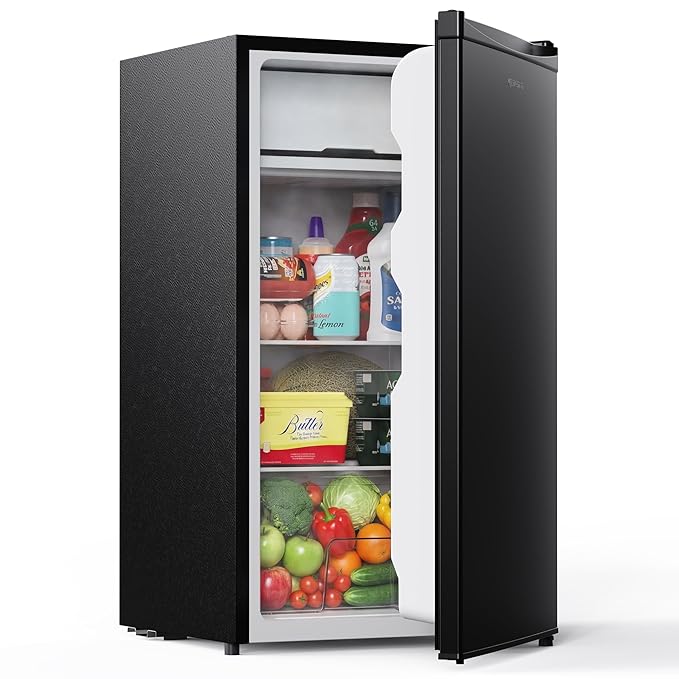
Top 6 Best Mini Fridge with Freezer You Can Buy Now
Upstreman 3.2 Cu.Ft Mini Fridge with Freezer, Best Budget Pick for Small Spaces
The Upstreman BR321 punches way above its price tag. For a budget fridge, it keeps things cold consistently, and that’s honestly all most people need. It holds 3.2 cubic feet, which is enough for drinks, snacks, leftovers, and a few frozen meals. Not huge, but not tiny either.
The separate freezer compartment actually works. A lot of cheap mini fridges have a freezer section that’s really just a slightly colder shelf. This one gets cold enough to keep ice cream solid and freeze meat short-term. That’s a real win at this price.
One thing you’ll love is the adjustable thermostat. You can dial it up or down depending on what you’re storing. Keeping beer? Go a little warmer. Storing insulin or produce? Crank it cooler. That flexibility matters more than people realize.
It runs quietly too. If you’re putting this in a bedroom or home office, you won’t hear it humming all night. The reversible door is a bonus since you can open it from either side depending on where you set it up. Solid pick for dorm rooms, offices, or a bedroom setup.
- Capacity: 3.2 Cu.Ft
- Separate freezer: Yes
- Noise level: Low
- Reversible door: Yes
- Best for: Budget buyers, dorms, small rooms
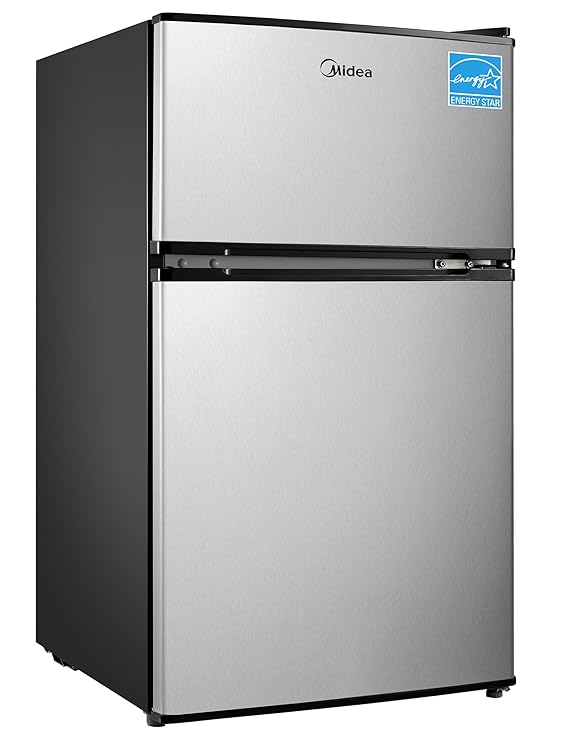
Midea WHD-113FSS1 Double Door Mini Fridge with Freezer, Best for Clean Looks and Real Performance
The Midea WHD-113FSS1 is a double-door design, and that alone makes it feel more like a real fridge. The freezer sits on top, the fridge section is below, and they’re fully separate. No sharing cold air, no weird temperature swings. Everything stays where it should.
Stainless steel finish gives it a premium feel. If you care about how your space looks, this one fits right in. It doesn’t scream “cheap dorm fridge.” It looks like something you’d put in a studio apartment and actually feel good about.
The fridge section has real shelves, a crisper drawer, and door storage. That’s more organization than most mini fridges offer. You can actually arrange your food like a normal person instead of just tossing everything in and hoping for the best.
Energy efficiency is another strong point here. Midea builds fridges that don’t eat up your electricity bill, and this model is no exception. It runs efficiently without sacrificing cooling power. If you’re renting and watching your monthly costs, that matters. Great for apartment living, small kitchens, or anyone wanting a real fridge experience in a smaller size.
- Capacity: 4.5 Cu.Ft
- Double door design: Yes
- Finish: Stainless steel
- Crisper drawer: Yes
- Best for: Apartments, aesthetics-conscious buyers
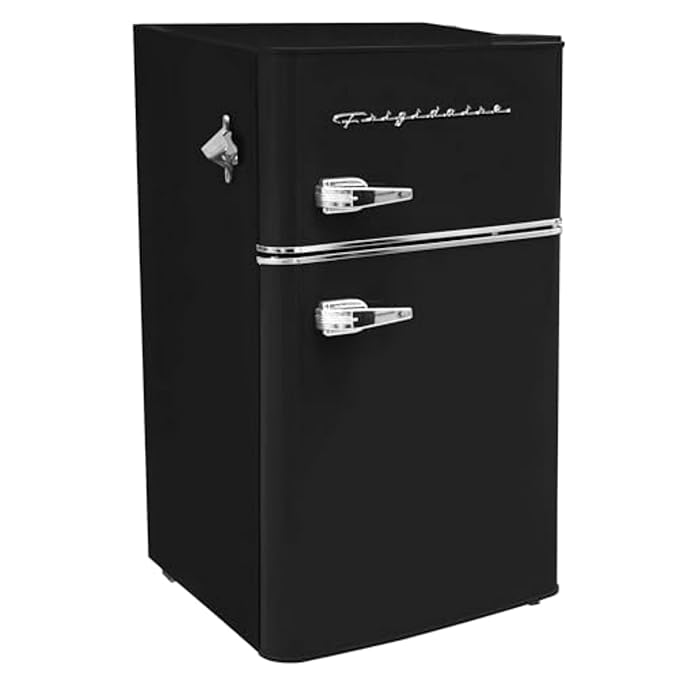
Frigidaire EFR840 Retro Mini Fridge with Freezer, Best for Style Plus Serious Cooling
The Frigidaire EFR840 is honestly a head-turner. That retro design stands out in any room. It comes in a bold black finish with chrome accents and rounded edges that feel straight out of the 1950s. If you want a fridge that looks cool and keeps things cool, this is it.
But don’t let the style fool you into thinking it’s all looks. The EFR840 has a real, separate top freezer. It gets cold enough to store frozen meals and make ice. For a retro-style fridge, that’s impressive. A lot of style-focused fridges cut corners on actual performance. Frigidaire didn’t.
Inside you get adjustable shelving, door storage, and a full-width freezer section. The layout is smart and easy to use. Nothing feels cramped or awkward. You can fit a good amount of food in here without playing Tetris every time you open the door.
It’s a Frigidaire, so you’re also getting a brand that has been making fridges for decades. That history means something. Parts are easier to find, customer support is more reliable, and build quality tends to be more consistent. Great for game rooms, studio apartments, or anyone who wants a fridge with real personality.
- Capacity: 8.7 Cu.Ft
- Retro design: Yes
- Freezer: Full-width top freezer
- Brand reliability: High
- Best for: Style lovers, game rooms, studio apartments
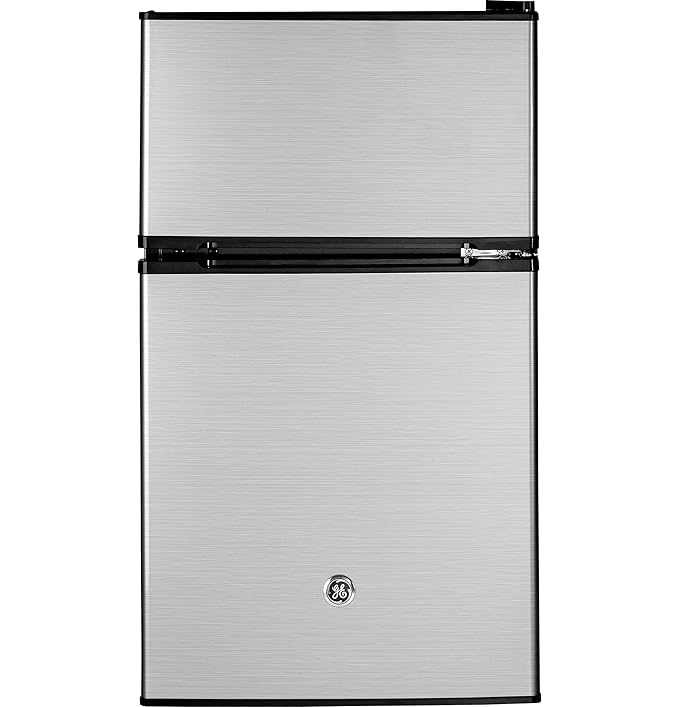
GE 3.1 Cubic Ft. Mini Fridge with Freezer, Best Brand Name You Can Trust
GE has been making appliances for over 100 years. That’s not a small thing. When you buy a GE fridge, you’re getting decades of engineering behind a product that’s meant to last. The GE 3.1 Cu.Ft mini fridge is a simple, reliable option that just works.
The freezer compartment sits inside the main section but stays cold enough for basic freezing needs. It’s not a fully separate unit, but it handles ice, frozen snacks, and short-term meat storage just fine. For most people using a mini fridge, that’s plenty.
Adjustable shelving gives you the flexibility to move things around. Need to fit a tall bottle? No problem. Want to store smaller items on multiple levels? Easy. That kind of flexibility makes daily use much more pleasant.
It’s also quiet and energy efficient. GE designs this model to use less power without making your food suffer for it. The simple, clean design fits in almost any space without looking out of place. No flashy retro style, just a dependable fridge that does what it’s supposed to do every single day. A great pick if you trust brand names and want something low-maintenance.
- Capacity: 3.1 Cu.Ft
- Brand: GE (100+ year legacy)
- Adjustable shelving: Yes
- Energy efficient: Yes
- Best for: Brand-loyal buyers, offices, reliability seekers
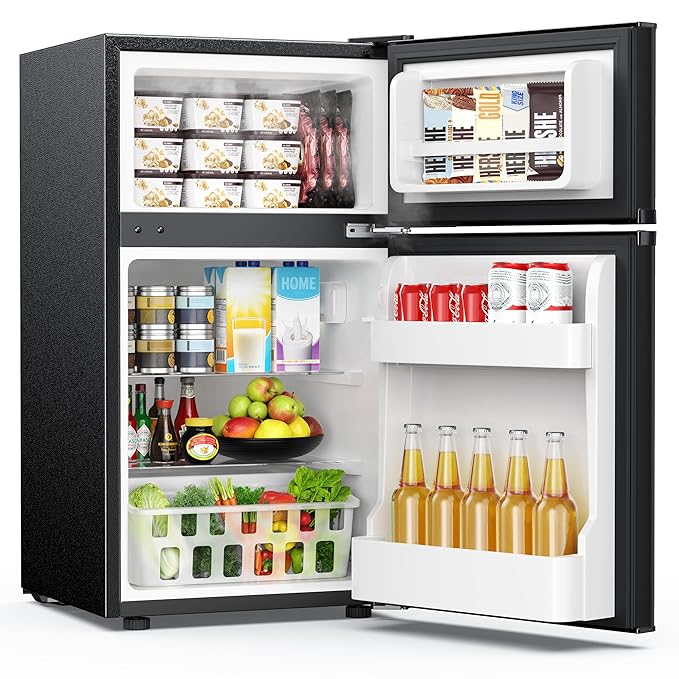
EUHOMY 3.2 Cu.Ft Mini Fridge with Freezer, Best for Apartments and Everyday Use
The EUHOMY mini fridge is one of those products that surprises you. It looks basic at first glance, but once you start using it, you realize how well thought-out it is. Everything from the layout to the temperature control feels practical and user-friendly.
The separate freezer compartment is a genuine freezer, not just a cold shelf. It gets down to real freezing temperatures, which means you can actually store frozen food in there long-term. That’s a big deal when you’re living in a small apartment and relying on this as your main fridge.
Temperature control is easy. The dial is simple to adjust, and the fridge responds quickly. You won’t spend days waiting for it to reach the right temperature after changing the setting. It stabilizes fast, which is great when you need consistent cooling for things like medication or baby formula.
The fridge section has decent storage with door shelves and a full main compartment. It’s compact but smartly designed so you don’t feel like you’re wasting space. It also runs quietly, which is a must if you’re in a small apartment where noise echoes. Solid all-around performer for everyday apartment life.
- Capacity: 3.2 Cu.Ft
- Separate freezer: Yes
- Temperature response: Fast
- Noise level: Low
- Best for: Apartments, everyday use, renters
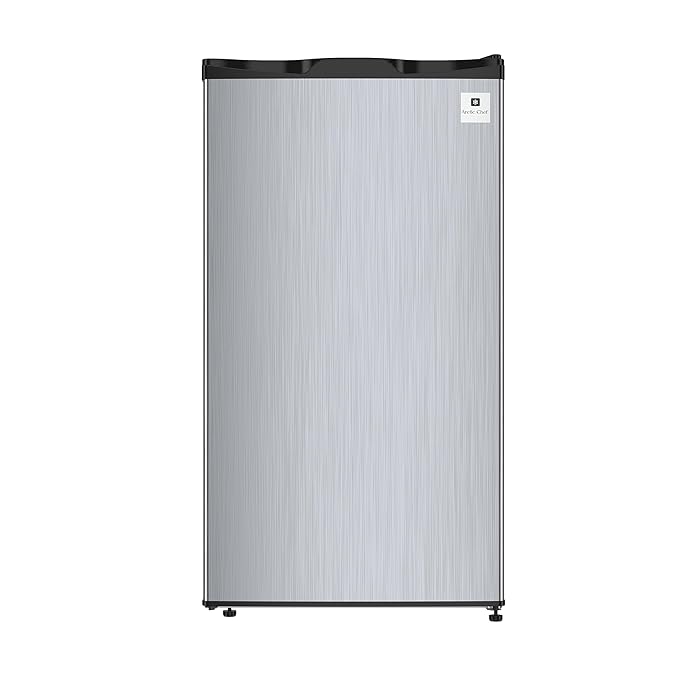
ARCTIC CHEF 3.2 Cubic Feet Mini Fridge with Freezer, Best for Versatile Placement and Long-Term Use
The ARCTIC CHEF RFR322 doesn’t get as much attention as it deserves. It’s a well-built little fridge that covers all the basics and then adds some extras that make everyday life easier. If you want something reliable without spending a lot, this is worth a serious look.
The freezer compartment works well for short to medium-term storage. Ice stays frozen, leftovers hold up, and frozen snacks survive just fine. It’s not a deep freeze, but it’s more than enough for a mini fridge setup. Consistent cooling is the name of the game here, and ARCTIC CHEF delivers.
The reversible door is one of the standout features. Whether your space is set up on the left or right, you can adjust the door swing to fit. That kind of flexibility is surprisingly rare and genuinely useful when you’re working with a tight room layout or an awkward corner.
Adjustable temperature control lets you customize how cold things get. The thermostat is responsive and easy to use. The platinum silver finish also looks clean and modern, so it doesn’t look cheap sitting in your space. It’s a fridge that works hard quietly and fits in anywhere you put it. Great for long-term daily use.
- Capacity: 3.2 Cu.Ft
- Reversible door: Yes
- Finish: Platinum silver
- Thermostat: Adjustable
- Best for: Versatile placement, long-term use, tight spaces
I hope this breakdown helps you stop second-guessing and just pick the fridge that fits your life. If you’re on a budget, go with the Upstreman. Want something that looks great in an apartment? The Midea or Frigidaire retro is your answer. Need a trusted brand? GE won’t let you down. Just match the fridge to your real daily needs, and you’ll be happy with your pick.
| Product | Capacity | Separate Freezer | Best For |
|---|---|---|---|
| Upstreman BR321 | 3.2 Cu.Ft | Yes | Budget buyers, dorms |
| Midea WHD-113FSS1 | 4.5 Cu.Ft | Yes (double door) | Apartments, aesthetics |
| Frigidaire EFR840 | 8.7 Cu.Ft | Yes (top freezer) | Style lovers, game rooms |
| GE 3.1 Cu.Ft | 3.1 Cu.Ft | Partial | Brand-loyal, offices |
| EUHOMY 3.2 Cu.Ft | 3.2 Cu.Ft | Yes | Renters, everyday use |
| ARCTIC CHEF RFR322 | 3.2 Cu.Ft | Yes | Tight spaces, long-term |
Things to Consider Before Buying Mini Fridge with Freezer: A Complete Buying Guide 2026
Buying a mini fridge sounds easy until you’re standing in front of a dozen options and have no idea which one actually fits your life. Too small and you’re frustrated. Too noisy and you can’t sleep. Wrong type and food spoils faster than it should.
There are real things to consider before buying a mini fridge with freezer that most people skip over entirely. Size, cooling type, noise, energy use, these all matter more than the price tag. Get them right and you’ll love your fridge. Get them wrong and you’ll be back on Amazon in six months.
Size and Capacity: Pick What Actually Fits Your Space
First, measure your space before you do anything else. Seriously. A fridge that’s one inch too wide or too tall causes real problems. You’d be surprised how many people skip this step and end up returning perfectly good fridges because they didn’t fit the spot.
Mini fridges usually range from 1.7 to 4.5 cubic feet. A 1.7 Cu.Ft unit is great for drinks and a few snacks. A 3.2 Cu.Ft model handles a week’s worth of groceries for one person. If you’re using it as your only fridge in a studio apartment, go for 4 Cu.Ft or more.
Think about what you’ll actually store in it. A college student storing energy drinks needs something different from someone storing meal preps and produce. Match the size to your real daily habits, not just the space on the floor.
- Measure height, width, and depth before buying
- 1.7 to 2.5 Cu.Ft works for drinks and snacks only
- 3.0 to 4.5 Cu.Ft suits daily grocery use for one person
- Always leave 2 to 3 inches on each side for ventilation
Freezer Type: Separate vs. Shared Compartment
Not all freezers are equal. Some mini fridges have a tiny freezer shelf inside the main compartment. Others have a fully separate freezer section with its own door. That difference matters a lot, depending on what you need.
A shared compartment freezer sits inside the fridge behind a small door or panel. It gets cold but not always cold enough to freeze things solid. Think ice trays, maybe a frozen pizza. Don’t count on it for long-term meat storage or actual frozen meals. It often causes frost buildup in the main fridge section too.
A separate freezer section, like the kind you’d see on the Midea WHD-113FSS1 with its double-door design, gives you true freezing temperatures. Meat stays frozen. Ice cream stays solid. And your fridge section stays unaffected. If freezer space is important to you, pay the little extra for a fully separate compartment.
- Shared freezer shelf: basic freezing, not great long-term
- Separate freezer door: real freezing temperatures, more reliable
- Double-door models give the best separation of cold zones
- Check the freezer temperature rating before buying
Noise Level: This Matters More Than You Think
Nobody talks about noise until it’s 2 AM and the fridge is humming like a small engine next to their bed. If you’re putting a mini fridge in a bedroom, dorm room, or home office, noise is a big deal. And it’s something most product listings bury in the fine print.
Look for decibel ratings in the specs. Anything under 40 dB is considered quiet. Most good mini fridges fall between 35 and 45 dB. That’s roughly the sound of a quiet library. Above 50 dB starts to feel noticeable, especially at night in a small room.
Compressor-based fridges run in cycles. They kick on, cool down, and turn off. That cycling noise is what most people hear at night. Thermoelectric fridges run silently but don’t cool as effectively. If quiet operation is your top priority and you don’t need powerful freezing, a thermoelectric model might suit you better.
- Look for decibel ratings under 40 dB for quiet spaces
- Compressor fridges cycle on and off, which creates noise bursts
- Thermoelectric models run silently but cool less powerfully
- Read user reviews specifically mentioning noise before buying
Energy Efficiency: Watch Your Electricity Bill
A mini fridge runs 24 hours a day, 7 days a week. That adds up. Most people don’t think about it when buying, then notice a small but steady rise in their electricity bill. The good news is that energy-efficient models don’t cost much more upfront, and they save you money every single month.
Look for the Energy Star certification. It means the fridge meets strict energy efficiency standards set by the EPA. An Energy Star mini fridge can use up to 20% less energy than a non-certified model. Over a year, that’s real money back in your pocket.
Also check the wattage. Most mini fridges use between 50 and 100 watts. Lower is better. Some cheap models run at higher wattage and end up costing more to operate over time than a slightly pricier, efficient model would. Do that math before you commit.
- Look for Energy Star certification on the product listing
- Aim for models using 50 to 80 watts
- Higher wattage means higher monthly electricity cost
- Efficient models cost a little more upfront but save long-term
Temperature Control: Consistency Is Everything
A fridge that can’t hold a steady temperature is a fridge that spoils your food. This is one of the most overlooked things people check. You want to be able to set a temperature and trust that it stays there, whether it’s summer or winter.
Look for fridges with adjustable thermostats, preferably with clear dial or digital controls. Some cheap models only give you a numbered 1 to 7 dial with no actual temperature indicator. That’s frustrating because you’re guessing. A model with degree-based settings, even a basic one, gives you real control.
Think about what you’re storing. Medication like insulin needs very specific temperatures, usually 36 to 46°F. Baby formula and breast milk have their own requirements. Regular food and drinks are more forgiving. But whatever you’re storing, you need a fridge that doesn’t fluctuate wildly when you open the door or when room temperature changes.
- Choose models with clear, adjustable temperature settings
- Degree-based controls are better than numbered dials
- Stable temperature is critical for medication and baby items
- Avoid models with reviews mentioning inconsistent cooling
Placement and Ventilation: Where You Put It Changes Everything
People often pick the wrong spot and then wonder why their fridge is warm or loud. Ventilation is a real technical requirement, not just a suggestion. Fridges push heat out through their sides and back. Block that airflow and the compressor works harder, runs hotter, and wears out faster.
Never put a mini fridge in a fully enclosed cabinet without ventilation gaps. Also avoid placing it right up against a wall with no space. Give it at least 2 to 3 inches on all sides. If you’re putting it on carpet, put a hard surface underneath so air can circulate under the unit too.
Placement also affects temperature performance. A fridge sitting in direct sunlight or next to a stove works constantly to fight the ambient heat around it. That strains the motor and bumps up your electricity use. Put it somewhere cool, shaded, and well-ventilated, and it’ll last longer and run better.
- Leave 2 to 3 inches of clearance on all sides and back
- Never place on carpet without a hard surface underneath
- Avoid spots near heat sources like stoves or sunny windows
- Enclosed cabinets need ventilation gaps or a built-in model
I hope these things to consider before buying a mini fridge with freezer help you feel genuinely confident in your choice. Skip even one of these steps and you risk buyer’s remorse. Take them seriously and you’ll end up with a fridge that works perfectly for your real life every single day.
| Factor | What to Check | Why It Matters | Pro Tip |
|---|---|---|---|
| Size and Capacity | Measure space, check cubic feet | Wrong size means returns or wasted space | Always measure before ordering online |
| Freezer Type | Separate door vs. shared shelf | Affects how well food actually freezes | Choose double-door for real freezer use |
| Noise Level | Look for dB rating under 40 dB | Loud fridges ruin sleep and focus | Read reviews mentioning noise specifically |
| Energy Efficiency | Check wattage and Energy Star label | Affects your monthly electricity bill | Energy Star models save money long-term |
| Temperature Control | Look for adjustable, degree-based settings | Inconsistent temps spoil food fast | Avoid fridges with only numbered dials |
| Placement and Ventilation | Plan clearance space before delivery | Poor airflow shortens fridge lifespan | Never put it in a fully sealed cabinet |
Frequently Asked Questions (FAQs)
Is it worth getting a mini fridge with a separate freezer?
Yes, absolutely. A separate freezer compartment gives you real freezing power, not just a chilly shelf. You can store frozen meals, make ice, and keep meat properly frozen. If you’re using a mini fridge as your main cooling source in a dorm or small apartment, a real freezer section makes a huge difference in how useful the fridge actually is day to day.
Is it okay to put a mini fridge in a bedroom?
Yes, most mini fridges are quiet enough for bedroom use. Models like the Upstreman and EUHOMY run at low noise levels that won’t keep you up at night. Just make sure there’s enough ventilation around the fridge so it doesn’t overheat. Give it a few inches of space on the sides and back, and you’ll be completely fine.
Can a mini fridge with freezer replace a full-size fridge?
It can work as a temporary replacement or for someone living alone with minimal cooking. But for a full household or heavy meal prepping, it’ll feel limiting pretty fast. The storage space just isn’t there for large families. For a single person, student, or someone in a small studio, it handles daily needs well enough without feeling like a constant compromise.
Can I control the temperature in a mini fridge?
Yes, most mini fridges come with an adjustable thermostat. You can turn it up or down depending on what you’re storing. Beer and drinks can sit at a slightly warmer setting. Medications, dairy, or produce need it cooler. Some models respond faster than others, so if temperature precision matters to you, look for models that mention fast stabilization in their specs.
Do I need to defrost a mini fridge with freezer?
Most budget mini fridges don’t have auto-defrost, so yes, you’ll need to manually defrost them occasionally. Ice builds up in the freezer over time and reduces efficiency. Plan to defrost every few months depending on how much frost accumulates. It’s not hard, just takes a couple of hours. Some higher-end models handle this automatically, so check the product details before you buy.
Is it safe to store medication in a mini fridge?
Yes, many people store insulin and other temperature-sensitive medications in mini fridges. The key is making sure the fridge holds a steady, consistent temperature. Look for models with reliable thermostats and minimal temperature fluctuations. Always keep medication away from the freezer section to avoid accidental freezing. If precision really matters for your medication, consider a medical-grade unit designed specifically for that purpose.
Can I use a mini fridge in my car or RV?
Standard plug-in mini fridges like the ones in this list are designed for indoor, outlet-powered use. They’re not built for car or RV use. If you need something portable for travel, look specifically for 12V car fridges or thermoelectric coolers. Those are built differently and handle movement, vibration, and variable power sources much better than a standard household mini fridge would.
Do mini fridges use a lot of electricity?
Not really. Most mini fridges use between 50 and 100 watts, which is quite low compared to full-size fridges. Over the course of a month, the energy cost is usually just a few dollars. Energy-efficient models like the Midea and GE are especially light on electricity. If you’re worried about your bill, look for an Energy Star rating on the product page before buying.
Is it hard to install a mini fridge?
Not at all. You just plug it in and let it run. Most manufacturers recommend letting the fridge sit upright for a few hours before turning it on if it was shipped on its side. After that, it’s plug-and-go. No installation, no tools, no special setup needed. Just give it some breathing room around the sides and back, and it’s ready to keep your food cold.
Can I put a mini fridge on carpet?
Technically yes, but it’s not ideal. Carpet blocks airflow to the bottom of the fridge and can cause it to overheat over time. If carpet is your only option, place the fridge on a hard surface like a small wooden board or a furniture mat. That tiny bit of elevation makes a real difference in keeping the motor cool and extending the life of the fridge.