As an Amazon Associate, I earn from qualifying purchases at no extra cost to you.
6 Best Upright Vacuum Cleaners (Buying Guide) 2026
 ByZayyan

Picking a vacuum feels simple until you’re standing in the aisle staring at 30 options. Dirty floors, pet hair everywhere, and no idea what actually works. I get it. In this article I will show you the top 6 best upright vacuum cleaners you can buy right now, so you stop guessing and start cleaning.




Top 6 Best Upright Vacuum Cleaners You Can Buy Now
Kenmore BU4050 Intuition Bagged Upright Vacuum, Best for Allergen Control
If someone in your home has allergies, this vacuum deserves your full attention. The Kenmore BU4050 uses a bagged system, and that matters more than people think. When you toss the bag, the dust stays inside. No puff of allergens flying back into your face. That alone makes it worth considering.
The suction is genuinely strong. It handles carpet well and transitions to hard floors without a fuss. The telescoping wand and handi-mate attachments make it easy to clean stairs, upholstery, and tight corners. You are not just buying a floor vacuum. You are getting a whole cleaning kit in one machine.
One thing I really like is the pet hair eliminator tool. It grabs hair off furniture and carpet without getting tangled up. If you have a dog or cat, you know how annoying that struggle is. This one handles it better than most.
It is a bit heavier than bagless options, and bags cost money over time. But if clean air matters to you, the trade-off is worth it. Solid build, reliable performance, and great for homes that need more than just surface cleaning.
- Bagged design keeps allergens sealed
- Strong suction on carpet and hard floors
- Pet hair eliminator tool included
- Telescoping wand for above-floor cleaning
- Heavier than some competitors
Shark AZ3002 Upright Vacuum, Best for Pet Hair on Every Surface
The Shark AZ3002 is built for pet owners who are tired of vacuuming the same spot twice. It has Shark’s DuoClean PowerFins technology, which means the brushroll actually pulls in hair instead of pushing it around. You feel the difference the first time you use it.
What really sets this one apart is the anti-hair wrap feature. The brushroll actively removes hair as it spins, so you are not stopping every five minutes to pull a clump of fur off the brush. That used to drive me crazy with other vacuums. This one just keeps going.
It also comes with a self-cleaning pet hair attachment for furniture. Sofas, car seats, pet beds, you name it. The suction stays strong even when the bin gets full, which is not always the case with cheaper models. That consistency is something you notice fast.
The vacuum is bagless and easy to empty. The HEPA filter traps fine particles, which is great if pet dander is a concern. It is on the pricier side, but for homes with heavy shedding pets, it earns its price quickly.
- DuoClean PowerFins pulls in hair, not around it
- Self-cleaning brushroll, no more manual detangling
- Strong suction even with a full dust bin
- HEPA filtration for pet dander
- Worth the higher price for pet owners
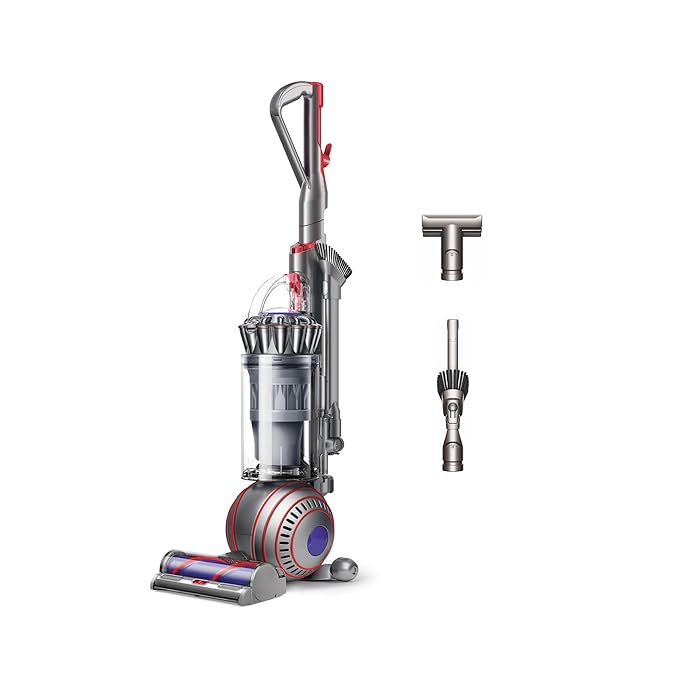
Dyson Ball Animal 3 Upright Vacuum, Best for Deep Carpet Cleaning
Dyson has a reputation for a reason. The Ball Animal 3 is one of those vacuums that makes you realize how much dirt your old vacuum was leaving behind. The first pass on a carpet you thought was clean will surprise you. Sometimes in a gross way. But that is the point.
The ball technology makes steering incredibly easy. You can swing around chair legs and furniture without stopping and repositioning. It sounds like a small thing until you have used a stiff-neck vacuum for years. Then it feels like a total upgrade.
The suction power is some of the best you will find in an upright. It goes deep into carpet fibers, pulling out embedded dirt and allergens that sit below the surface. For homes with thick rugs or high-pile carpet, this is the one to beat.
It is expensive, no question. And it is heavy. But the cleaning power is real, and Dyson backs it with solid customer support. If you want the best performance and budget is not the main concern, this is where your money goes.
- Ball steering makes maneuvering effortless
- Deep suction pulls embedded dirt from carpet
- Great for thick rugs and high-pile floors
- Strong allergen filtration
- Premium price but premium performance
Bissell CleanView Swivel Pet Upright Vacuum, Best Budget Pick for Pet Owners
Not everyone needs to spend $500 on a vacuum. The Bissell CleanView Swivel Pet proves that. It is one of the most affordable options on this list and still handles pet hair better than you would expect from the price.
The swivel steering makes it easy to move around furniture. It is not as smooth as the Dyson Ball, but it is close enough for everyday cleaning. The brush rolls are designed specifically to pick up pet hair without tangling, and they do a decent job on both carpet and bare floors.
The triple action brush roll is a standout feature at this price. It loosens, lifts, and suctions dirt in one pass. You are not going back over the same patch five times. That efficiency is nice, especially when you are cleaning up after muddy paws or a shedding season explosion.
It is lightweight, which makes it easy to carry upstairs or move from room to room. The dust bin is on the smaller side, so you will empty it more often in heavy-use homes. But for the price, the Bissell CleanView is genuinely hard to beat.
- Affordable price for pet owners on a budget
- Swivel steering for easy furniture navigation
- Triple action brush roll lifts pet hair well
- Lightweight and easy to carry
- Smaller dust bin needs frequent emptying
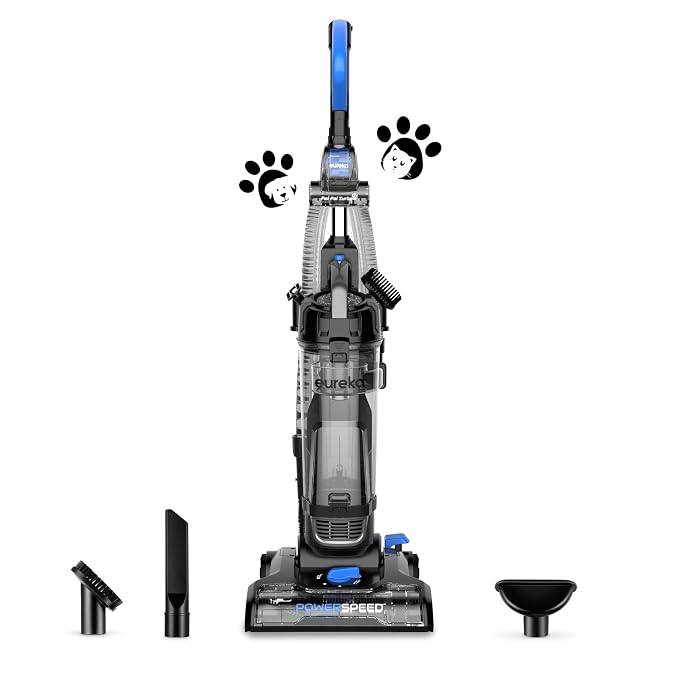
Eureka NEU181A PowerSpeed Lightweight Upright Vacuum, Best for Everyday Quick Cleans
Sometimes you just need a vacuum that does its job without making your arm tired. The Eureka PowerSpeed is exactly that. It is light, fast, and easy to pull out when you need a quick clean before guests arrive or after a messy meal.
At under 10 pounds, this is one of the lightest uprights you can find. Carrying it up stairs is not a workout. Older users or anyone with joint pain will appreciate how little effort it takes to move around. Light does not mean weak here, though. The suction is solid for everyday messes.
It has a washable filter, which saves you money over time. No buying replacements every few months. Just rinse it, let it dry, and put it back. That kind of low-maintenance design is something more vacuums should have, honestly.
It does not handle thick carpet or heavy pet hair as well as the pricier options on this list. But if you have mostly hard floors or low-pile carpet and just need a reliable daily driver, the Eureka PowerSpeed does exactly what it promises.
- Ultra-lightweight under 10 pounds
- Easy to carry upstairs and between rooms
- Washable filter saves money long-term
- Good suction for everyday messes
- Not ideal for thick carpet or heavy shedding
Hoover WindTunnel Cord Rewind Pro Bagless Vacuum, Best for Convenience and Cord Management
Cords are annoying. You know it, I know it. The Hoover WindTunnel Cord Rewind Pro knows it too. It comes with a 25-foot cord and a one-touch automatic rewind. You press a button and the cord zips back in neatly. No winding it around the handle by hand like it is 1994.
The WindTunnel technology creates three channels of suction that pull dirt up from the floor instead of pushing it around. It works well on both carpet and hard floors. The cleaning path is wide, so you cover more ground in fewer passes. That speeds up the whole process.
It comes with a rinse-clean washable filter, so you are not constantly buying replacements. The dust cup is easy to empty, and the whole machine feels solid without being too heavy. The design is no-frills but functional, which is exactly what a lot of people want.
One heads-up: the attachments are decent but not exceptional. If you need strong above-floor cleaning tools, you may want something else. But for floor cleaning with minimal hassle, the WindTunnel Cord Rewind Pro is a genuinely smart pick.
- 25-foot cord with one-touch auto rewind
- WindTunnel tech lifts dirt instead of scattering it
- Wide cleaning path covers more floor faster
- Washable filter, no replacements needed
- Attachments are basic but functional
I hope this guide helped you find the right vacuum for your home. There is no single best option for everyone. It really depends on your floors, your pets, your budget, and how often you clean. If pet hair is your enemy, go Shark or Bissell. Want the deepest clean? Dyson. Need something light and affordable? Eureka or Hoover. Pick the one that fits your life and you will not regret it.
| Product | Best For | Weight | Bagged/Bagless |
|---|---|---|---|
| Kenmore BU4050 | Allergen control | ~20 lbs | Bagged |
| Shark AZ3002 | Pet hair removal | ~17 lbs | Bagless |
| Dyson Ball Animal 3 | Deep carpet cleaning | ~17 lbs | Bagless |
| Bissell CleanView Swivel Pet | Budget pet owners | ~15 lbs | Bagless |
| Eureka NEU181A PowerSpeed | Lightweight daily use | ~9.9 lbs | Bagless |
| Hoover WindTunnel Cord Rewind | Cord convenience | ~16 lbs | Bagless |
Things to Consider Before Buying an Upright Vacuum Cleaner (Complete Guide 2026)
Buying a vacuum sounds easy until you actually start shopping. There are so many options, so many features, and so many prices that it gets overwhelming fast. You just want clean floors. Not a headache.
The truth is, the wrong vacuum will frustrate you every single time you use it. Too heavy, too loud, wrong for your floors, bad for pet hair. All real problems people run into. Knowing the right things to consider before buying an upright vacuum cleaner saves you money and a lot of regret.
Suction Power and Motor Strength
Suction is the whole point of a vacuum. If it cannot pull dirt up effectively, nothing else matters. A lot of people focus on flashy features and ignore this, then wonder why their carpet still looks dirty after cleaning.
Motor power is usually measured in watts or amps. Higher numbers generally mean stronger suction, but the design of the airflow path matters just as much. A well-built 1200-watt vacuum can outperform a poorly designed 1400-watt one. Always look for real user reviews that talk about suction performance, not just the spec sheet.
One thing to watch out for: suction can drop as the dust bin fills up on bagless models. Some brands handle this better than others. If you clean large spaces, look for a model that maintains consistent suction even when the bin is getting full.
- Higher watts or amps usually mean stronger suction
- Airflow design matters as much as raw power
- Check reviews for real-world suction performance
- Watch for suction drop on bagless models as bin fills
Flooring Type in Your Home
This one changes everything. A vacuum that works brilliantly on hardwood might struggle on thick carpet, and vice versa. You need to match the vacuum to what is actually on your floors before you buy.
For hard floors like tile, wood, or laminate, you want a model with a soft roller or the ability to turn off the spinning brushroll. A stiff brushroll spinning at full speed can scatter debris instead of picking it up. It can also scratch delicate surfaces over time if you are not careful.
For carpet, especially thick or high-pile carpet, you need strong suction and an aggressive brushroll that digs into the fibers. If you have a mix of both floor types, look for a vacuum with adjustable settings so you can switch modes without hauling out a different machine.
- Hard floors need a soft roller or brushroll shut-off
- Thick carpet needs strong suction and an aggressive brushroll
- Mixed floors need adjustable settings
- Check the product specs for floor compatibility before buying
Bagged vs. Bagless Design
This is one of the most debated choices in the vacuum world, and honestly, both have real advantages. It comes down to your priorities and how much you care about air quality versus convenience.
Bagless vacuums are easier to manage day to day. You empty the dust cup, rinse the filter, and keep going. No extra purchase needed. But when you empty that cup, a small cloud of dust puffs back into the air. If you have allergies, that moment is the problem.
Bagged vacuums seal everything inside until you toss the bag. Much cleaner disposal, much better for allergy sufferers. The downside is the ongoing cost of replacement bags and remembering to buy them before you run out. If clean air is your priority, the bagged design wins every time.
- Bagless: convenient, no ongoing cost, dusty when emptying
- Bagged: cleaner disposal, better for allergies, bags cost money
- Allergy sufferers should lean toward bagged designs
- Both work well, choose based on your lifestyle
Weight and Maneuverability
A vacuum you hate using is a vacuum that collects dust in the closet. Weight matters more than most people admit when they are shopping. You might not notice it in the store, but after cleaning three rooms and hauling it upstairs, you will feel every pound.
Most uprights range from about 10 to 20 pounds. If you have multiple floors, mobility issues, or just want something easy to grab quickly, go lighter. Lightweight models around 10 to 12 pounds are much easier to manage daily. They are great for quick cleanups without the commitment of dragging a heavy machine out.
Maneuverability is just as important. Ball-steering technology, like what Dyson uses, makes a real difference when you are weaving around chair legs and furniture. A stiff-neck vacuum that only moves forward and back will slow you down and frustrate you fast. Try to find user videos showing how it turns before you commit.
- Lighter vacuums are easier for multi-floor homes
- 10 to 12 pounds is ideal for frequent quick cleans
- Ball-steering or swivel heads make maneuvering much easier
- Test or watch demos before buying if possible
Filtration and Air Quality
This one gets overlooked constantly. People think filtration only matters if someone in the house has asthma. But dirty exhaust air affects everyone, especially in smaller or less-ventilated homes. What goes in should not come back out.
HEPA filtration is the gold standard. It traps 99.97% of particles down to 0.3 microns, which includes dust mites, pollen, pet dander, and fine allergens. If anyone in your home has any kind of respiratory sensitivity, HEPA is not optional. It is the thing you need.
Even if allergies are not a concern, check whether the filters are washable. Washable filters save money over time and mean you are not hunting down a specific replacement part every few months. Some vacuums have sealed filtration systems too, which means air only exits through the filter, not through gaps in the body. That detail matters more than most people realize.
- HEPA filtration traps the tiniest allergens and particles
- Essential for homes with allergy or asthma sufferers
- Washable filters save money and hassle long-term
- Sealed filtration systems are better than open ones
Attachments and Cleaning Versatility
Your floors are not the only thing that gets dirty. Stairs, sofas, curtains, mattresses, car seats. A vacuum with good attachments turns one machine into a whole cleaning system. That versatility is worth paying a little more for.
The basics you actually want are a crevice tool for tight corners, an upholstery tool for furniture, and a dusting brush for shelves and baseboards. Some models also include a pet hair attachment, which is a game-changer if you have animals. These tools are not all created equal, so check that they actually fit your cleaning needs.
One thing to check before buying: how the attachments store on the machine. Loose tools that get thrown in a drawer are tools you will forget to use. Onboard storage keeps everything together so you actually use what you paid for. Also check cord length. A 20 to 25-foot cord covers most rooms without unplugging and replugging every few minutes.
- Look for crevice tool, upholstery tool, and dusting brush at minimum
- Pet hair attachment is worth it for animal owners
- Onboard tool storage means you will actually use the attachments
- A 20 to 25-foot cord saves a lot of frustration during cleaning
I hope these six points help you feel confident the next time you are staring at a wall of vacuums trying to decide. Knowing the things to consider before buying an upright vacuum cleaner means you stop guessing and start making a smart choice. The right vacuum makes cleaning faster, easier, and honestly, less miserable.
| Factor | What to Check | Why It Matters | Quick Tip |
|---|---|---|---|
| Suction Power | Watts, amps, user reviews | Weak suction leaves dirt behind | Read real reviews, not just specs |
| Floor Type | Hard floor mode, brushroll settings | Wrong vacuum damages floors or misses dirt | Match the vacuum to your actual floors |
| Bagged vs. Bagless | Disposal method, filter type | Affects air quality and maintenance | Allergies? Go bagged |
| Weight | Listed weight in pounds | Heavy vacuums get ignored over time | Under 12 lbs for multi-floor homes |
| Filtration | HEPA rating, washable filters | Dirty exhaust affects air quality | Look for sealed HEPA systems |
| Attachments | Tool variety, onboard storage | Expands what the vacuum can clean | Check cord length too, aim for 25 ft |
Frequently Asked Questions (FAQs)
Is it worth buying a bagged vacuum in 2026?
Yes, absolutely. Bagged vacuums are especially worth it if anyone in your home has allergies or asthma. The bag seals in dust and allergens when you remove it, so nothing escapes back into the air. They tend to hold more dirt too, so you empty them less often. The ongoing cost of bags is the only real downside to consider.
Is it okay to vacuum pet hair every day?
Yes, and honestly, if you have a heavy shedder, daily vacuuming is a great habit. Modern uprights are built for frequent use. Just make sure you clean the brushroll regularly to prevent tangles. Vacuuming every day keeps pet hair from building up in carpet fibers, which makes each cleaning session easier and faster.
Can I use an upright vacuum on hardwood floors?
Yes, most uprights work fine on hardwood. Just check that the model has a setting to turn off the brushroll or reduce suction. A spinning brushroll at full speed can scratch hardwood over time. The Shark AZ3002 and Dyson Ball Animal 3 both handle hard floors well with the right settings adjusted.
Can a lightweight vacuum still have strong suction?
Yes, and the Eureka NEU181A is proof of that. Weight and suction power are not directly connected. What matters more is the motor quality and the design of the airflow path inside the machine. A well-designed lightweight vacuum can outperform a heavy one that was built with cheaper components. Always check suction ratings before assuming.
Do I need HEPA filtration in my vacuum?
If you have allergies, asthma, or pets, then yes, HEPA filtration is worth having. It traps tiny particles that regular filters let pass back into the air. You might not notice the difference on your floors, but you will notice it in the air quality over time. The Shark AZ3002 and Dyson Ball Animal 3 both include HEPA-level filtration.
Do upright vacuums work better than robot vacuums?
For deep cleaning, yes. Robot vacuums are great for maintenance between sessions, but they cannot match the suction power or deep-carpet performance of a good upright. Think of a robot vacuum as your daily helper and an upright as your weekly heavy lifter. Using both together is honestly the smartest approach for most homes.
Is it hard to maintain a bagless upright vacuum?
Not at all. You just empty the dust cup after each use and rinse the filter every month or so. Some models have washable filters that need no replacement. The main thing to stay on top of is the brushroll. Hair and thread wrap around it over time, and that reduces performance. A quick check every few weeks keeps everything running well.
Can upright vacuums clean stairs?
Yes, but with some limitations. Most uprights come with a hose and attachments designed for above-floor cleaning like stairs. The Kenmore BU4050 has a handi-mate for exactly this reason. That said, a canister or handheld vacuum is more comfortable for stairs if you do them frequently. An upright works fine in a pinch, but it is not the most ergonomic tool for the job.
Is it better to vacuum slowly or quickly?
Slower is better, especially on carpet. Moving slowly gives the brushroll time to agitate the fibers and the suction time to pull dirt up. Going fast means you are barely skimming the surface. On hard floors you can move a bit quicker since there are no fibers to dig into. A slow, steady pass on carpet makes a real difference in how clean it actually gets.
Do more expensive vacuums last longer?
Generally, yes, but not always. A higher price usually means better motors, stronger materials, and more reliable parts. Dyson, Shark, and Kenmore tend to last years with proper maintenance. But a cheap vacuum that you take care of can outlast an expensive one that gets neglected. Clean the filters, check the brushroll, and store it properly. That matters more than the price tag.