As an Amazon Associate, I earn from qualifying purchases at no extra cost to you.
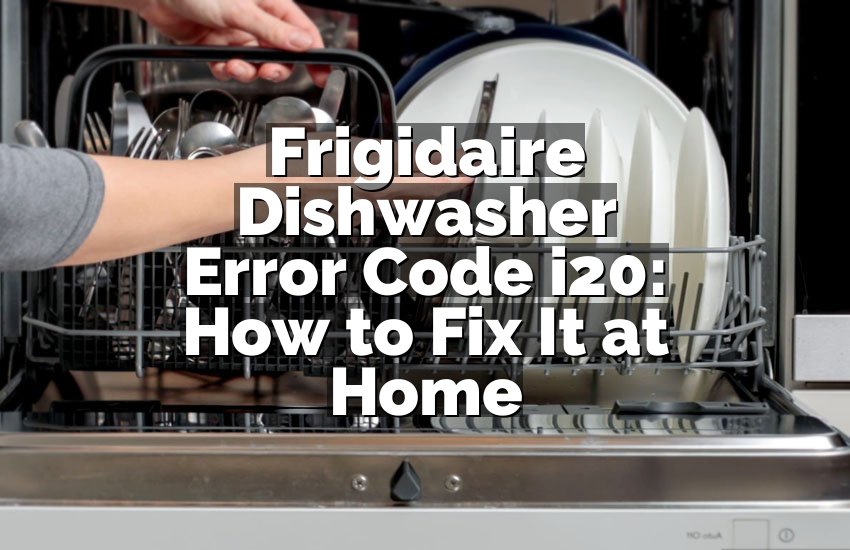
Frigidaire Dishwasher Error Code 40: Fix It Fast the Easy Way
 ByZayyan

It’s for the folks who feel a knot in their stomach when their kitchen appliance stops mid-cycle. You expect clean plates, but instead, you get a blinking light and an annoying beep. Frigidaire dishwasher error code 40 usually means your machine is struggling with a dirty filter or sump. I’ll show you how to fix this yourself without calling a pro.
To handle this, start by turning off the power at the breaker to keep things safe. Next, locate the filter assembly at the bottom of the tub. Carefully remove the filter and the glass trap. Wash them thoroughly with warm, soapy water to remove all food debris. Check the sump area for any stuck bits of food. Once everything is clean, reassemble the parts properly, restore power, and run a test cycle.
Why Does My Dishwasher Keep Showing This Error?
It’s frustrating when you just want to relax, but your machine refuses to cooperate. Usually, this code pops up because food bits have built up over time in the sump or the filter screen. Your dishwasher tries to pump water, but it just can’t move enough through the mess. Think of it like trying to breathe through a straw that’s half-blocked by a stray piece of lettuce. It just doesn’t work well.
Also, it happens if you skip pre-rinsing your dishes too often. While modern machines can handle some food, they aren’t garbage disposals. Over time, grease and small particles settle in the bottom. This buildup triggers the sensors to stop the cycle to prevent damage to the pump. Don’t worry, though. It’s almost always just a cleaning issue, not a broken motor or a failed computer board.
- Excessive food residue buildup.
- Clogged fine mesh filter screen.
- Debris stuck in the glass trap.
- Grease layers blocking water flow.
- Sensor misreading due to dirt.
- Inconsistent cleaning habits over time.
How to Fix Your Frigidaire Dishwasher Error Code 40
Inspect the Primary Filter Mesh
The main filter screen often catches the smallest bits of grime. If this gets coated in thick gunk, water won’t circulate properly. I always check this part first because it’s the most common culprit. You’ll find it at the very bottom of the tub.
Give it a gentle twist to unlock it. If it feels stuck, don’t force it hard, just wiggle it a bit. You’ll be surprised at how much hidden slime can hide on the underside of that screen.
Use an old toothbrush to scrub the mesh gently. This reaches the tight spots that your hands can’t touch. A little vinegar also helps if the grease is stubborn.
- Twist the filter counter-clockwise.
- Scrub the mesh thoroughly.
- Use warm water only.
- Ensure it clicks back.
Clean Out the Glass Trap
The glass trap is a small cup designed to catch heavy items like seeds or broken glass. When this cup fills up, it blocks the sump entirely. It’s a smart design, but it needs your help to stay clear.
Pull the trap out carefully. I usually keep a paper towel handy because it can be a bit messy. Empty the contents into your trash can. Never dump this into your sink drain.
Rinse the trap under your kitchen faucet until it looks brand new. Make sure no seeds are wedged in the sides. This ensures smooth water movement once you start the next wash.
- Lift the trap assembly.
- Empty all solid debris.
- Rinse under hot water.
- Check for small seeds.
Check the Sump Area Carefully
The sump is the bowl-shaped area where water collects. Sometimes, large items like plastic labels or fruit stickers get lodged here. These items can block the drain path even if your filters are perfectly clean.
Look into the hole where the filter sits. Use a flashlight to see clearly. You want to make sure the opening is completely free of any foreign objects.
If you see something, grab it with long-nose pliers. Just be careful not to poke the plastic housing. A clean sump is the secret to a happy dishwasher.
- Use a bright flashlight.
- Clear out plastic labels.
- Remove stuck fruit stickers.
- Ensure the path flows.
Reset the Control System
Sometimes, the computer just needs a quick nap to forget the error. Once you’ve cleaned everything, you have to tell the machine that the job is done. A simple power reset clears the memory.
Go to your electrical panel and flip the breaker off. Wait at least three minutes. This allows the capacitors in the control board to drain their power completely.
Flip the breaker back on. Most of the time, the error code will vanish immediately. If it stays, you might need to check your cleaning work one more time.
- Flip the circuit breaker.
- Wait three full minutes.
- Restore the electrical power.
- Check the display panel.
Verify the Drain Hose Connection
If the error persists, the problem might hide outside the tub. Check the drain hose under your sink. If it’s pinched or kinked, the water can’t leave the sump area.
Follow the hose from the dishwasher to the sink drain. Make sure it isn’t squeezed behind the unit. A flat hose prevents proper drainage and causes sensor errors.
Also, check if the drain hose is hanging at the right height. It should loop up high before going down into the drain to prevent backflow.
- Look for hose kinks.
- Check under the sink.
- Ensure it isn’t pinched.
- Verify the loop height.
Inspect the Drain Pump Intake
This is a more advanced step for when cleaning fails. Sometimes, a hard object like a toothpick gets stuck right at the pump intake. This physically prevents the water from moving.
You might need to remove a small cover inside the sump. Check your manual for the exact location on your model. It’s usually held by a single screw or a clip.
Be gentle here. You don’t want to break the plastic housing or the pump blades. If you find something, pull it out and test the unit again.
- Locate the pump cover.
- Remove the mounting screw.
- Check for hard objects.
- Reattach the cover securely.
What Should I Do If the Error Code Comes Back?
If you have cleaned everything and the code still shows up, don’t panic. It’s possible that your water supply has too much sediment, or your detergent isn’t dissolving well. Sometimes, using too much soap leaves a waxy residue that coats the sensors, making them think the machine is clogged when it’s actually just dirty. Try running a cycle with a specialized dishwasher cleaner or a cup of white vinegar.
However, if you’ve deep-cleaned the filters, checked the hoses, and still see that error, a sensor might have finally given up. Electronics can fail over time. In this case, you might need a new turbidity sensor or a main control board. Don’t try to replace these yourself unless you’re comfortable with electrical work. It’s often smarter to call a technician who can test the parts with a multimeter.
- Run a vinegar cycle.
- Use less dish soap.
- Check for sensor failure.
- Call a certified tech.
- Ask for a part quote.
- Don’t force the buttons.
| Step | Task | Importance | Effort | Tool Needed |
| 1 | Power Off | Safety | Low | Breaker |
| 2 | Clean Filter | Essential | Medium | Brush |
| 3 | Clear Trap | Essential | Low | None |
| 4 | Inspect Sump | Important | Low | Flashlight |
| 5 | Reset System | Required | Low | None |
| 6 | Check Hose | Necessary | Medium | Pliers |
Frequently Asked Questions
Is it safe to run the dishwasher with this error?
It’s not a good idea. The machine has stopped because it can’t move water properly. Running it can overheat the drain pump or cause water to leak onto your kitchen floor. Always fix the clog before you start another cycle to save your appliance from extra wear and tear.
Can I use bleach to clean the filter?
Please don’t. Bleach can damage the rubber seals and plastic parts inside your machine. It’s too harsh for the delicate components that keep water contained. Stick to warm, soapy water or a bit of distilled white vinegar. These are much safer and work just as well for most grime.
Do I need special tools for this fix?
Most of the time, you don’t need anything but your hands. You might want a flashlight to see into the dark sump area and an old toothbrush to scrub the mesh filter. If you need to remove a pump cover, you might need a basic screwdriver, but that is rarely required.
Is it a major repair?
Usually, no. It’s just a housekeeping issue. Most people clear this error in about ten minutes with simple cleaning. Think of it like changing the air filter in your car. It’s a basic maintenance task that keeps everything running smooth. It only becomes a repair if a part is physically broken.
Can food particles damage the pump?
Yes, absolutely. Hard things like fruit pits, popcorn kernels, or glass shards can jam the pump impeller. If the pump can’t spin, the water just sits there. This is why keeping the glass trap and filter clear is the best way to avoid expensive service calls in the future.
Do I have to call a professional?
Only if you have done all the cleaning steps and the error remains. If you’ve scrubbed the filters, cleared the hoses, and verified everything is clean, there might be a deeper electrical fault. In that case, a pro is your best bet to avoid damaging the machine further.
Is the error code just a glitch?
Sometimes it can be a temporary sensor hiccup. Resetting the power at the breaker usually clears these minor glitches. If the machine runs a full cycle after the reset, you’re likely in the clear. However, if it comes back right away, it means there is still a physical blockage.
Can hard water cause this error?
Hard water is a common cause of stubborn buildup. The minerals can create a white, crusty layer on your filters that standard soap won’t remove. If you see white deposits, soak your filters in white vinegar for an hour to dissolve the minerals. This makes a huge difference.
Final Thoughts
I hope this helps you get your kitchen back to normal. Frigidaire dishwasher error code 40 is just a sign that your machine needs a little attention. You’ve got this. Grab a flashlight, clear out that gunk, and your dishes will be sparkling again in no time. Simple maintenance is the secret to a long life for your appliances. Just keep it clean and keep it simple.