As an Amazon Associate, I earn from qualifying purchases at no extra cost to you.
KitchenAid Dishwasher Error Code E1 F9 and Fix It Now Today
 ByZayyan

Water is pooled in the bottom, the cycle stops mid drain, and the control starts flashing E1 F9 like it is mad at you. I have been on my knees with towels and a Torx driver more times than I can count, pulling apart KitchenAid dishwashers that quit right after dinner.
This error means the dishwasher cannot drain fast enough, so the control shuts everything down to avoid flooding your kitchen. Most of the time the fix is physical, not electronic. A clogged sump, a stuck drain pump flapper, or a kinked hose causes the control to panic. With basic tools like a T15 Torx driver and a 1/4 inch nut driver, you can clear the blockage, test the pump, and get the machine draining like it should again.
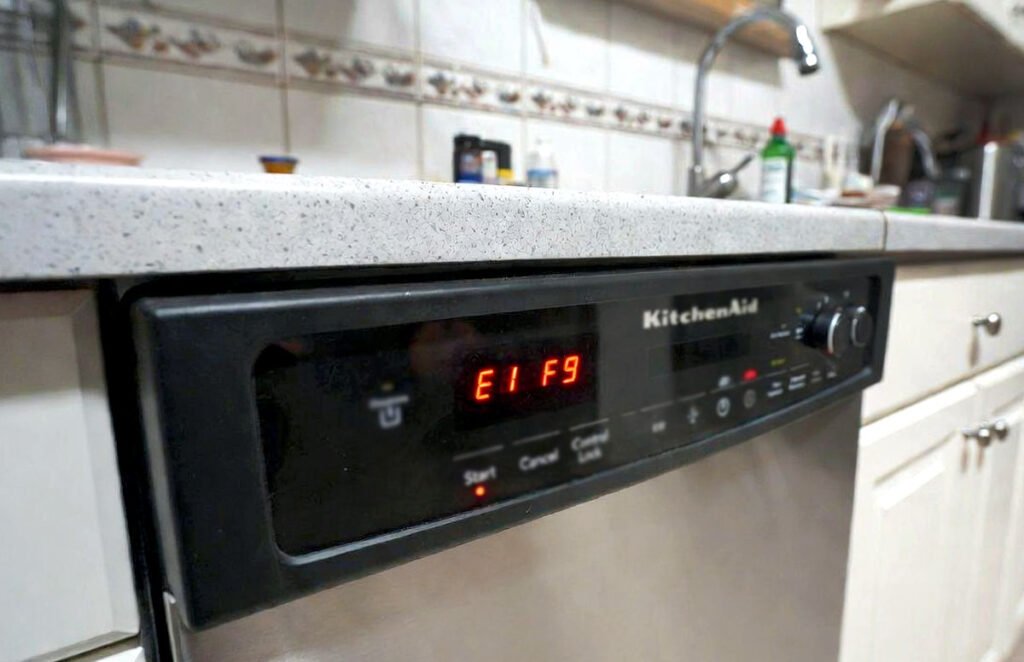
What is the KitchenAid Dishwasher Error Code E1 F9 and Why Does It Happen
The E1 F9 code is KitchenAid’s way of saying the dishwasher tried to drain and failed. During the drain phase, the control board powers the drain pump and watches for the water level to drop. If it does not see that change within a set time, it assumes something is wrong. Instead of running forever, it stops the cycle to protect your floor and cabinets.
In the field, I see this happen after years of small debris building up in the sump. Seeds, glass chips, paper labels, and grease slowly choke the drain path. The pump motor might still be good, but it cannot move water through a blocked system. The control does not know why the water is stuck, it only knows the water did not leave fast enough.
Another common trigger is a partial drain where some water leaves, but not enough. A kinked hose, a high loop that collapsed, or a weak pump can all slow the flow. The dishwasher technically drains, but it misses the timing window. The control reads that delay as a failure and throws E1 F9, even though the tub is not completely full.
- Clogged sump or filter area
- Stuck drain pump flapper
- Kinked or collapsed drain hose
- Grease buildup inside the hose
- Weak or jammed drain pump
- Blocked garbage disposal inlet
How to Fix Your KitchenAid Dishwasher Error Code E1 F9
Step 1: Cut Power and Access the Sump Area
First thing I do is kill the power and water, because this error shows up when the control thinks water will not leave. Flip the breaker off, then shut the dishwasher supply valve under the sink. Open the door and pull the lower rack out. Grab a T15 Torx driver, because KitchenAid loves that size. We are heading to the sump area, and spills happen fast.
Lay a towel across the front kick plate, then remove the two 1/4 inch hex screws holding it on. Behind it you will see the drain hose loop and the pump wiring. This code trips when the pump cannot spin or water cannot move. Feel the hose for hard grease plugs. If it feels stiff, it is already telling you a story. Warm water cycles bake grease rock hard over time.
Next, remove the lower spray arm and filter stack inside the tub. They twist and lift, no screws yet. Shine a light into the sump and check for glass, labels, or bones. I use a pick and needle nose pliers for control. The pump inlet is hidden under a rubber flapper. If that flapper sticks closed, the machine panics and throws E1 F9 during the drain check.
- Turn breaker off before touching anything
- Use a T15 Torx for interior screws
- Always pull the lower rack out first
- Keep towels ready for water spills
Step 2: Clean the Filter and Sump Thoroughly
With the filter stack out, take it to the sink and rinse it under hot water. Scrub the mesh with an old toothbrush. I see filters that look clean on top but are packed with grease underneath. That grease slows water movement just enough to trigger E1 F9. Do not rush this part, because a half cleaned filter brings you right back here in a week.
Back in the tub, reach into the sump opening carefully. This is where broken glass likes to hide. Feel around the edges and the pump inlet. If you feel grit, pull it out. The drain pump opening is offset, not centered. Many people miss it. That little side channel is the actual drain path, and it clogs easily with food labels and seeds.
Once it is clean, pour a cup of water into the sump and watch how it drains. It should disappear fast, not slowly creep down. If it drains slowly with the pump off, you still have a blockage downstream. Cleaning the sump alone fixes a surprising number of E1 F9 calls, especially on machines over five years old.
- Wash the filter with hot water only
- Check the side drain channel closely
- Remove debris by hand, not vacuum
- Test drain speed with a cup of water
Step 3: Inspect and Clear the Drain Hose
Move under the sink and trace the drain hose from the dishwasher to the sink or disposal. Look for tight bends or crushed sections. KitchenAid hoses are stiff, and when cabinets shift, they kink. A kink slows flow enough to fail the drain timing. Straighten the hose and make sure the high loop is intact but not pinched.
Disconnect the hose at the sink or disposal using pliers. Keep a bowl handy, because water will come out. Push a small brush or zip tie through the hose. If it stops halfway, you found your clog. Grease plugs feel rubbery and stubborn. I flush the hose with hot water until it runs clear and free.
Before reconnecting, check the disposal inlet if you have one. I have seen brand new disposals with the knockout plug still inside. That blocks the drain completely. Pop it out with a screwdriver if it is still there. Reconnect the hose snug, not overtight, because cracked fittings cause leaks later.
- Check for kinks behind the cabinet
- Flush hose with hot water
- Verify disposal knockout is removed
- Do not overtighten hose clamps
Step 4: Check the Drain Pump and Flapper
If the hose and sump are clear, the drain pump is next. From the front, reach under and locate the pump. It is held in with a twist lock or a small screw, depending on model. Disconnect the wiring plug first. Twist the pump counterclockwise and pull it out. Expect some water, so keep towels down.
Look inside the pump housing for debris. Seeds and glass jam the impeller blades. Spin the impeller with your finger. It should move freely with slight resistance. If it feels gritty or stuck, clean it out. Check the rubber flapper on the outlet. If it is warped or stiff, it can stick shut and block water.
A weak pump can also cause E1 F9. If it hums but barely moves water, replacement is the fix. I use a multimeter to check resistance, usually around 30 to 40 ohms. Anything open or wildly off means the pump is done. Reinstall or replace it carefully, making sure the seal seats flat.
- Disconnect wiring before removing pump
- Spin impeller by hand to test
- Inspect rubber flapper for stiffness
- Check pump resistance if unsure
Step 5: Test the Dishwasher Drain Cycle
With everything back together, restore power and water. Do not fully reinstall the kick plate yet. Start a short cycle and listen. When it hits the drain phase, you should hear a strong rush of water into the sink or disposal. Weak dribbling is a red flag that something is still restricted.
Watch the tub during the drain. The water should drop fast and leave the bottom mostly dry. If the code does not return, you are on the right track. I like to cancel the cycle once or twice to force extra drains. This confirms the system can drain repeatedly without timing out.
If E1 F9 pops back up immediately, suspect the control is seeing a false signal or the pump is weak under load. At this point, most mechanical causes are ruled out. Do not ignore repeated codes, because running it this way stresses the pump and control.
- Leave kick plate off for testing
- Listen for strong drain sound
- Cancel cycle to force extra drains
- Stop testing if leaks appear
Step 6: Decide On Parts Replacement If Needed
When cleaning does not solve it, replacement is the honest fix. Drain pumps are the most common part for this code. Use the model number from the door frame to get the exact pump. Aftermarket pumps can be noisy or weak. I stick with OEM whenever possible for longevity.
If the pump tests good, the control board could be misreading the water level. That is rarer, but it happens. Before replacing a control, double check wiring connections to the pump and float switch. Loose plugs cause false drain errors and waste money on parts you did not need.
Once replaced, run a full normal cycle and watch the drain at the end. If it finishes clean with no standing water, reinstall the kick plate and call it done. This is one of those repairs that feels big, but usually comes down to one stubborn blockage or tired pump.
- Use model number for correct parts
- OEM pumps last longer
- Check wiring before replacing control
- Run a full cycle after repair
How Can I Prevent The E1 F9 Error From Coming Back
Preventing this code is mostly about keeping grease and debris out of the drain path. Scrape plates well, especially seeds and paper labels. Run hot water at the sink before starting the dishwasher. That fills the machine with hot water immediately and helps dissolve grease instead of letting it settle in the sump.
Once a month, pull the filter and rinse it. It takes five minutes and saves hours later. I also recommend running an empty cycle with a dishwasher cleaner or a cup of white vinegar. This breaks down grease inside the hose and pump that you cannot see but the control definitely notices.
Pay attention to how your dishwasher sounds when it drains. A healthy drain is loud and fast. When it starts sounding lazy or slow, that is your warning. Fixing a partial clog early keeps the control happy and prevents E1 F9 from ruining another night of dishes.
- Scrape food before loading
- Run hot water before starting
- Clean filter monthly
- Use dishwasher cleaner regularly
- Listen for strong drain sound
- Check hose position yearly
Final Thoughts
E1 F9 looks scary, but it is usually your dishwasher begging for a clear drain path. Take your time, clean everything thoroughly, and do not skip the hose and pump checks. Most homeowners can fix this with patience and basic tools. When the water finally rushes out like it should, the relief is real, and your KitchenAid gets a second life.
| Steps | Difficulty Level | Parts Needed | Pro Tip |
|---|---|---|---|
| Access Sump | Easy | T15 Torx, towels | Pull rack fully out first |
| Clean Filter | Easy | Brush | Clean underside grease |
| Clear Hose | Medium | Pliers | Check disposal knockout |
| Inspect Pump | Medium | Multimeter | Spin impeller by hand |
| Test Drain | Easy | None | Force cancel drains |
| Replace Parts | Medium | OEM pump | Use model number |
Frequently Asked Questions (FAQs)
Is It Safe To Use The Dishwasher With E1 F9 Showing
It is not a good idea to keep using it with this code active. The dishwasher is failing to drain correctly, which means water can back up and leak. Running it repeatedly also overheats the drain pump. Fixing the drain issue first prevents bigger and more expensive damage later.
Can I Clear E1 F9 Without Pulling The Dishwasher Out
In many cases, yes. Most clogs are in the sump, filter, or drain hose under the sink. You only need to pull the dishwasher out if the hose is crushed behind it or you need full access to wiring. Try internal cleaning steps before going that far.
Do I Need To Replace The Control Board For This Error
Usually no. The control is just reporting what it sees. If water does not leave fast enough, it throws E1 F9. Only consider the control after confirming the sump, hose, and pump are all clear and working properly.
Is It Normal To Find Water Left In The Bottom After A Cycle
A small amount of clean water in the sump is normal. Standing dirty water is not. If you see cloudy water covering the filter area, the dishwasher is not draining fully and E1 F9 may be coming next.
Can A Garbage Disposal Cause This Error
Yes, very often. A clogged disposal or an unremoved knockout plug blocks the dishwasher drain. This is one of the first things I check on service calls, especially after a recent disposal install.
Do I Need Special Tools For This Repair
You mainly need a T15 Torx driver, a 1/4 inch nut driver, pliers, and a flashlight. A multimeter helps for pump testing but is not required for basic cleaning and inspection.
Is It Worth Fixing An Older KitchenAid Dishwasher
If the unit is under ten years old and otherwise runs well, fixing a drain issue is worth it. Pumps and hoses are affordable compared to replacement. Proper cleaning can extend its life several more years.
Can Hard Water Make E1 F9 Worse
Yes, hard water leaves mineral deposits that trap grease and debris. Over time, this narrows the drain path. Using a cleaner and maintaining the filter helps offset the effects of hard water buildup.