As an Amazon Associate, I earn from qualifying purchases at no extra cost to you.
Siemens Dishwasher Error Code E02 (Fix It Fast)
 ByZayyan

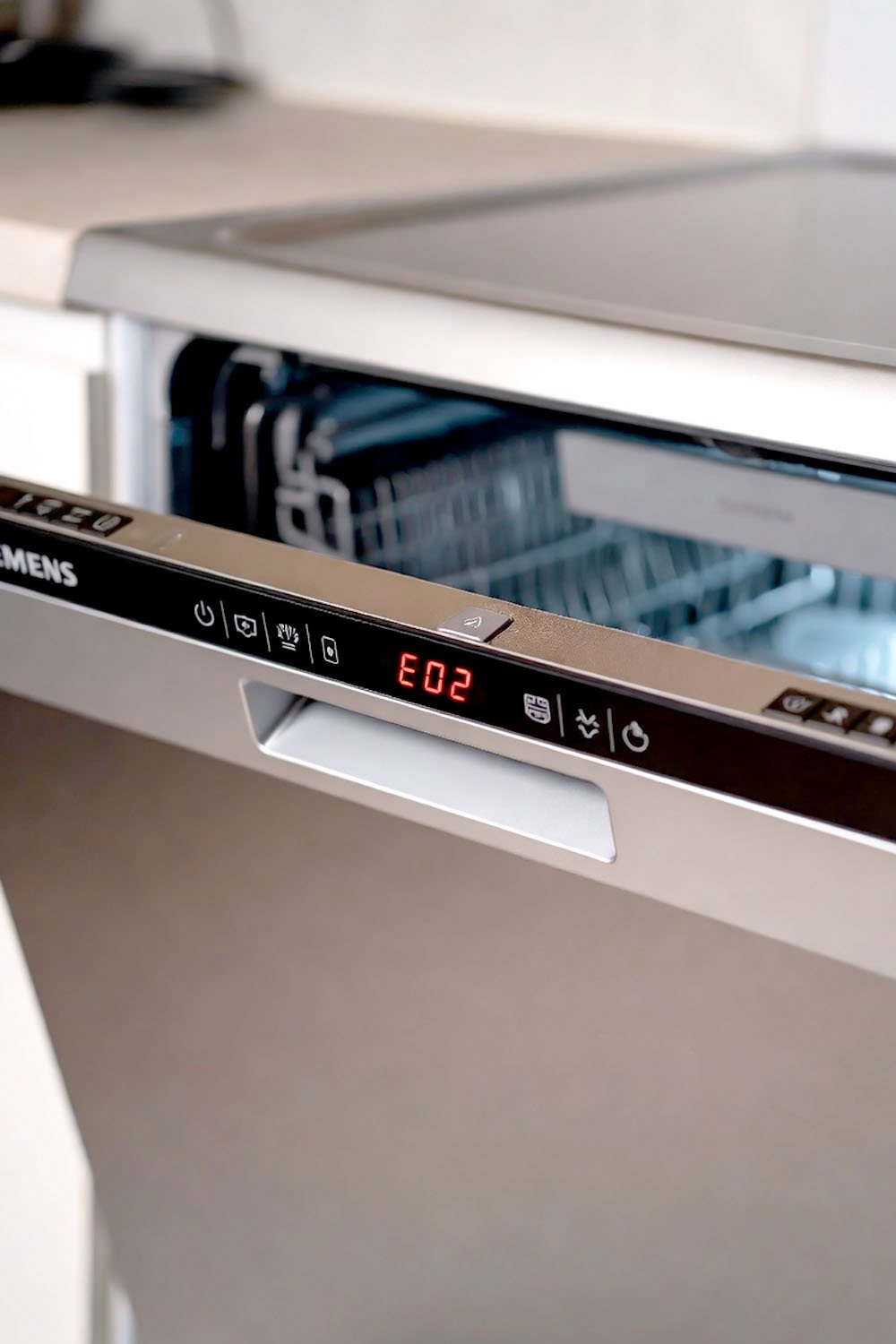
The other day, I walked into my kitchen and found my Siemens dishwasher just staring at me with that cold, red E02 blinking on the screen. It felt like the machine was throwing a tantrum right when I had a sink full of greasy lasagna pans from dinner. I tried hitting every button, but the dishwasher just beeped back at me, leaving me stuck with cold water and a giant mess to clean by hand.
First off, you should know that this error is just your dishwasher’s way of saying it cannot get the water hot enough to clean. Interestingly, the fix is usually much simpler than buying a whole new machine if you stay calm. To make matters worse, most people panic and call a repairman immediately, but you can actually handle this yourself with a few basic tools and a little bit of patience.
Why is My Dishwasher Acting Up with This E02 Code?
The E02 error happens because the brain of your dishwasher, the control module, has lost its connection to the heater. Think of it like a light switch that has come loose inside the wall, so even when you flip it, the light stays dark. In this case, the “switch” is a small part called a relay that has likely stopped working because of too much heat.
From my years of fixing these, I have found that Siemens machines are built very well, but the heating parts work very hard. Every time you run a cycle, that little relay has to snap shut to let electricity flow to the heater. Over time, the metal parts inside can wear out or the solder holding them to the board can crack, which cuts off the power.
Another reason you might see this is because of a simple wiring issue or a sensor that has gone a bit crazy. If the sensor cannot tell how hot the water is, it tells the computer to stop everything just to be safe. It is a safety feature designed to keep your house from overheating, even though it feels like a giant headache when you just want clean plates.
- The power relay on the circuit board has worn out.
- A tiny bit of metal solder has cracked on the board.
- The wires near the bottom of the door have frayed.
- The heating element itself has finally given up.
- A sensor is covered in grease and giving bad readings.
- A simple power surge confused the internal computer.
The Ultimate Guide to Fixing the Siemens E02 Error
Step 1: Perform a Hard Reset
First off, you should always try the “turn it off and back on” trick because it works more often than you would think. Modern dishwashers are basically small computers, and sometimes the software just gets stuck in a loop. I always suggest this as the very first step because it is totally free and takes zero technical skill to complete successfully.
To do this right, you cannot just press the power button on the front of the machine. You actually need to pull the plug out of the wall or go to your fuse box and flip the switch for the kitchen. Interestingly, you need to leave it off for about ten minutes so all the electricity can drain out of the internal parts.
Once the time is up, turn the power back on and see if the E02 code has disappeared from the screen. Sometimes the computer just needed a moment to clear its head and start fresh without any old errors. If the code stays away and the water starts getting warm, you just saved yourself a very expensive and unnecessary service call.
To make matters worse, if you ignore a persistent code and just keep resetting it, you might be hiding a bigger problem. If the E02 comes back after one or two cycles, it means there is definitely a part that is broken. At that point, you have to stop resetting and actually look inside the machine to find the real cause of the heat failure.
- Unplug the dishwasher or flip the circuit breaker.
- Wait ten full minutes for the system to clear.
- Turn the power back on and start a test.
- Check if the water actually starts to get warm.
Step 2: Access the Control Module
If the reset did not work, it is time to look at the control module, which is the brain of your Siemens. This part is usually hidden inside the front door or behind a plastic panel at the very bottom. You will need a simple screwdriver to take out the screws that hold the plastic cover in place so you can see the board.
Be very careful when you are taking the screws out because you do not want to scratch the pretty finish on your machine. Once the cover is off, you will see a plastic box with a lot of colorful wires plugged into it. Interestingly, this is where all the magic happens, but it is also where most of the electrical failures occur over the years.
I always tell people to take a quick picture of the wires with their phone before they touch anything else. This way, you have a perfect map of where every single plug goes when it is time to put it all back together. To make matters worse, if you plug a wire into the wrong spot later, you could actually fry the entire computer board.
Take your time and gently unclip the plastic box from the frame of the dishwasher so you can hold it in your hand. You are looking for any signs of trouble like black soot, melted plastic, or a smell like burnt toast. These are all big red flags that something inside the control module has overheated and needs your help to fix.
- Unscrew the panels to find the main control box.
- Use your phone to take a photo of the wiring.
- Gently unclip the module from its plastic housing.
- Look for any obvious signs of burning or melting.
Step 3: Inspect the Heater Relay
Now that you have the board in your hand, look for a little square box on the green circuit board. This is the heater relay, and it is the most common part to fail and cause the E02 error code. Because it carries so much power, the metal pins on the back of the board can get hot and melt the solder.
Flip the board over and look closely at the metal dots where the relay is attached to the green surface. You are looking for a “cold joint,” which looks like a tiny crack or a dark ring around the metal pin. Interestingly, even a crack as thin as a human hair is enough to stop the electricity from reaching the heater.
If you see a crack, you can actually fix it yourself with a tiny bit of fresh solder and a soldering iron. Just melt the old metal and add a tiny bit of new solder to make the connection strong and shiny again. To make matters worse, if the relay itself looks melted on the outside, you cannot just solder it back to life.
If the relay is totally toast, you have two choices: buy a new relay for a few dollars or buy a whole new board. Buying a new board is much easier because you just plug the wires back in, but it costs a lot more money. Either way, fixing this connection is the key to getting your hot water back and finishing your dishes.
- Find the square heater relay on the circuit board.
- Check the back for any cracked or loose solder.
- Apply new solder if you see a broken connection.
- Replace the whole board if the plastic is melted.
Step 4: Test the Heating Element
If the control board looks brand new and perfect, the problem might be the heating element itself. In most Siemens models, this is a tube-shaped part located under the machine that the water flows through to get hot. To get to it, you usually have to take off the side panels of the dishwasher with your screwdriver.
Once you find the heater, look for the two wires that plug into the ends of the metal tube. You can use a simple tool called a multimeter to see if the heater is still good or if it has burned out. Interestingly, a good heater will show a little bit of resistance, which means the electrical path inside is still solid.
If your tool shows no reading at all, it means the wire inside the heater has snapped, just like a lightbulb that has burned out. To make matters worse, you cannot repair the inside of a heating element, so you will have to buy a new one. It is a bigger job, but it is much cheaper than buying a new dishwasher.
Make sure the machine is unplugged while you are touching these wires because there is a lot of power here. If you find that the heater is broken, you will need to drain any leftover water before you unscrew the old part. It can be a bit messy, so keep some old towels nearby to soak up any spills on your kitchen floor.
- Remove the side panels to see the heater unit.
- Use a multimeter to check the electrical path.
- Look for a reading to see if the part is alive.
- Buy a replacement if the heater shows no signal.
Step 5: Check the Door Wires
Sometimes the parts are fine, but the wires connecting them have snapped because they get pinched every time you open the door. The main wire harness runs through the bottom hinge of the door, and after thousands of loads, the metal can break. This is a very common hidden problem that causes the E02 code to pop up.
Open the door all the way and look at the plastic sleeve at the bottom where the wires go into the machine. You are looking for any wires that look bent, flat, or have the colorful plastic insulation rubbed away to show the copper. Interestingly, even if the wire looks okay on the outside, it might be broken on the inside.
Give each wire a very gentle tug to see if it feels stretchy or if it pulls apart easily in your hand. If you find a broken wire, you can strip the ends and join them back together with a small connector or some electrical tape. To make matters worse, a broken wire can sometimes spark against the metal frame, which is dangerous.
Always make sure the wires are tucked neatly away so they do not get pinched again once you put the covers back on. I have seen many people fix the heater only to have the problem come back because they forgot to check the wires. A simple piece of tape can sometimes be the only thing standing between you and a working dishwasher.
- Look at the wires near the bottom door hinge.
- Check for any pinched or exposed copper strands.
- Tug gently on wires to see if they are broken.
- Repair any breaks with a connector and electrical tape.
Step 6: Clean the Temperature Sensor
The last thing to check is the temperature sensor, which tells the machine exactly how hot the water is getting. If this sensor gets covered in old grease or bits of food, it cannot “feel” the heat correctly anymore. This leads the computer to think the water is cold, which triggers that annoying E02 error code.
You can usually find this sensor near the bottom filter or attached to the side of the heating element. It looks like a small plastic plug with two wires coming out of the back of it. Interestingly, a simple cleaning with some warm vinegar and a soft cloth is often enough to bring a “dead” sensor back to life.
If cleaning does not work, you can test it with your multimeter just like you did with the heating element. If the sensor does not give a steady reading that changes when it gets warm, then the internal parts have failed. Replacing a sensor is very cheap and is one of the easiest parts to swap out on your own.
To make matters worse, if you leave a dirty sensor in place, your dishwasher might run for hours as it tries to heat the water. This wastes a lot of electricity and can eventually wear out the other parts of the machine. Taking five minutes to clean the sensor is a great way to keep your Siemens running smoothly for years.
- Locate the sensor near the filter or the heater.
- Wipe it clean of any grease or food buildup.
- Test it with a multimeter to ensure it is working.
- Replace it if it still sends the wrong temperature signal.
Can I still use my dishwasher while it shows the E02 code?
I really recommend that you stop using the machine until you get that E02 code fixed. Since the heater is not working, your dishes are being washed in cold water, which is not very good at killing germs. You might notice that your plates still feel a little bit slimy or that the soap has not dissolved all the way.
To make matters worse, the E02 code can sometimes be caused by a wire that is sparking or a board that is melting. Running the dishwasher when there is an electrical problem is a fire risk that you just do not want to take. It is much better to wash a few plates in the sink for a day or two while you wait for parts.
- Cold water will not kill the bacteria on your plates.
- Grease and oil will not wash away in cold water.
- The dishwasher might run for hours and waste power.
- There is a small risk of smoke or a fire.
- Your soap pods will not melt and will leave a mess.
- Using a broken machine can cause other parts to fail.
Final Thoughts
I know it is frustrating when your kitchen helper quits on you, but you can definitely fix the E02 error yourself. Most of the time, it is just a simple connection that needs to be tightened or a board that needs a quick reset. Just take it one step at a time, keep your tools handy, and you will be back to relaxing while the machine does the work.
| Step Name | Difficulty Level | Parts Needed | Pro Tip |
| Hard Reset | Very Easy | None | Leave it off for 10 full minutes. |
| Board Check | Medium | Screwdriver | Take a photo of the wire colors. |
| Relay Repair | Hard | Solder / Iron | Only do this if you feel confident. |
| Sensor Clean | Easy | Vinegar / Cloth | Clean the sensor before buying a new one. |
Frequently Asked Questions (FAQs)
Is it hard to reach the control board?
It is actually pretty easy once you know where the screws are located on the door. You usually just have to remove the inner panel of the door to see the plastic housing for the board. Just make sure you hold the door so it does not flop down when the screws are out.
Can I fix the board without soldering?
If the board is truly broken and you do not want to use a soldering iron, you will have to buy a new board. You can find them online by searching for your dishwasher model number. Then you just unplug the old one and plug the new one in, which is very simple.
Do I need to turn off the water?
For most of these steps, you do not need to turn off the water because you are working on the electrical parts. However, if you decide to replace the heating element, you should definitely turn off the water supply. This prevents any accidental leaks while you are moving the machine around your kitchen.
Is this error common for Siemens dishwashers?
Yes, it is one of the most common issues I see with these machines as they get a bit older. The heating relay is a part that just wears out after several years of constant use. It does not mean your dishwasher is bad; it just means it needs a little bit of maintenance.
Can I use a hair dryer to test the sensor?
That is actually a great trick that I use all the time when I am out on a job! You can hold a hair dryer near the sensor while it is hooked up to your multimeter. If the sensor is working, you will see the numbers on your meter change as it gets warmer.
Do I need a professional to do this?
If you feel nervous about touching wires or using a screwdriver, then calling a pro is a smart move for your peace of mind. But if you have ever fixed a leaky faucet or changed a light fixture, you have all the skills you need to handle this repair yourself.
Is the E02 error dangerous for my home?
The code itself is a safety feature meant to protect you, so the machine is doing its job by stopping. However, you should not ignore it or try to bypass it because it means the electrical system is not working right. Always fix the problem before you keep using the machine regularly.
Can a dirty filter cause the E02 code?
While a dirty filter usually causes drainage problems, it can sometimes block water from reaching the heater correctly. If the heater gets too hot because there is not enough water flowing over it, it might trigger an error. It is always a good idea to keep your filters clean anyway.