As an Amazon Associate, I earn from qualifying purchases at no extra cost to you.
Whirlpool Dishwasher Error Code F1 E1 (Fix It Now Quickly)
 ByZayyan

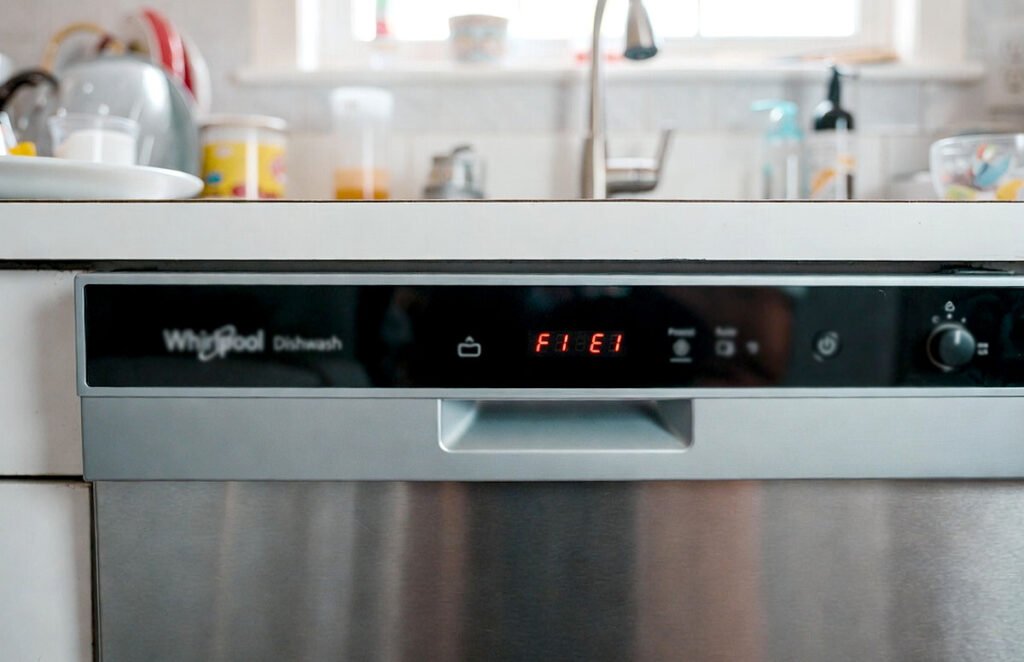
The kitchen floor was already wet when the beeping started. I popped the toe kick off with a T15 Torx, towels everywhere, homeowner stressed, dishwasher locked in an endless drain loop. Control panel flashing F1 E1 like it was mocking us. I found the real problem fast. In this article I break down exactly what that code means and how to fix it right.
The Whirlpool dishwasher error code F1 E1 is a water level failure, not a random glitch. The control board is confused because water is either coming in when it should not, or not leaving when it should. Most of the time the fix is mechanical, not electronic. A clogged pressure hose, a stuck float, or a bad OWI sensor usually causes it. Resetting alone rarely works. You fix the water issue and the code clears itself.
What is the Whirlpool Dishwasher Error Code F1 E1 and Why Does It Happen
This error shows up when the control board loses trust in the water level signals. Whirlpool dishwashers use a mix of sensors to know when to fill, wash, and drain. When those signals do not match reality, the board panics and throws F1 E1. It usually locks the machine into a drain cycle to prevent flooding, even if there is barely any water inside.
I see this code most after a slow buildup problem finally hits a tipping point. Grease, soap scum, and hard water minerals slowly clog the pressure system. One day the dishwasher fills a little too much or drains a little too slow. The control board notices the timing is off and shuts everything down. From the outside it feels sudden, but the failure has been brewing for months.
There are cases where the control board itself is bad, but that is not where I start. I always check the cheap, dirty parts first. Nine times out of ten, something simple is blocking water flow or confusing a sensor. Fix that, and the dishwasher goes right back to normal without replacing expensive electronics.
- Clogged pressure hose
- Dirty or failed OWI sensor
- Stuck float switch
- Drain hose siphoning
- Partial drain pump blockage
- Control board misreading water level
How to Fix Your Whirlpool Dishwasher Error Code F1 E1
Step 1: Kill Power and Pull the Dishwasher Out Safely
Before touching anything, shut off power at the breaker, not just the control panel. I have seen too many techs get zapped by live door switches. Open the door, remove the two mounting screws under the counter using a T15 Torx, then close the door again. That keeps the hinges from twisting while you slide it out.
Pull the dishwasher straight forward about a foot. Watch the water line and drain hose so they do not snag. If the floor is tight, lay down cardboard or an old towel. Most Whirlpool units have sharp metal edges under the frame, so gloves are smart here. Once out, remove the lower toe panel with a quarter inch nut driver.
Now you can actually see what you are dealing with. Look for standing water in the base pan or signs of past leaks. If the unit tipped during install, the float switch may already be triggered. At this point, do not reset anything yet. A reset hides symptoms. You want to find the cause first.
- Shut off breaker fully
- Use T15 Torx for mounting screws
- Slide unit out carefully
- Remove toe panel for access
Step 2: Check the Float Switch for Sticking or Soap Buildup
Open the door and pull the lower rack straight out. In the front right corner you will see the float, usually a small plastic dome or tower. Lift it gently with your fingers. It should move freely and drop back down with a soft click. If it feels gritty or stiff, you already found a problem.
Soap residue loves to build up under this float. Especially if gel detergent or too much soap is used. Pull the float straight up, no tools needed. Under it is the float stem and microswitch lever. Clean everything with hot water and a toothbrush. Do not use grease or oil. It needs to stay dry.
Now reach under the tub and feel the float switch itself. Sometimes the wires slip off or the switch gets knocked crooked during a move. The switch should be firmly clipped in place. If it rattles or spins, replace it. A bad float switch will absolutely trigger F1 E1.
- Float should move freely
- Clean soap residue fully
- No lubricant on float parts
- Replace loose float switch
Step 3: Clean the Pressure Hose and Air Trap
This is the step most DIY repairs miss. The pressure system tells the board how much water is inside. On Whirlpool units, a thin rubber hose runs from the sump to the pressure sensor or OWI sensor. You access it from underneath, usually on the right side of the sump assembly.
Use pliers to slide the clamp back, then pull the hose off. Be ready for nasty water. Blow through the hose gently. If it feels blocked or restricted, that is your culprit. Rinse it out in the sink until air passes freely. Also clean the plastic air trap nipple it connects to.
Check the hose for cracks or soft spots. If it feels gummy, replace it. They are cheap and fail quietly. Reinstall the hose securely and make sure the clamp is tight. A small air leak here can confuse the sensor just as much as a clog.
- Locate pressure hose at sump
- Clean hose and air trap
- Replace soft or cracked hose
- Secure clamp tightly
Step 4: Inspect and Test the OWI Sensor
The OWI sensor, also called the turbidity sensor, sits in the sump and reads water clarity and level. It is a common failure point for F1 E1. From underneath, twist it counterclockwise to remove. Some models have a locking tab you press with a flat screwdriver.
Once out, the lens is usually coated in white film or grease. Clean it gently with vinegar and a soft cloth. Do not scratch it. Check the wiring connector for corrosion or loose pins. If the sensor smells burnt or rattles, it is done.
A multimeter test can confirm failure, but most homeowners will not have the specs. In my experience, if cleaning does not help and the code returns, replace the sensor. Use OEM only. Aftermarket sensors cause more callbacks than they save money.
- Remove sensor from sump
- Clean lens carefully
- Inspect wiring connector
- Replace if code returns
Step 5: Verify Drain Hose Routing And Pump Performance
A badly routed drain hose can siphon water out during fill, which triggers F1 E1. Check that the drain hose has a high loop under the sink or is connected to an air gap. The loop should be at least 32 inches high. No exceptions.
Next, check the drain pump. From underneath, remove the pump cover with a quarter inch nut driver. Look for glass, labels, or food blocking the impeller. Spin it with your finger. It should move smoothly without grinding.
If the pump is weak, it may drain too slowly and confuse the control board. Listen during operation. A healthy pump has a steady hum. A failing one sounds rough or intermittent. Replace it if in doubt. Draining issues are a major trigger for this error.
- Ensure proper high loop
- Clear drain pump debris
- Spin impeller by hand
- Replace noisy drain pump
Step 6: Reset And Confirm Control Board Behavior
After fixing the water issue, restore power at the breaker. Close the door and run a diagnostic cycle. Most Whirlpool units enter diagnostics by pressing three keys in sequence three times, like Heated Dry, Normal, Heated Dry. Timing matters, about one second per press.
Watch the cycle closely. The dishwasher should fill, pause, wash, then drain without error. If F1 E1 comes back immediately, unplug the unit again and recheck sensor connections. Only after all mechanical checks pass do I consider a control board.
Control boards fail, but not often. When they do, they usually show other symptoms like random beeping or dead buttons. If you replace it, photograph wire positions first. Use a quarter inch nut driver for the housing screws. Take your time and do it once.
- Restore power safely
- Run diagnostic cycle
- Observe fill and drain
- Replace board last
How Can You Prevent The F1 E1 Error From Coming Back
Regular cleaning matters more than people think. Once a month, pull the lower rack and clean the float area. Wipe soap residue before it hardens. This alone prevents many water level issues. Also run a vinegar cycle every few months to keep sensors clear.
Use the right detergent and the right amount. More soap does not mean cleaner dishes. It means more buildup inside hidden passages. Gel detergents are the worst offenders. Pods tend to be more consistent and easier on sensors.
Finally, check under the sink once in a while. Make sure the drain hose loop is still high and secure. Garbage disposal installs often knock it down. A simple hose clip can save you from another shutdown and a long night of beeping.
- Clean float monthly
- Run vinegar cleaning cycles
- Avoid excess detergent
- Prefer detergent pods
- Check drain hose loop
- Inspect under sink yearly
Final Thoughts
This error feels scary, but it is usually the dishwasher protecting your kitchen. Take it step by step and fix the water problem, not the code. If you get stuck, pause and reassess instead of forcing parts. These machines are fixable. With patience and the right checks, you can beat F1 E1 and get back to quiet, clean dishes.
| Steps | Difficulty Level | Parts Needed | Pro Tip |
|---|---|---|---|
| Power And Access | Easy | T15 Torx, nut driver | Always shut breaker off |
| Float Switch Check | Easy | None | Clean with hot water only |
| Pressure Hose Cleaning | Medium | Pliers, towels | Blow through hose |
| OWI Sensor Inspection | Medium | Flat screwdriver | Use OEM replacement |
| Drain System Check | Medium | Nut driver | Maintain high loop |
| Control Board Reset | Hard | Camera, nut driver | Replace last |
Frequently Asked Questions (FAQs)
Is it safe to keep resetting the dishwasher when F1 E1 appears
Resetting over and over is not a fix. The dishwasher is detecting a real water level problem. Repeated resets can stress the drain pump and control board. You might get it running for a day, but the underlying issue will return. Always inspect the float, pressure hose, and drain system before relying on resets.
Can this error be caused by using the wrong detergent
Yes, absolutely. Excess detergent or gel formulas create thick residue that clogs pressure hoses and coats sensors. Over time, the dishwasher loses accurate water readings. Switching to pods and using less soap often prevents repeat failures. I see detergent related issues weekly in the field.
Do I need to replace the control board for this code
Most of the time, no. Control boards are the last thing I replace for F1 E1. Mechanical and sensor issues cause this error far more often. Only consider a new board after all sensors, hoses, and pumps test good and the error returns immediately.
Is it normal for the dishwasher to keep draining nonstop
When F1 E1 is active, nonstop draining is normal behavior. The control board is trying to prevent flooding. It assumes water is where it should not be. Once the water level readings make sense again, the draining will stop.
Can a clogged sink drain trigger this error
Indirectly, yes. A slow or clogged sink drain can cause backflow or siphoning issues if the drain hose is not looped high enough. That can confuse the dishwasher water level system. Always fix sink drainage problems and verify proper hose routing.
Do I need special tools to fix this
No specialty tools are required. A T15 Torx, a quarter inch nut driver, pliers, and a flashlight cover almost everything. A multimeter helps but is optional. Most fixes are cleaning and inspection based, not heavy repairs.
Is it worth fixing an older Whirlpool dishwasher
If the unit is under ten years old and otherwise solid, yes. F1 E1 is usually inexpensive to fix. Sensors and hoses are cheap compared to replacement. If the tub is rusty or the racks are falling apart, then replacement might make more sense.
Can hard water make this problem worse
Hard water is a major contributor. Mineral deposits clog air traps and coat sensors faster. If you live in a hard water area, regular vinegar cleaning cycles are critical. A whole house softener or dishwasher additive also helps reduce repeat issues.