As an Amazon Associate, I earn from qualifying purchases at no extra cost to you.
Miele Dishwasher Error Code F18: How to Fix It Like a Pro
 ByZayyan

There is nothing quite like the sinking feeling of seeing that flashing red light just as you are about to relax for the evening. You have a mountain of crusty dinner plates and a machine that refuses to fill with water. I have seen this exact frustration on countless faces over my twenty years of fixing these machines.
The core solution for an F18 error involves checking the flow meter and the water inlet valve to ensure your machine actually gets the water it needs. First, you should start by turning off the power and checking the supply hose for any obvious kinks or clogs. Then, if the hose is clear, you will likely need to inspect the internal flow sensor or the solenoid valve for electrical failure. Consequently, cleaning the small filters inside the intake connection often solves the issue without needing expensive new parts or a professional service call.
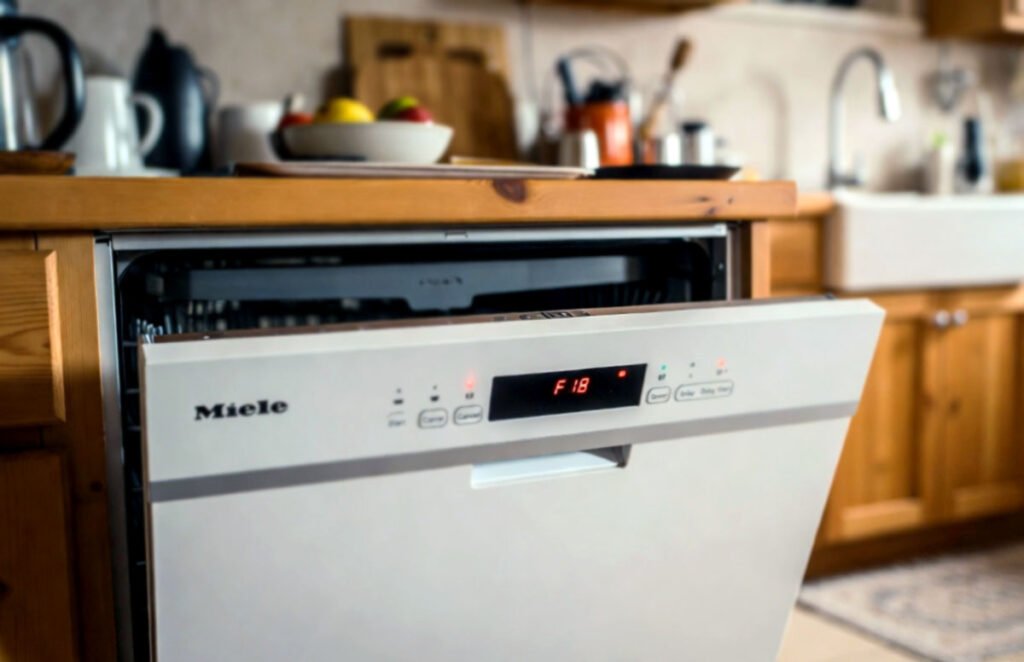
What is the Miele F18 Error?
This specific code is the way your dishwasher tells you that it is having a hard time sensing the water coming into the tub. In my two decades of repair work, I have found that Miele machines are incredibly precise about their timing. Furthermore, if the flow meter does not spin fast enough or if the water takes too long to reach the correct level, the computer triggers this alarm. As a result, the machine stops to prevent the pump from running dry and burning out.
Most people think their machine is totally broken when they see this code, but it is usually just a communication breakdown between the sensors and the control board. For instance, the flow meter is a tiny plastic wheel that spins as water passes through it. It sends electrical pulses to the brain of the dishwasher constantly. Thus, when those pulses are missing or inconsistent, the machine stops everything to protect itself from potential leaks or overheating.
You might hear the machine hum for a second and then suddenly stop with that dreaded beeping sound. Often, it is triggered right at the start of a cycle when the initial fill should happen. Sometimes the issue is external, like a clogged house filter or a pinched hose. However, other times it is an internal component that has simply worn out after years of hard work in your kitchen. Ultimately, it is a safety measure.
- A faulty or stuck water inlet solenoid valve.
- The internal flow meter sensor has failed completely.
- Kinked or pinched water supply hoses behind the unit.
- Debris and mineral scale clogging the intake filter.
- Low water pressure from your home plumbing system.
- A glitch in the main electronic control module.
Miele Dishwasher Error Code F18 Repair Guide
Check the Water Supply Valve
First, you need to make sure the water is actually turned on at the source under your sink. I cannot tell you how many times I have driven across town just to find a shut-off valve that was bumped. Reach under there and give the handle a firm turn. You want to ensure it is fully open and providing maximum pressure to the appliance.
Sometimes the valve itself can become restricted with mineral buildup or rust over time. This is especially true in older homes. If you feel resistance, the valve might not be opening all the way inside the pipe. Therefore, you can test this by disconnecting the hose. Carefully turn the valve on into a bucket to see if the flow is strong and steady.
Once you are sure the house supply is active, check the braided or plastic hose for any sharp bends. Dishwashers are often pushed back too far against the wall. This can crush the line and trigger that F18 code immediately. In short, a simple adjustment to the position of the machine or the hose can often fix the whole problem quickly.
- Verify the sink shut-off valve is fully open.
- Inspect the supply hose for kinks or pinches.
- Test the water pressure into a separate bucket.
- Reposition the dishwasher to prevent hose restriction.
Clean the Inlet Filter Screen
Every Miele dishwasher has a small plastic filter screen tucked inside the water intake connection point. This little screen is your first line of defense against sand, grit, and pipe scale. Over several years, these tiny particles can build up. Eventually, they create a thick crust that prevents water from entering the machine fast enough to satisfy the internal timer.
To clean it, you must first turn off the water. Then, unscrew the large plastic nut where the hose meets the machine. Use a pair of needle-nose pliers to gently pull the small plastic filter out of its seat. Be very careful not to tear the mesh. Even a small hole can let debris into the expensive internal valves.
Hold the filter under a faucet. Use an old toothbrush to scrub away any visible gunk or white calcium deposits. If the buildup is really stubborn, you can soak the screen in a bit of white vinegar. This helps dissolve the minerals. Once it looks clear and bright, pop it back into place and tighten the hose connection firmly.
- Disconnect the water intake hose from the machine.
- Remove the small plastic mesh filter with pliers.
- Scrub away debris using a soft brush and water.
- Soak in vinegar if mineral deposits are present.
Inspect the Flow Meter Sensor
The flow meter is a clever little device that measures exactly how much water enters the tub. It contains a small magnet on a spinning wheel. It also has a reed switch that counts every rotation. If this sensor gets stuck, the dishwasher will think no water is entering. Consequently, it throws the F18 code to keep your kitchen safe.
Accessing this part usually requires removing the side panel of the dishwasher. This is easier than it sounds. Once you are inside, you will see the plastic water path assembly. Check the wiring harness to ensure the plugs are seated tightly. Also, make sure no wires have been chewed by pests or vibrated loose over many years.
You can sometimes shock a stuck flow meter back to life by gently tapping the plastic housing. Use the handle of a screwdriver for this. This simple action can dislodge a tiny grain of sand that might be stopping the wheel. If the wiring is solid but the wheel is still not spinning, the sensor board itself might be dead.
- Remove the side panel to access the water path.
- Check the wiring harness for loose or damaged connections.
- Gently tap the flow meter housing to free it.
- Verify the sensor board is seated correctly in place.
Test the Water Inlet Valve
The inlet valve is an electromagnetic gatekeeper that opens when the dishwasher asks for water. If the solenoid coil inside this valve burns out, the gate stays shut. Thus, no water can pass through. You can usually hear a faint clicking sound or a low hum when the valve is trying to work. Listen closely during the start.
To test this part like a pro, you should use a multimeter to check for electrical continuity. If the meter shows an open circuit, the coil has failed. In that case, the entire valve assembly must be replaced. It is a very common failure point in areas with hard water. Power surges can also stress these delicate electrical parts.
Make sure the power is completely disconnected before you touch these terminals. They carry a standard household current. If the valve tests fine electrically but still won’t let water through, it might be mechanically jammed. Replacing the valve is the only reliable way to get your kitchen back in working order. This will stop the annoying beeping.
- Listen for a hum or click during the start.
- Check the solenoid coil for electrical continuity.
- Ensure the power is off before testing terminals.
- Replace the valve if it is mechanically jammed.
Reset the Electronic Control Board
Sometimes the F18 error is just a ghost in the machine. It can be caused by a sudden power flicker or a minor data glitch. The computer gets confused and holds onto the error code stubbornly. Performing a hard reset can clear the memory. This gives the dishwasher a fresh start. It is often the simplest fix available.
To do this properly, do not just use the power button. You need to either unplug the unit or flip the circuit breaker. Leave it completely without power for at least five minutes. This allows the capacitors on the circuit board to discharge fully. This ensures all the temporary memory is wiped clean before you restore the power again.
Once you restore the power, try running a short rinse cycle first. Do not start a full heavy load yet. This allows the machine to calibrate its sensors and verify the water flow. If the cycle finishes without any red lights, you have successfully cleared the glitch. This saves you an expensive visit from a local repair technician.
- Disconnect the main power at the circuit breaker.
- Wait five minutes for the electronics to discharge.
- Restore power and select a short rinse cycle.
- Monitor the machine for a successful fill sequence.
Verify Household Water Pressure
If you have tried everything else and the code keeps coming back, the problem might be your plumbing. Miele machines require a specific range of water pressure to function correctly. If your pressure is too low, the water trickles in slowly. Then, the dishwasher times out and assumes there is a major blockage or a serious leak.
Check other faucets in your kitchen to see if the flow seems weaker than usual. Sometimes a failing pressure regulator on your main line can cause intermittent issues. If you have a well system, your pressure tank might need more air. Alternatively, the pump switch might be set too low. The Miele needs a strong, steady flow.
In some cases, a whole-house water filtration system can become clogged. This drops the pressure significantly. If you have a filter, try bypassing it temporarily. This helps you see if the dishwasher starts behaving again. Getting the pressure back up to the standard range will usually satisfy the flow meter. Your dishwasher will then run happily.
- Check other kitchen faucets for low water flow.
- Inspect the main house water pressure regulator.
- Verify the well pump settings if applicable.
- Bypass whole-house filters to test for pressure drops.
How Can I Prevent the F18 Error?
Preventing this headache starts with keeping your water supply as clean as possible. I always tell my friends to check their intake filters at least once a year. This is vital if you live in an area with hard water. If you notice white crusty buildup on your showerhead, that same stuff is moving toward your dishwasher sensors.
Another great trick is to avoid slamming your kitchen cabinets. This is important if they are right next to the dishwasher hose. Over time, constant vibrations or shifting items can nudge the machine. This can kink the intake line against the back wall. Make sure the machine is leveled perfectly and secured to the underside of the counter.
Finally, consider installing a basic sediment filter on your main water line. This is helpful if you deal with frequent pipe repairs in your neighborhood. Every time the city works on the pipes, sand and rust enter your home. A simple filter catches that junk early. This is much cheaper than replacing a flow meter every few years.
- Clean the intake filter screen every twelve months.
- Install a water softener if you have hard water.
- Ensure the dishwasher is leveled and cannot shift.
- Check hoses for kinks after any kitchen maintenance.
- Use a sediment filter for the whole house.
- Run a monthly cleaning cycle with a descaling agent.
Final Thoughts
Dealing with a broken dishwasher is a huge chore, but the F18 error is something you can definitely handle with a little patience. Most of the time, it is just a matter of cleaning a filter or straightening a hose to get things moving again. Take it one step at a time, keep your cool, and you will be back to enjoying a clean kitchen without the mountain of hand-washed dishes.
| Steps | Difficulty Level | Parts Needed | Pro Tip |
| Filter Cleaning | Low | None | Use vinegar for hard scale. |
| Hose Inspection | Low | None | Leave space behind the unit. |
| Valve Testing | Medium | Multimeter | Always turn off the power first. |
| Flow Meter Fix | High | Screwdriver | Tap the sensor gently to free it. |
Frequently Asked Questions (FAQs)
Is it safe to leave the dishwasher on when F18 appears?
It is generally best to turn the machine off as soon as you see the error code. While the dishwasher has built-in safety features, leaving it in an error state can put unnecessary stress on the electronic control board. Shutting it down also allows you to safely inspect the water supply without the risk of an internal pump running while dry.
Can I fix the F18 error without any special tools?
You can often resolve this issue using just your hands and perhaps a pair of basic pliers. Many F18 errors are caused by a simple kinked hose or a dirty intake filter. These can be removed and cleaned under a faucet easily. If the problem is deeper, you might need a screwdriver, but the initial troubleshooting steps are very beginner-friendly.
Do I need to pull the dishwasher out from the cabinet?
In many cases, yes, you will need to slide the unit forward to get a good look at the water intake hose. Be sure to disconnect the mounting screws that hold the machine to the countertop first. Sliding it out carefully will allow you to see if the hose has been pinched or if there are leaks at the connection point.
Is it common for Miele dishwashers to have water flow issues?
Miele machines are built to very high standards, but they are also very sensitive to water quality and pressure. Because they are designed to be efficient, they use precise sensors that can be triggered by minor changes. This is not necessarily a sign of a bad machine, but rather a reflection of its high-performance design and protective programming.
Can hard water cause the F18 error code to return?
Hard water is one of the leading causes of recurring F18 errors because mineral deposits build up inside the inlet valve. These minerals act like tiny rocks that can jam the moving parts of your sensors. If you have very hard water, using a dedicated dishwasher salt or a house-wide softener is the best way to stop the code.
Do I have to replace the flow meter if it is dirty?
Not always, as many flow meters can be cleaned or freed with a little bit of manual intervention. If a small piece of debris is simply stuck in the wheel, flushing the system or tapping the housing can often fix it. However, if the electrical sensor on the side of the meter has shorted out, then a full replacement is necessary.
Can a clogged drain cause an F18 error code?
While the F18 code is specifically related to the water coming into the machine, a major drainage issue can sometimes confuse the system. If the dishwasher cannot empty the old water, it may not trigger the fill sequence correctly. It is always a good idea to check your bottom filters and drain pump for debris whenever you are troubleshooting.
Is it expensive to hire a professional for this repair?
The cost can vary, but a professional service call usually involves a flat travel fee plus the cost of labor and parts. If the fix is just a clogged filter, you might feel frustrated paying for a full visit. That is why I always recommend trying the basic cleaning and hose checks yourself first to save a few hundred dollars.