As an Amazon Associate, I earn from qualifying purchases at no extra cost to you.
6 Best Knives for Home Chef (Buying Guide) 2026
 ByZayyan

Picking the right chef’s knife feels harder than it should. You walk into a store, see 40 options, and suddenly forget everything you know. In this article I will show you the top 6 best knives for home chef use, break down what makes each one worth your money, and help you walk away with zero regret.



Top 6 Best Chef’s Knives You Can Buy Now
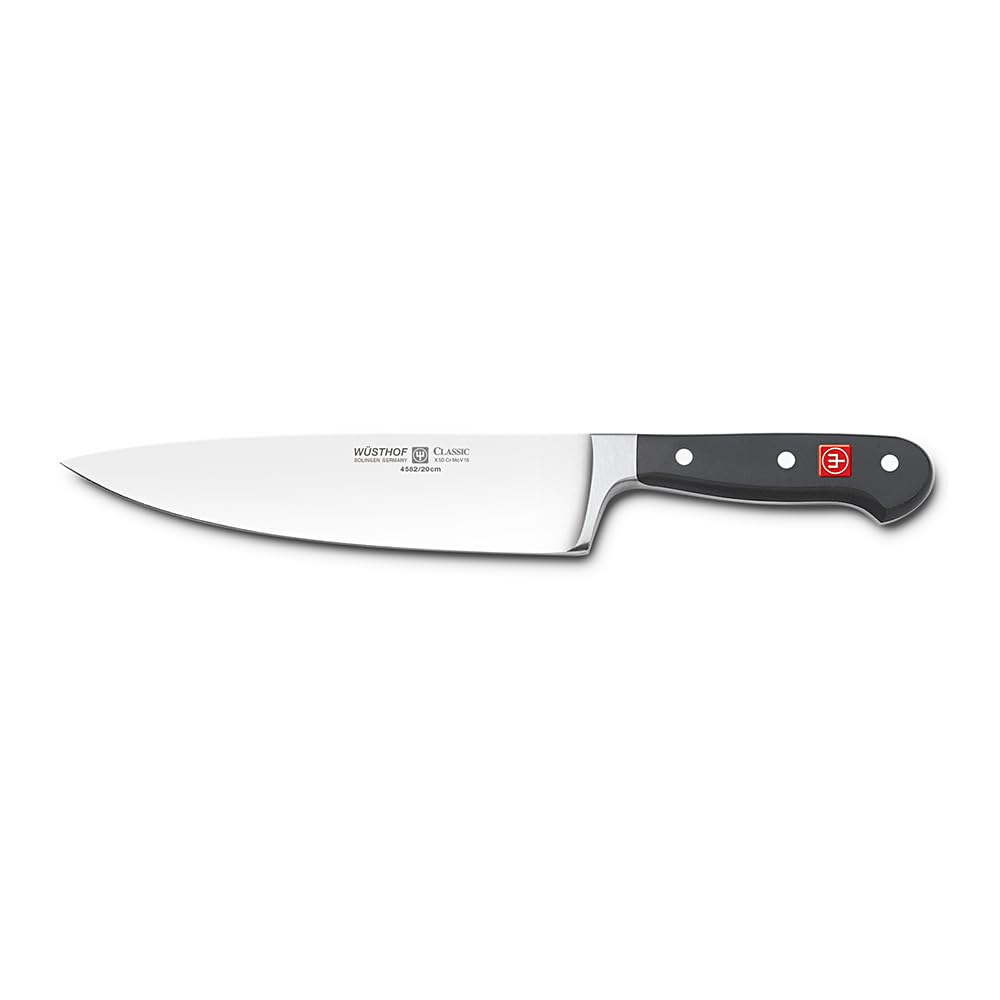
WÜSTHOF Classic 8 Inch Chef’s Knife – Best All-Around Workhorse
If there’s one knife that shows up in nearly every serious home kitchen, it’s this one. The Wüsthof Classic has been around forever, and for good reason. It feels solid the moment you pick it up. Not heavy in a bad way. Solid in a “this thing means business” way.
The blade is forged from a single piece of high-carbon stainless steel. That means it holds an edge really well. You won’t be sharpening it every other week. The full bolster protects your fingers, and the triple-riveted handle gives you a grip that doesn’t slip even when your hands are wet and you’re rushing through dinner prep.
What makes it stand out is the balance. It sits perfectly between the blade and handle. Chopping onions, slicing chicken, breaking down herbs — it handles all of it without making your wrist tired. This is a knife that becomes an extension of your hand.
It’s pricier than some beginner options, yes. But this is a buy-once, use-forever situation. Treat it right, and it’ll outlast almost everything else in your kitchen.
- Blade: High-carbon stainless steel
- Handle: Triple-riveted synthetic
- Weight: Balanced, not heavy
- Best for: Everyday cooking, all tasks
- Price range: Mid-to-high
MAC Knife Professional Series 8 Inch – Best for Effortless Slicing
MAC knives don’t get talked about as much as they should. That’s a shame, because this one is genuinely special. It’s a Japanese-style knife made for people who want razor-thin slices without putting in a lot of effort. Once you use it, you’ll wonder why you waited.
The hollow edge is what sets it apart. Those little dimples along the blade create air pockets that stop food from sticking. So when you’re cutting potatoes or cucumbers, they actually slide off instead of clinging to the side. It sounds like a small thing. It isn’t.
The blade is thinner and harder than most German-style knives. It’s sharpened to about 15 degrees per side, which gives you that incredible cutting feel. You barely need to push. The knife does the work. For anyone who cooks a lot of vegetables or fish, this is a dream.
The handle is comfortable but modest. Nothing flashy. It fits most hand sizes well and gives good control during detailed cuts. One thing to watch: this knife is harder, which means it’s also slightly more brittle. Don’t use it on bones or frozen food.
- Blade: High-carbon molybdenum steel
- Handle: Pakkawood composite
- Edge: Hollow ground, 15 degrees per side
- Best for: Slicing vegetables, fish, delicate cuts
- Price range: Mid-to-high
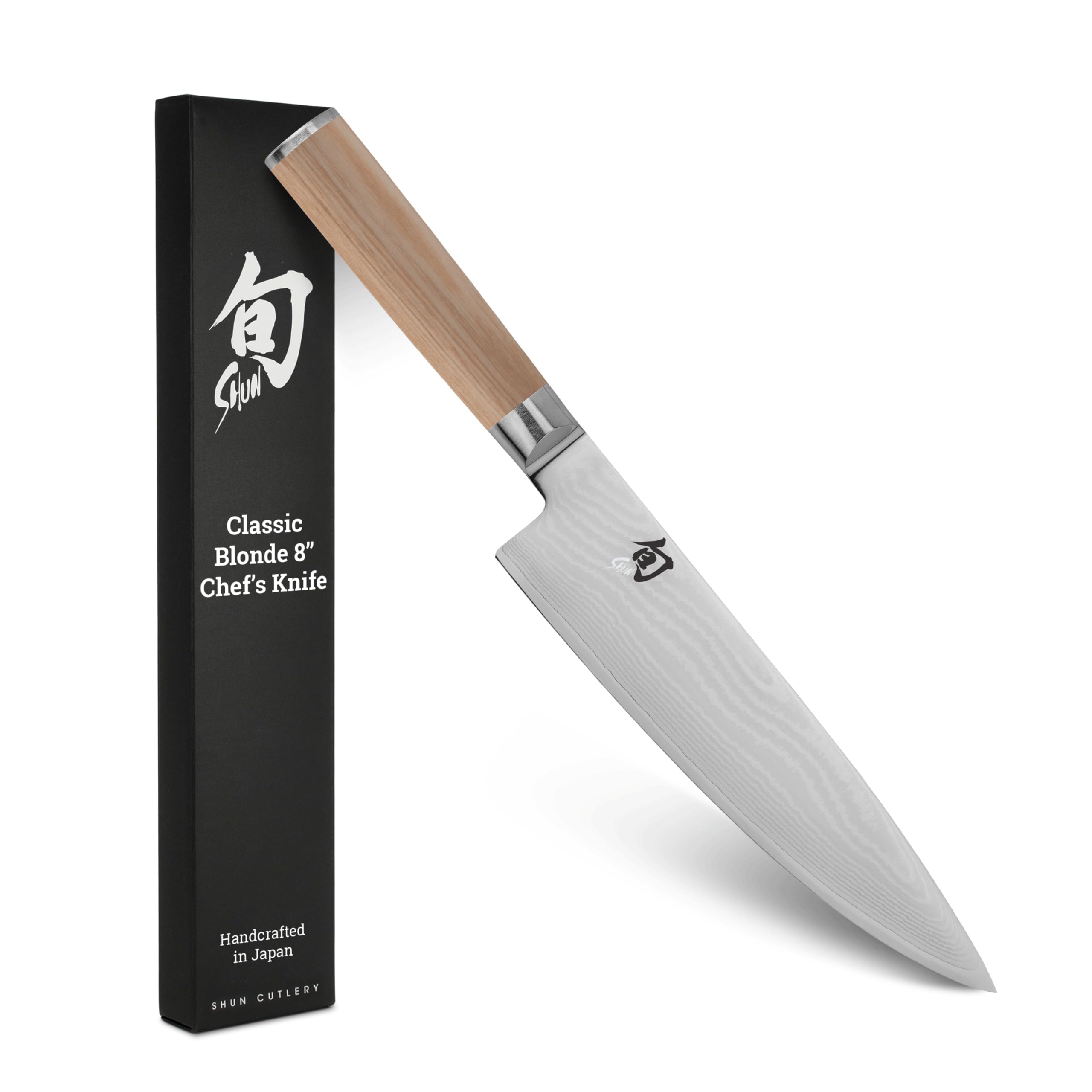
Shun Classic Blonde 8-Inch Chef’s Knife – Best Looking Knife That Actually Performs
Some knives look pretty but disappoint in real use. The Shun Classic Blonde is not one of those. It’s beautiful, yes. But it also cuts like it means it. This is the knife you leave on your counter because it’s too good-looking to put away.
The blade is made from VG-MAX steel with 68 layers of Damascus cladding on each side. That layering isn’t just for looks. It adds durability and helps reduce drag when cutting. The edge is hand-sharpened in Japan at 16 degrees, which gives it a precision feel that’s hard to match at this price.
The blonde PakkaWood handle is what makes this version special. It’s lighter in color, which gives the whole knife a clean, modern look. But more importantly, the D-shaped handle fits right-handed users perfectly. It keeps your grip consistent even during long cooking sessions.
This knife is handcrafted. Every single one. That means slight variations exist, but they’re part of what makes it feel personal. It’s a serious tool that also happens to be stunning. If you care about both performance and aesthetics, this is your knife.
- Blade: VG-MAX steel, 68-layer Damascus
- Handle: Blonde PakkaWood, D-shaped
- Edge: Hand-sharpened at 16 degrees
- Best for: Precision cuts, gift giving, display kitchens
- Price range: High
ZWILLING Professional S 8-Inch Chef’s Knife – Best German Knife for Serious Cooks
Zwilling has been making knives since 1731. Let that sink in. This isn’t a brand chasing trends. This is a company that has been doing one thing for almost 300 years and getting better at it. The Professional S is their answer to serious home cooking.
The blade is made using their Sigmaforge process, which means it’s forged from a single piece of steel under massive pressure. That gives it incredible strength and a very precise taper from spine to edge. It’s sharp out of the box, and it stays sharp longer than most knives you’ve used before.
The handle is ergonomic and sits nicely in your palm. It’s got a traditional three-rivet design with a full bolster, which makes it feel safe and controlled. If you’ve ever slipped with a knife and scared yourself, a full bolster helps prevent that. Your finger naturally rests against it.
What I love about this knife is how it handles heavy tasks. Squash, thick carrots, dense bread. It doesn’t flinch. It’s a powerful knife that still has enough finesse for everyday cooking. Great for someone upgrading from a basic set for the first time.
- Blade: Single-piece Sigmaforge stainless steel
- Handle: Three-rivet ergonomic grip
- Bolster: Full, for added safety
- Best for: Heavy prep, everyday cooking
- Price range: Mid-to-high
Global Knives 8-Inch Chef’s Knife – Best for Lightweight Control
The Global G-2 looks like nothing else in your kitchen. No bolster. No separate handle. Just one seamless piece of stainless steel from tip to end. It’s different. And once you get used to it, it’s honestly kind of amazing.
The blade is made from Cromova 18 stainless steel, which is ice-tempered for extra hardness. The edge is sharpened to about 15 degrees and stays sharp for a long time. Combine that with the lightweight design and you get a knife that feels effortless. Less hand fatigue, especially on long cooking days.
The handle is hollow and filled with sand for balance. It sounds strange but works brilliantly. The dimpled texture gives you grip without needing a traditional bolster. Some people love it immediately. Others take a little time to adjust. Either way, the control you get once you’re used to it is excellent.
This knife is ideal if you have smaller hands or find traditional knives too heavy. It’s also great for anyone who does a lot of fast, repetitive cutting. The light weight means your hand doesn’t wear out. One note: the all-metal design can feel cold in winter kitchens. A small trade-off for a seriously good knife.
- Blade: Cromova 18 stainless steel, ice-tempered
- Handle: Seamless hollow stainless steel
- Weight: Very light
- Best for: Small hands, fast prep, lightweight cooking
- Price range: Mid
Victorinox 8 Inch Fibrox Pro Chef’s Knife – Best Budget Knife That Punches Way Above Its Price
Here’s something a lot of people won’t tell you. The Victorinox Fibrox Pro is the knife professional cooks reach for when they don’t want to risk their expensive knives. It’s cheap. It performs like it isn’t. That’s the whole story.
The blade is laser-tested and ice-hardened, which means the edge is consistent all the way along. It slices cleanly through tomatoes, herbs, meat, you name it. The sharpness out of the box surprised me the first time I used one. For the price, there’s honestly nothing close.
The Fibrox handle is textured, non-slip, and dishwasher-safe. It’s not glamorous. But it works. Your grip stays firm even when your hands are slippery. The handle also has a slight curve that fits comfortably in most hand sizes. It just works and keeps working.
This is the knife to recommend to someone just starting out, someone who needs a reliable backup, or someone who cooks a lot and doesn’t want to stress about damaging a fancy blade. It’s also NSF-certified, which means professional kitchens use and trust it. That says a lot. Buy it. You won’t feel like you compromised.
- Blade: High-carbon stainless steel, ice-hardened
- Handle: Fibrox textured non-slip grip
- Dishwasher safe: Yes
- Best for: Beginners, budget buyers, backup knife
- Price range: Budget-friendly
I hope this guide makes your decision a whole lot easier. Every knife on this list earns its spot. It just comes down to what matters most to you. Want the best value? Go Victorinox. Want something stunning that cuts beautifully? Shun. Want a lifetime workhorse? Wüsthof or Zwilling. Pick the one that fits your cooking style, and then actually use it. That’s what matters.
| Knife | Best For | Blade Steel | Price Range |
|---|---|---|---|
| WÜSTHOF Classic 8″ | All-around everyday cooking | High-carbon stainless | Mid-to-high |
| MAC Professional 8″ | Slicing vegetables and fish | Molybdenum steel | Mid-to-high |
| Shun Classic Blonde 8″ | Precision cuts and aesthetics | VG-MAX Damascus | High |
| ZWILLING Professional S 8″ | Heavy prep and serious cooks | Sigmaforge stainless | Mid-to-high |
| Global G-2 8″ | Lightweight fast cutting | Cromova 18 stainless | Mid |
| Victorinox Fibrox Pro 8″ | Budget buyers and beginners | Ice-hardened stainless | Budget |
Things to Consider Before Buying Knives for Home Chef: A Real-World Buying Guide
Buying a kitchen knife sounds easy until you’re standing in front of a wall of options and have no idea what half the labels mean. Steel type, blade angle, bolster, tang — it gets overwhelming fast. And if you pick wrong, you’re stuck with something that frustrates you every single time you cook.
The good news? There are clear things to consider before buying knives for home chef use, and once you know them, the decision gets a lot simpler. Here’s everything that actually matters.
Blade Steel: What Your Knife Is Actually Made Of
Not all steel is the same. The type of steel in your blade affects how sharp it gets, how long it stays sharp, and how much care it needs. Getting this wrong means buying a knife that disappoints you from day one.
There are two main camps: German steel and Japanese steel. German steel like the kind in Wüsthof or Zwilling knives is softer, more flexible, and very forgiving. You can use it hard and it won’t chip. Japanese steel like VG-10 or VG-MAX is harder, holds a sharper edge longer, but needs more careful handling.
If you cook every day and want low maintenance, German steel is your friend. If you love razor-thin slices and don’t mind being gentle with your tools, go Japanese. Neither is wrong. It just depends on how you cook.
- German steel: durable, forgiving, easier to maintain
- Japanese steel: sharper edge, more precise, needs careful use
- High-carbon steel: sharpens beautifully but can rust if not dried fast
- Stainless steel: rust-resistant, easier to care for, very common
Blade Length: Picking the Right Size for Your Kitchen
Most people just grab an 8-inch knife because that’s what everyone recommends. And honestly, for most home cooks, that’s exactly right. But it’s still worth understanding why, so you can make the call that fits your situation.
An 8-inch blade handles almost everything: chicken breasts, onions, herbs, squash. It gives you enough length to slice with a smooth rocking motion but isn’t so long that it feels unwieldy. A 6-inch is great if you have a small cutting board or smaller hands. A 10-inch is for people who break down large cuts of meat regularly.
Think about your actual cooking habits, not your dream cooking habits. If you mostly cook for two people and chop veggies on a medium board, an 8-inch is perfect. Buy based on your real kitchen, not an imaginary one.
- 6 inch: great for small hands, tight spaces, detail work
- 8 inch: the sweet spot for most home cooks
- 10 inch: best for large proteins, big batch cooking
- Try holding the knife before buying if you can
Handle Comfort: The Part Most People Ignore
Here’s something a lot of buyers skip over. They obsess over the blade and completely forget the handle. But your hand touches the handle for the entire time you cook. If it’s uncomfortable, you’ll dread picking the knife up.
Handles come in different shapes, materials, and sizes. Western handles are usually wider, rounded, and fit most hand sizes well. Japanese handles are often thinner and work beautifully for a pinch grip. Material matters too: PakkaWood feels warm and solid, synthetic polymer is grippy and dishwasher-safe, and full stainless steel looks great but can feel slippery.
Before buying, think about your grip style. Do you pinch the blade near the bolster? Then the handle shape matters less. Do you wrap your full hand around the grip? Then you want something that fills your palm comfortably. Always prioritize comfort over looks.
- PakkaWood: warm feel, beautiful, needs hand washing
- Synthetic/Fibrox: grippy, practical, dishwasher-safe options available
- Full metal handle: sleek, can be slippery when wet
- D-shaped handles suit right-handed pinch grips well
Weight and Balance: How a Knife Actually Feels in Use
A knife can have great steel and a beautiful handle and still feel wrong. That’s usually a balance issue. Balance is about where the weight sits, and it changes how tired your hand gets after 20 minutes of chopping.
Hold the knife at the bolster (the thick part between blade and handle) and see if it feels neutral, blade-heavy, or handle-heavy. A balanced knife feels like it almost floats in your hand. A blade-heavy knife strains your wrist over time. A handle-heavy knife makes fine control harder.
Weight is personal too. Some cooks love a heavy knife because it feels powerful. Others prefer something lighter for speed and less fatigue. Neither is objectively better. The best knife is the one that disappears in your hand because it feels so natural.
- Balance point: should sit near the bolster for most cooks
- Heavier knives: feel sturdy, better for dense vegetables
- Lighter knives: less fatigue, great for fast prep work
- Always pick up a knife before buying when possible
Full Tang vs. Partial Tang: Why It Matters More Than You Think
You might see the word “tang” on a knife spec sheet and wonder why it’s there. It’s actually one of the most important structural details of a knife. And it directly affects how long your knife lasts.
Tang refers to how far the steel of the blade extends into the handle. A full tang knife has steel running all the way through the handle to the end. You can usually see it along the sides of the handle as two thin strips of metal. Partial tang stops somewhere in the middle. Hidden tang is a single narrow piece that goes through but isn’t visible.
For everyday use, full tang is the most reliable. The knife stays together under stress. Partial tang knives can wobble or loosen over time, especially if you wash them a lot. It’s not that they’re always bad, but for a knife you plan to use for years, full tang gives you more confidence.
- Full tang: strongest, most durable, best for everyday use
- Partial tang: fine for light use, can loosen over time
- Hidden tang: common in Japanese knives, still very strong
- Check the handle sides for visible steel as a quick test
Your Budget: Being Honest About What You Actually Need
Budget conversations make people uncomfortable. But being real here saves you from two common mistakes: spending too little and getting frustrated, or spending too much and being afraid to actually use the knife.
A $30 knife like the Victorinox Fibrox Pro is used in professional kitchens. That’s not a myth. It’s sharp, durable, and easy to maintain. So you don’t need to spend $200 to get a great result. But a $10 supermarket knife with stamped steel and a hollow plastic handle will disappoint you within a month.
The sweet spot for most home cooks is somewhere between $50 and $150. In that range, you get forged steel, a solid handle, good balance, and real longevity. Spend once on something good, learn to maintain it, and you won’t need to buy another knife for a very long time.
- Under $40: usable but often stamped steel, less durable
- $50 to $100: solid quality, forged steel, great starting point
- $100 to $150: excellent performance, better materials
- Over $150: premium feel, longer edge retention, worth it if you cook often
I hope this helps you feel more confident about your next knife purchase. Understanding the things to consider before buying knives for home chef use takes the guesswork out completely. You don’t need to spend hours researching. Just know your cooking habits, pick the right steel, find a handle that fits your grip, and spend what makes sense for how much you actually cook.
| Factor | What to Look For | Why It Matters | Watch Out For |
|---|---|---|---|
| Blade Steel | German (softer) or Japanese (harder) steel | Affects sharpness, edge retention, and care needs | High-carbon steel rusts if not dried immediately |
| Blade Length | 6, 8, or 10 inch depending on your cooking style | Wrong length makes everyday tasks awkward | Don’t buy a 10-inch if your cutting board is small |
| Handle Comfort | PakkaWood, Fibrox, or full metal based on your grip | You hold the handle the whole time you cook | Slippery handles cause accidents, especially when wet |
| Weight and Balance | Test at the bolster, should feel neutral in hand | Imbalanced knives cause wrist fatigue over time | Blade-heavy knives tire your hand quickly |
| Tang Type | Full tang for daily use, hidden tang for Japanese styles | Determines structural durability of the knife | Partial tang can loosen with heavy use or frequent washing |
| Budget | $50 to $150 for most home cooks | Guides you toward quality without overspending | Very cheap knives go dull fast and feel unsafe to use |
Frequently Asked Questions (FAQs)
Is it worth spending more on a high-end chef’s knife?
Yes, in most cases. A quality knife lasts decades if you care for it properly. Cheaper knives go dull fast, which actually makes them more dangerous because you press harder when cutting. A knife like the Wüsthof or Shun stays sharp longer, cuts cleaner, and makes cooking more enjoyable every single day.
Is it okay to put chef’s knives in the dishwasher?
Only if the knife is specifically rated for it, like the Victorinox Fibrox Pro. For most quality knives, skip the dishwasher. The heat and detergent damage the blade and handle over time. Hand washing with warm soapy water and drying immediately keeps your knife in much better shape for much longer.
Can I use one chef’s knife for everything?
Yes, and that’s actually the whole point of a chef’s knife. An 8-inch blade handles vegetables, meat, fish, herbs, and most everyday tasks. You don’t need a drawer full of knives. One great chef’s knife covers about 80 percent of what you do in the kitchen. Add a paring knife and you’re set.
Can I sharpen my chef’s knife at home?
Absolutely. You have two good options. A honing rod keeps the edge aligned between sharpenings. A whetstone actually sharpens and removes metal. If you’re new to it, start with a simple pull-through sharpener or a honing rod. Just do it regularly. A knife used often needs honing at least every few weeks.
Do I need a German or Japanese knife?
Depends on how you cook. German knives like Wüsthof and Zwilling are thicker, more durable, and great for heavy cutting tasks. Japanese knives like MAC and Shun are thinner, harder, and give you incredibly precise, effortless slices. Both are excellent. If you cook a variety of food, a German knife is usually more forgiving for beginners.
Is it safe to use a very sharp knife?
Yes, actually safer than a dull one. A sharp knife cuts where you direct it. A dull knife slips. That’s when accidents happen. Sharp knives require less force, which means more control. Just use proper technique: curl your fingers inward when holding food, keep your blade moving forward, and always cut away from your body.
Do I need to store my knife in a special way?
Yes. Don’t toss it loose in a drawer. The edge knocks against other utensils and dulls fast. A knife block, magnetic strip, or blade guard are all great options. A magnetic wall strip is especially good because it keeps knives accessible, protects the edge, and looks clean on your counter.
Can a beginner use a high-end knife like the Shun or Wüsthof?
Definitely. You don’t need to be an expert chef to use a quality knife. In fact, a well-balanced, sharp knife is easier and safer to use than a cheap one. Just take a few minutes to learn basic grip and cutting technique. Watch a quick video online. You’ll feel comfortable within your first few cooking sessions.
Is it better to buy a knife set or a single chef’s knife?
For most home cooks, start with one great chef’s knife. Sets often include knives you’ll never use and compromise quality to hit a price point. Spend your budget on one excellent 8-inch chef’s knife, add a paring knife later, and you’ll cook better than someone who bought a 14-piece block of mediocre blades.
Do I need to oil or condition my knife handle?
It depends on the handle material. Wood handles benefit from occasional oiling with food-safe mineral oil to prevent drying and cracking. Synthetic handles like Fibrox or PakkaWood need very little maintenance. Just keep them clean and dry. Whatever handle you have, always dry your knife right after washing. Moisture is the enemy.