As an Amazon Associate, I earn from qualifying purchases at no extra cost to you.
Miele Dishwasher Error Code F26: Fix It Now Like a Pro
 ByZayyan

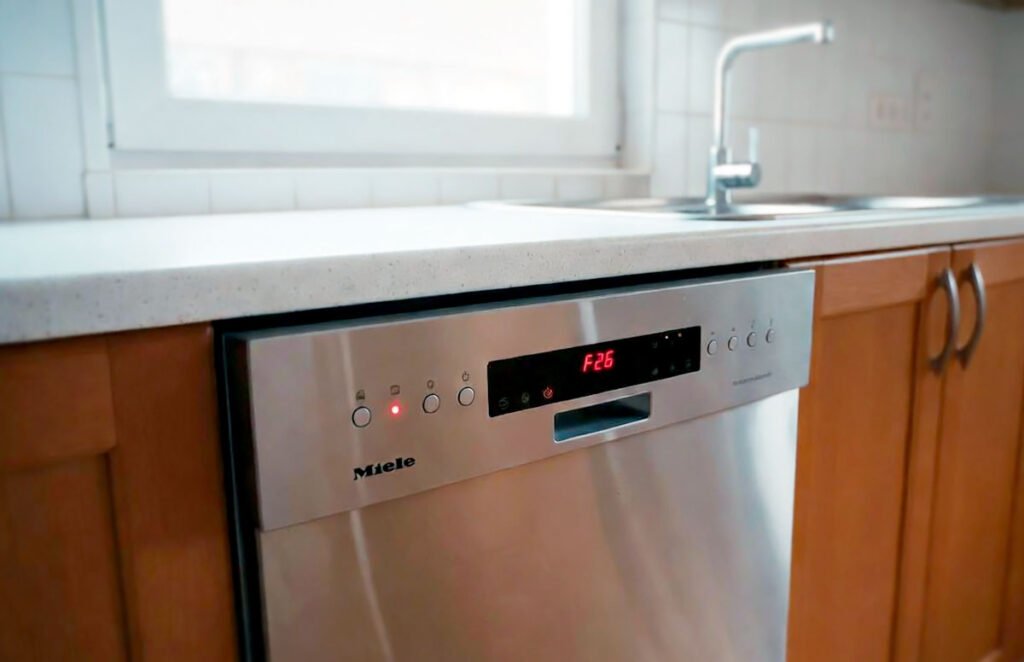
I know that sinking feeling when you walk into the kitchen after dinner and see that flashing red light on your Miele. You were expecting clean plates, but instead, you are staring at a sink full of dirty water. It is enough to make anyone want to give up on adulting for the day.
The F26 error code specifically points to a problem with the circulating pump pressure switch. Usually, this means the switch is stuck, the heater pressure switch is clogged with old grease, or the wiring harness has a tiny break. You can often fix this by cleaning the sump or replacing the switch located right on the side of the main motor.
What is the Miele F26 Error and Why Does It Happen?
When your Miele throws an F26 code, it is essentially a safety lockout. The machine thinks the wash pump is not moving enough water. Therefore, the electronic brain waits for a signal from the pressure switch to confirm water flow. If that signal never arrives, the cycle stops immediately to prevent the heating element from burning out or melting the plastic.
I have seen this happen most often because of a buildup of fatty sludge inside the tiny rubber hose. Over years of washing at low temperatures, grease turns into a waxy substance. Consequently, this gunk blocks the pressure signal from reaching the sensor. It is a classic case of the machine being too smart for its own good, since it senses a blockage that might be minor.
Sometimes the issue is purely mechanical within the switch itself. For instance, the internal diaphragm gets brittle or the metal contacts become pitted. In rarer cases, a small piece of glass or a toothpick might have bypassed the filter. This prevents the pump from building the necessary force. As a result, the control board assumes there is a major component failure when it is just debris.
- Accumulated grease and fat blocking the pressure switch orifice.
- A faulty heater pressure switch with a ruptured internal diaphragm.
- Loose or corroded spade connectors on the pressure switch wiring.
- Foreign objects like broken glass jamming the circulation pump impeller.
- A failing circulation pump motor that cannot reach its target RPM.
- Residual soap suds causing air pockets that trick the pressure sensor.
Miele Dishwasher Error Code F26: The Step-by-Step Repair Guide
Clear the Sump and Filter Area
Start by removing the bottom rack. Next, pull out the large cylindrical filter assembly from the bottom of the tub. You will need to scoop out any standing water using a small sponge. Keep going until the plastic sump is completely dry. This area often hides small shards of glass.
Check the non-return valve. This is the small plastic piece held down by a metal wire clip. Pop that clip over and pull the valve straight up. Afterward, inspect the drain impeller underneath it. Make sure nothing is wrapped around the shaft. Even a tiny thread can cause trouble.
Once the area is clear, use a flashlight. Look into the hole where the water enters the pump. Feel around with your finger for any grit. Finally, reassemble everything tightly. Ensure the filter locks back into place with a firm click. A loose filter allows more debris to enter.
- Remove all standing water from the bottom of the dishwasher.
- Inspect the non-return valve for hidden debris or blockages.
- Clean the triple filter system using hot water and soap.
- Check the intake port for any physical obstructions or slime.
Access the Bottom Component Tray
First, disconnect the power cord. You must also turn off the water supply valve. Then, disconnect the drain hose so it does not kink. Now you are ready to get to the heart of the problem. You must lay the machine on its back carefully.
Use a T20 Torx screwdriver for this part. Remove the screws holding the lower kick plate and the metal base pan. Furthermore, keep track of these small screws. Carefully slide the plastic drip tray out. Be mindful of the float switch wire clipped to the center.
Once the base is off, you will see the large motor. This is the circulation pump. It sits right in the middle of the chassis. However, lay an old towel down first. There will always be about a cup of water that leaks out. This prevents a mess on your floor.
- Disconnect the power and water lines before moving the unit.
- Remove the bottom access panel using a T20 Torx driver.
- Disconnect the leak sensor wire from the bottom drip tray.
- Place towels down to catch residual water from the pump.
Identify the Heater Pressure Switch
Look at the side of the large motor. You are looking for a round, plastic component with wires. This is the heater pressure switch. It is the specific part causing the F26 code. Usually, it is held by a black rubber latch or a screw.
Check the wiring harness for signs of damage. Sometimes the heat from the motor makes the plastic brittle. In many Miele models, this is a “normally open” switch. It only completes the circuit when water pressure pushes it. Therefore, pull the wires off gently with pliers to inspect.
Notice the small rubber hose or plastic nipple. This connects the switch to the pump. This is the “artery” that gets clogged with grease. If you see a thick, white paste inside, you found the culprit. That gunk prevents the pressure from reaching the sensor.
- Locate the circular pressure switch on the main pump.
- Inspect the wire terminals for corrosion or heat damage.
- Check the connection point between the switch and pump.
- Look for grease buildup inside the small pressure sensing port.
Test and Clean the Switch
Before buying a new part, try cleaning the old one. Use very hot water and a bit of degreasing soap. Use a toothpick to gently clear the hole. However, be careful not to puncture the internal diaphragm. Sometimes, a quick soak is all it takes.
If you have a multimeter, you can test the switch. Check for continuity while applying a small amount of air pressure. You should hear a distinct “click” when it engages. If you hear the click but the resistance does not change, it is broken.
Many pros skip the cleaning and just replace the part. This is because these switches are under a lot of stress. But, if you are on a budget, a flush can save money. Just make sure the part is completely dry. Never plug it back in while wet.
- Clean the switch orifice using hot water and degreaser.
- Test for electrical continuity using a standard digital multimeter.
- Listen for a physical click when applying light air pressure.
- Ensure the component is bone dry before reinstalling it.
Replace the Faulty Component
If cleaning did not work, buy a new switch. Ensure you have the exact part number from your model sticker. This sticker is usually on the right side of the door. Then, align the new switch with the mounting bracket. Push it until it locks.
Slide the rubber O-ring into place carefully. This ensures there are no leaks later. If the seal is dry, use a tiny bit of dish soap. This acts as a lubricant to help it seat perfectly. Afterward, secure any clips or screws you removed earlier.
Reconnect the wiring harness exactly as it was. Ensure the spade connectors are tight. If they feel loose, give them a tiny squeeze with pliers. Proper electrical contact is crucial. The control board is very sensitive to even minor voltage drops.
- Verify the part number against your specific dishwasher model.
- Lubricate the O-ring seal for a leak-free installation.
- Snap the new switch into the mounting bracket securely.
- Tighten the wire connectors to ensure a solid electrical path.
Reassemble and Run a Test Cycle
Carefully tip the dishwasher back up. Reconnect the water, drain, and power lines. But do not slide it back under the counter yet. Instead, run a short “Rinse” cycle first. This allows you to check for any leaks while everything is visible.
Once you are sure it is dry, slide it back. Use a spirit level on the top frame. This ensures the machine is perfectly square. A tilted dishwasher can cause drainage issues. These issues often mimic pressure faults, so leveling is very important.
Finally, run a “Heavy” cycle with a cleaner. This helps clear out any remaining grease. You want the internal plumbing to be as clean as possible. This prevents the code from returning. Now your Miele is ready for a full load of dishes.
- Perform a leak check during a short test rinse cycle.
- Level the dishwasher to ensure proper drainage and pressure.
- Run a high-heat cycle with cleaner to remove grease.
- Verify that the F26 error code has cleared completely.
How to Prevent the F26 Error From Coming Back
The best way to keep your Miele running is prevention. Most people use the “Eco” settings to save energy. However, these cycles run at lower temperatures. Lower heat means that animal fats do not fully melt. Consequently, they solidify inside the pressure switch hoses.
You should run the hottest cycle possible once a week. This “thermal blast” liquefies any waxy buildup. Additionally, check your detergent usage. Using too much soap creates excess suds. These suds can block the pressure sensor. As a result, the machine thinks the pump failed.
Lastly, never “pre-rinse” your dishes until they are spotless. Modern detergents actually need a bit of food debris to work. If the water is too clean, the detergent creates foam. Foam is the enemy of the pressure switch. Just scrape the big chunks off and relax.
- Run a high-temperature “Sanitize” cycle at least once weekly.
- Avoid using excessive amounts of detergent to prevent suds.
- Stop pre-rinsing dishes to allow detergent to work properly.
- Clean the triple filter every two weeks to maintain flow.
- Use a high-quality rinse aid to help water shed quickly.
- Check the drain hose for kinks or clogs periodically.
Final Thoughts
Fixing an F26 error feels intimidating at first. However, it is usually just a matter of cleaning some gunk. You have got the skills to handle this project. Just take your time and stay organized. Once that Miele is humming again, you will feel like a total hero.
| Steps | Difficulty Level | Parts Needed | Pro Tip |
| Clear Sump | Easy | Sponge, Towel | Check under the non-return valve. |
| Access Base | Medium | T20 Torx Driver | Watch the leak sensor wire clip. |
| Inspect Switch | Medium | Flashlight | Look for yellowish grease in the port. |
| Test/Replace | Hard | New Switch, Multimeter | Squeeze connectors for a tight fit. |
Frequently Asked Questions (FAQs)
Is it worth fixing a Miele dishwasher with an F26 error?
It is absolutely worth fixing because Miele machines are built to last. An F26 error is usually a minor component failure or a simple blockage. Therefore, spending a little on a pressure switch is much cheaper than buying a new unit. You can extend the life of your machine significantly.
Can I clear the F26 code without taking the machine apart?
Sometimes you can clear it by running a cleaning cycle with a heavy-duty degreaser. However, this only works if the blockage is very soft. If the diaphragm inside the switch has failed mechanically, cleaning will not help. Eventually, you will need to access the bottom to verify the part.
Do I need special tools to fix this specific Miele problem?
You really only need a T20 Torx screwdriver and perhaps a pair of pliers. Miele uses Torx screws almost exclusively. Therefore, a standard Phillips head will not work. Having a multimeter is helpful for testing electrical continuity. However, many people just replace the switch if cleaning fails to work.
Is it safe to tilt the dishwasher on its side for repair?
It is much safer to tilt it onto its back rather than its side. This prevents water from getting on the electronic control boards. Always ensure the machine is completely drained first to minimize messes. Furthermore, laying it on a thick rug will prevent the stainless steel from getting scratched.
Can a clogged drain hose cause the F26 error code?
While F26 is a circulation pressure fault, a backed-up drain can leave water in the sump. This interferes with the next cycle’s pressure. If the pump has to fight against old water, it might not reach the proper pressure. Thus, you should always check the entire water path.
Do I have to use genuine Miele parts for the pressure switch?
I strongly recommend using genuine Miele parts for this repair. Their sensors are calibrated to very specific pressure ranges. Aftermarket parts might fit the hole but often have different electrical tolerances. Consequently, using a cheap part can lead to “ghost” errors where the machine works only intermittently.
Is it possible that my circulation pump is actually dead?
It is possible but less common than a simple switch failure. If you hear a loud humming or grinding noise, the motor bearings might be shot. However, if the motor sounds normal but the code pops up later, the switch is likely the culprit. Always test the cheaper part first.
Can hard water buildup lead to an F26 fault code?
Hard water can definitely contribute because calcium deposits can crust over the sensing port. If you live in an area with very hard water, using Miele salt is vital. This prevents mineral scale from seizing up the moving parts. Regular descaling will keep the pressure switch working smoothly.