As an Amazon Associate, I earn from qualifying purchases at no extra cost to you.
Siemens Dishwasher Error Code E24: Fix It Fast Today!
 ByZayyan

Oops, your kitchen just turned into a small lake because your fancy machine decided to quit. I remember when my own Siemens unit flashed those bright red lights right before a big family dinner party started. It felt like a total disaster, but this common error is actually quite easy to solve.
To fix your machine, first check the drain hose for any kinks or flat spots that block water flow. You must then open the filter at the bottom and remove any bits of food or broken glass stuck inside. Pop off the plastic pump cover to see if the impeller can spin freely. Finally, ensure the sink connection is totally clear of gunk so the water can escape without any pressure.
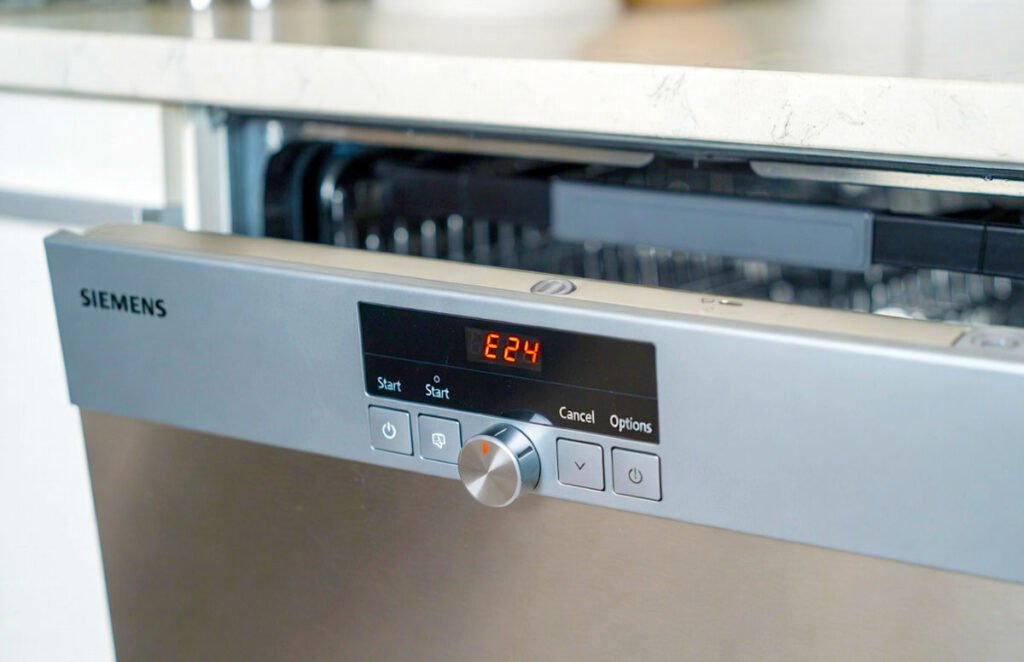
Why does my dishwasher keep showing the E24 signal?
The E24 signal usually pops up when the machine thinks the water cannot drain out fast enough during the cycle. This happens because the internal sensors detect a backup or a struggle within the pump system. It is a very common safety feature designed to prevent your kitchen floor from getting soaked by a massive flood.
Sometimes the issue is not even inside the dishwasher but rather in your kitchen sink pipes or the garbage disposal unit. If those areas are clogged with grease or old food bits, the dishwasher water has nowhere to go. This back pressure triggers the sensor almost immediately after the wash cycle tries to move to the next stage.
Modern machines are very sensitive to the timing of water movement so even a small piece of plastic can cause trouble. You might notice the machine starts for a minute, hums loudly, and then stops with that annoying beeping sound. Taking a few minutes to investigate the drain path will usually get things back to normal quickly.
- Drainage sensors detect water flow issues.
- Kinked hoses often block the water path.
- Food waste clogs the internal fine filters.
- The pump cover might be loose or missing.
- Sink plumbing clogs create back pressure issues.
- Electrical glitches can cause false error readings.
How to Fix Siemens Dishwasher Error Code E24
Inspect the Drain Hose for Kinks
The very first thing you should do is pull your dishwasher out just a little bit from the cabinet. You need to look behind the machine to see if the long plastic drain hose is pinched or twisted. If the hose has a sharp bend, the water simply cannot push through the narrow gap to exit the unit.
Many times, we push the machine back too hard after cleaning, and the hose gets crushed against the wall. This creates a physical wall that stops the pump from doing its job correctly. You should gently straighten the hose and make sure it has a nice smooth curve instead of a flat or folded spot.
If you find a kink, try to massage the plastic back into its original round shape so the water flows. Sometimes the plastic stays flat if it has been crushed for a long time under the weight of the machine. In that case, you might need to use a warm cloth to soften the plastic and help it pop back out.
Check the entire length of the hose from the back of the machine all the way to the sink. Ensure no heavy items in your under-sink cabinet are leaning against the pipe and squishing it. Once the path is wide open, you will likely find that the error code disappears on your very next wash.
- Pull the machine forward to see the back.
- Look for sharp bends in the plastic hose.
- Straighten any twists or flat sections found.
- Ensure no heavy objects crush the drain line.
- Check the connection point at the sink area.
- Keep the hose curve smooth and wide open.
Clean the Internal Filter System
Every Siemens dishwasher has a round filter assembly at the bottom that catches big chunks of food and debris. Over time, these filters get coated in a thick layer of grease or tiny seeds that block the water. If the water cannot pass through the mesh, the pump will struggle and trigger the E24 error code.
You should twist the filter handle to unlock it and pull the whole plastic cylinder out of the machine. Take it to your sink and give it a good scrub with a soft brush and some dish soap. You will be surprised at how much slime can hide in the fine mesh even if it looks clean.
While the filter is out, look into the hole where it sits to see if any stagnant water is hiding there. Use a small sponge to soak up the dirty water so you can see the very bottom of the sump area. Often, a small piece of bone or a fruit pit is sitting right there blocking the exit hole.
Put the clean filter back in and make sure you lock it into place by turning it until the arrows align. If the filter is loose, the machine might allow larger debris to enter the pump which causes much bigger problems. A clean filter ensures your dishwasher can breathe and move water without any extra effort or stress.
- Twist and lift the bottom filter assembly.
- Wash the mesh under hot running water.
- Use a brush to remove hidden grease.
- Clear out any debris from the sump hole.
- Dry the area to check for small items.
- Lock the filter back into the correct spot.
Check the Drain Pump Impeller
If your filters are clean but the error persists, you need to check the actual pump impeller for any blockages. There is a small plastic cover at the bottom of the sump that protects the spinning blades of the pump. You can usually pop this cover off using a spoon or a small screwdriver to see what is inside.
Once the cover is off, look for things like broken glass, toothpicks, or rubber bands wrapped around the center post. These items are the most common killers of dishwasher pumps because they stop the blades from spinning. If the motor tries to spin but gets stuck, the machine will immediately show the E24 error code on the screen.
Use a pair of tweezers or a small tool to carefully remove any foreign objects you find in that tiny space. Be very careful because broken glass is often the culprit and it can be very sharp and hard to see. Once the area is clear, try to flick the impeller with your finger to see if it spins.
It is vital to snap the pump cover back into its original position until you hear a clear clicking sound. If that cover is not perfectly seated, the pump cannot create the suction needed to pull the water out of the tub. Many people forget this step and the error code remains even though the pump is actually clean.
- Remove the plastic pump cover carefully now.
- Look for glass or debris near blades.
- Use tweezers to pull out stuck objects.
- Check if the impeller spins very freely.
- Listen for the click when replacing covers.
- Ensure the area is free of any slime.
Verify the Sink Connection and Siphon
Sometimes the problem is not in your dishwasher at all but rather in the plumbing under your kitchen sink. The drain hose usually connects to a small plastic nub on your sink pipe or the garbage disposal unit. If this connection point is clogged with grease, the dishwasher water will simply hit a wall and stop moving.
You should unscrew the metal clamp holding the hose to the sink pipe and pull the hose off to look inside. It is very common to find a thick plug of old food or fat sitting right at the mouth of the connection. Use a screwdriver or a pipe cleaner to poke through the hole and ensure it is totally clear.
If you recently installed a new garbage disposal, make sure the internal knockout plug was removed before you connected the hose. This is a very frequent mistake that leads to an instant E24 error because the water is physically blocked. The plug is a small plastic disc that must be hammered out during the initial installation.
Once you are sure the hole is clear, slide the hose back on and tighten the clamp firmly to prevent leaks. Make sure the hose has a high loop before it enters the sink drain to stop dirty sink water from flowing back. This simple plumbing check often fixes the error when the dishwasher itself is actually in perfect working order.
- Disconnect the hose from the sink pipe.
- Clean out any grease from the nozzle.
- Check for the garbage disposal knockout plug.
- Clear any clogs in the sink trap.
- Tighten the hose clamp to prevent leaks.
- Ensure the drain hose has a high loop.
Reset the Control Module Software
Modern appliances are basically computers that can sometimes get confused or stuck in a loop with an error code. If you have cleaned everything and the E24 is still there, you might just need to reset the brain. A software reset clears out the old error memory and lets the machine start its checks from the beginning.
To do this, you can press and hold the Start button for about three to five seconds until the display changes. You will usually see the clock reset or a series of zeros appear on the digital screen of the unit. This tells the machine to cancel the current program and try to drain any remaining water left inside.
If the button reset does not work, you should try a hard power reset by unplugging the machine from the wall. Leave the power off for at least ten minutes to allow the electrical capacitors in the board to fully discharge. This complete lack of power forces the computer to restart and run a fresh diagnostic test when it wakes up.
Plug the dishwasher back in and try running a short rinse cycle to see if the error code returns again. Frequently, the simple act of cutting the power is enough to clear a stubborn code that was stuck in the memory. This is the easiest fix and should always be tried before you call an expensive repair technician to visit.
- Hold the Start button for five seconds.
- Wait for the display to show zeros.
- Unplug the power cord from the wall.
- Wait ten minutes for a full reset.
- Plug it back in and restart a cycle.
- Observe the machine during the first drain.
Check for Heat Pump Issues
In some rare cases, the E24 error on a Siemens machine can actually be related to the heat pump or motor. If the motor is starting to fail, it might not have enough strength to push the water out through the pipes. This causes the sensor to think there is a blockage even if the path is technically clear of any food.
You can often hear if the motor is struggling because it will make a low humming or buzzing sound instead of a splash. If you hear a loud grinding noise, it usually means the bearings inside the motor are worn out and need help. This is a more serious issue that might require a professional to look at the internal components.
Check the wiring connections near the bottom of the machine to ensure nothing has come loose or been chewed by pests. Sometimes a loose wire can cause the pump to work intermittently which leads to confusing error codes that come and go. Ensure all plugs are pushed in tight and no wires look burnt or damaged by the heat.
If you have tried all the cleaning steps and the reset but the E24 still haunts you, the pump might need replacing. Replacing a pump is a bit technical but it is much cheaper than buying a whole new dishwasher for your kitchen. Always double check your warranty status before opening the main motor housing to save yourself some extra money.
- Listen for humming or grinding motor sounds.
- Check for weak water flow during cycles.
- Look for loose or damaged electrical wires.
- Inspect the motor for any visible leaks.
- Consider replacing the pump if cleaning fails.
- Verify the warranty before performing big repairs.
Why does the error happen at the start of the cycle?
It is very strange but the E24 error often happens right at the very beginning of the washing process. This occurs because the Siemens software performs a quick drain test before it ever lets fresh water into the tub. The machine wants to make sure the path is clear so it does not accidentally cause a flood later on.
If the pump detects even a tiny bit of resistance during this initial test, it will stop the whole process immediately. This is why you might hear the pump run for a second and then see the error code flash. It is a protective measure that saves your kitchen from potential water damage, even if it feels very annoying at the moment.
Sometimes the sensors are just a bit too sensitive and they misinterpret the flow of air as a blockage. If you open and close the door quickly during this start phase, you can sometimes trick the sensor into working. However, it is always better to find the real cause of the resistance to ensure your machine stays healthy for years.
- Initial drain tests check for potential leaks.
- Sensors monitor resistance levels very early.
- Safety protocols stop the cycle immediately.
- Air pockets can sometimes fool the sensor.
- Door opening can reset the initial check.
- Early detection prevents major kitchen floods.
Final Thoughts
Dealing with a Siemens dishwasher error code E24 is definitely a headache, but you can usually fix it yourself. By checking the hose, cleaning the filters, and clearing the pump impeller, you save time and a lot of money. Most of these issues are just simple clogs that happen with regular use over time. Stay patient, follow the steps carefully, and your dishes will be sparkling clean again in no time at all.
| Problem Area | Action Required | Tool Needed | Difficulty Level |
| Drain Hose | Remove kinks and bends | Hands only | Very Easy |
| Main Filter | Scrub mesh with soap | Soft Brush | Easy |
| Pump Impeller | Remove glass or seeds | Tweezers | Medium |
| Sink Spigot | Clear grease or plugs | Screwdriver | Medium |
| Reset Board | Power cycle the unit | Power Plug | Easy |
| Software | Hold start button | Finger | Very Easy |
Frequently Asked Questions (FAQs)
Is it safe to use the dishwasher while the E24 code is showing?
No, you should not try to run the machine if the E24 code is active on the screen. This error means the water cannot leave the tub, so adding more water will likely lead to a messy flood. If you keep forcing the machine to run, you might also burn out the drain pump motor which is expensive to fix. It is best to solve the blockage first before you attempt to start another washing cycle.
Can I fix the E24 error without calling a professional repair person?
Yes, most people can fix this specific error code on their own without needing any special skills or expensive tools. It usually involves basic cleaning of the filters or straightening a hose that got pinched behind the unit. If you follow the steps to clear the pump impeller and check the sink connection, you will likely solve the problem. Only call a pro if you suspect the actual motor has completely failed or the electronics are broken.
Do I need special tools to clean the Siemens dishwasher pump?
You generally do not need any fancy tools to access the pump area in a Siemens dishwasher. A simple teaspoon can often be used to pop off the plastic pump cover located at the bottom of the sump. You might also want a pair of tweezers to pull out tiny bits of glass or hair that are stuck in the blades. Having a sponge and a bucket nearby is also helpful to soak up any standing water before you start.
Is the E24 error code common in older Siemens models?
This error code is actually very common in both old and new Siemens models because they use similar drainage logic and sensors. Over time, grease and food waste naturally build up in any machine, which eventually leads to a drainage warning. Older machines might have more wear on the pump motor, making them slightly more prone to this issue. Regular maintenance and cleaning of the filters will help prevent this error from popping up regardless of your machine’s age.
Can a clogged sink drain cause the E24 error to appear?
Yes, a clogged kitchen sink is one of the most frequent reasons for this error code to show up. If your sink pipes are full of gunk, the dishwasher cannot push its waste water into the plumbing system. The resulting back pressure triggers the dishwasher’s internal sensors to stop the cycle and show the E24 signal. Always check that your sink is draining quickly and clearly before you assume there is something wrong with the dishwasher itself.
Do I have to pull the dishwasher out to check the drain hose?
In many cases, you will need to slide the dishwasher out from under the counter to see the entire hose. This is important because kinks often happen right where the hose connects to the back of the machine. If you can see the connection under your sink and it looks straight, the problem might be hidden behind the cabinets. Just be careful not to pull it too far and accidentally disconnect the water supply or the electrical wires.
Is it possible for a false E24 error to happen?
Sometimes the electronic control board can experience a glitch and show a false E24 error code. This might happen after a power surge or if the sensors get a bit confused by soap suds in the system. If you have checked all the physical parts and found no clogs, a simple reset often clears the false alarm. Unplugging the machine for ten minutes is the best way to clear out any temporary digital bugs that are causing trouble.
Can using too much detergent cause drainage errors?
Using too much dish soap or the wrong kind of detergent can definitely lead to an E24 error code. Excess soap creates a massive amount of suds that the pump cannot move efficiently because air is trapped in the bubbles. The sensor sees this lack of water movement as a blockage and shuts the system down for safety. Always use the recommended amount of high quality detergent pods to keep the suds level low and the water flowing smoothly.
Should I check the non-return valve for the E24 code?
The non-return valve is a small rubber flap that prevents dirty water from flowing back into the dishwasher once it has been pumped out. If this valve is stuck or dirty, it can cause the E24 error because the water cannot exit the machine. You can usually find this valve near the pump assembly at the bottom of the tub. Ensure it is clean and the rubber is flexible so it can open and close properly during the drain cycle.
Does a dirty filter always cause the E24 error?
While a dirty filter is a very common cause, it is not the only thing that triggers an E24 error. You can have a perfectly clean filter but still see the code if the hose is kinked or the pump cover is loose. However, cleaning the filter is the easiest first step and it solves the problem in a large number of cases. It is good practice to clean your filters every month to avoid any unexpected interruptions to your kitchen routine.