As an Amazon Associate, I earn from qualifying purchases at no extra cost to you.
Whirlpool Dishwasher Error Code F4 E3: Fix It Now (Quick Steps)
 ByZayyan

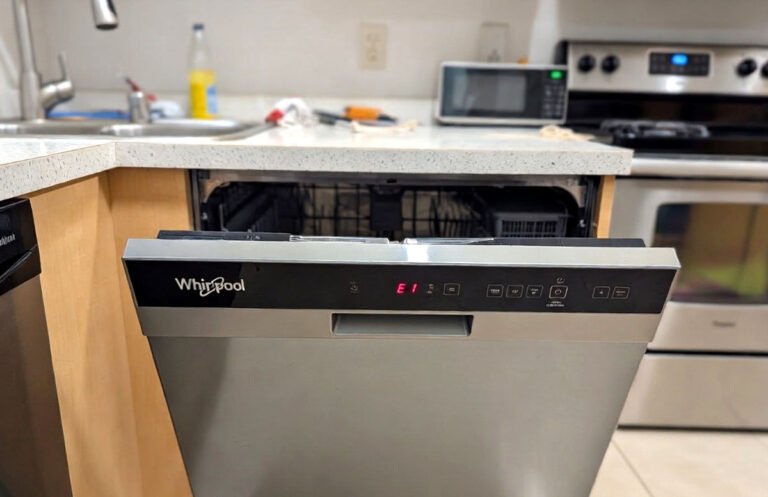
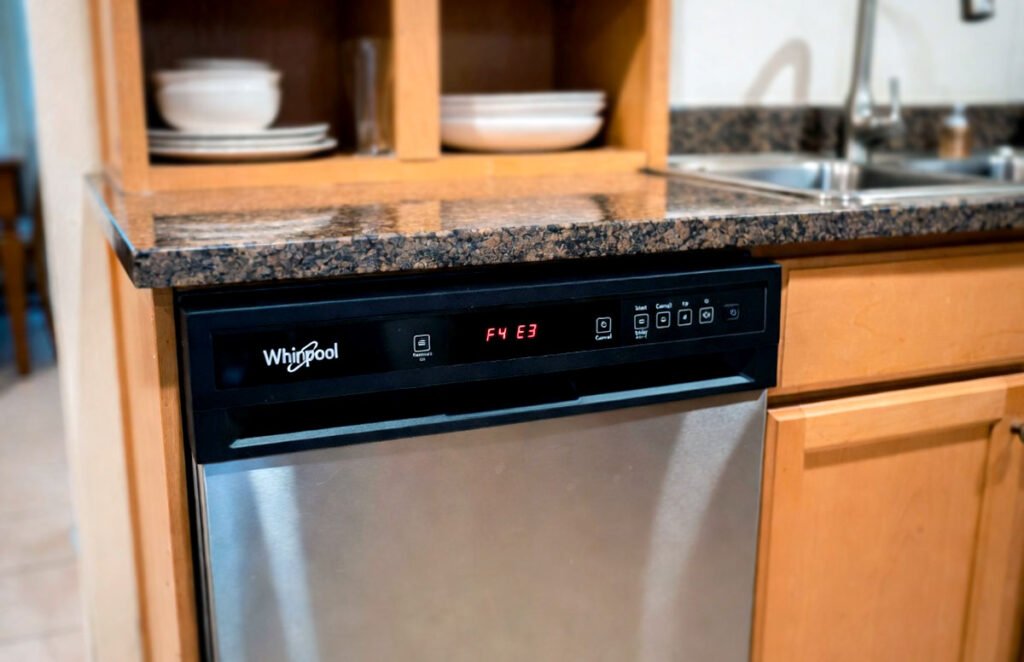
The kitchen smells like stagnant water and your sink is overflowing because the dishwasher refuses to drain. You just spent an hour scrubbing lasagna pans by hand while that blinking F4 E3 light mocked you from the control panel. This error usually triggers when the wash pump detects a high-current draw or a physical blockage.
To clear this error, you need to access the wash motor and check for debris like glass shards or fruit pits. Usually, the issue stems from a faulty wash motor or a clogged sump assembly that forces the motor to work too hard. You should start by manually clearing the filters and checking the impeller for movement. If the motor is humming but not turning, it likely needs a total replacement. Keep a Torx T15 screwdriver and a shop vac handy to handle the water and the tiny screws holding the internal components together.
What is the Meaning of the Whirlpool F4 E3 Error Code?
When your Whirlpool displays the F4 E3 code, it essentially means the wash motor is struggling to spin. The control board monitors the electrical current going to the motor. If that current spikes because the motor is jammed or the bearings are seized, the machine shuts down to prevent a fire or a total electrical short. It is a protective measure that saves your house but ruins your afternoon.
This specific error is frustrating because it often happens mid-cycle when the tub is full of hot, soapy water. You might hear a faint buzzing sound or a clicking noise coming from the bottom of the unit before the code pops up. This tells me the motor is trying to engage but cannot overcome the physical resistance. It is rarely a computer glitch and almost always a mechanical failure or a physical obstruction.
I have seen everything from a single toothpick to a broken piece of a coffee mug stop these high-efficiency motors cold. Since the wash pump and the motor are often one integrated unit in modern Whirlpool models, any internal damage usually requires replacing the whole assembly. Do not ignore this code or try to reset it repeatedly. Doing so can burn out the main control board, which is a much more expensive repair than just fixing the pump.
- A piece of broken glass jammed in the wash motor impeller.
- Excessive suds from using the wrong type of detergent.
- Worn out motor bearings causing high electrical resistance.
- A failed capacitor on the motor start circuit.
- Loose wiring harness connections at the base of the machine.
- Heavy grease buildup inside the sump housing.
Whirlpool Dishwasher Error Code F4 E3 Repair Guide
Clear the Sump and Filters
Start by pulling out the bottom rack and set it aside on the floor. Reach into the bottom of the tub and twist the cylindrical filter counterclockwise to lift it out. You will likely find a disgusting slurry of old food and grease trapped in the mesh. Take this to the sink and scrub it with an old toothbrush and some degreasing dish soap until the mesh is completely clear.
Check the large flat metal filter plate that sits at the bottom of the tub. Often, small bones or plastic wrap get stuck underneath this plate. If you see any debris, use your shop vac to suck out the standing water so you can see clearly. Reach your fingers into the sump hole, but be very careful. Broken glass loves to hide in the dark corners of the sump assembly.
Once the area is dry, feel around the circular opening where the water enters the pump. Use a bright flashlight to inspect the plastic housing for any cracks or warping. If everything looks clean, snap the filters back into place. Ensure they are locked tight, or debris will just bypass them again. A loose filter is the number one cause of a jammed wash motor.
- Remove the cylindrical filter and the flat mesh screen.
- Scrub all filters with soap and a stiff brush.
- Vacuum out all standing water from the sump.
- Check the sump floor for glass or hidden debris.
Inspect the Wash Motor Impeller
You need to know if the motor can actually spin before you decide to buy a new one. Reach into the sump and find the small plastic fan blades, known as the impeller. Use a long screwdriver to gently nudge the blades. They should move with a little bit of springy resistance but they definitely should not be stuck or frozen in place.
If the impeller feels like it is glued down, you probably have a foreign object wedged in the housing. Sometimes a tiny pebble or a piece of hard plastic gets stuck between the blade and the wall. You can try to wiggle it loose with a pair of needle-nose pliers. If it moves freely now, you might have just saved yourself a couple hundred dollars in parts.
Check for any signs of melting or heat damage on the plastic surrounding the impeller. If the motor was struggling for a long time, the friction could have warped the housing. If the plastic looks charred or deformed, the seal is likely blown. At this point, the motor is toast. You will need to move to the next step of accessing the motor from underneath.
- Locate the wash motor impeller blades inside the sump.
- Nudge the blades with a tool to check movement.
- Remove any caught objects with needle-nose pliers.
- Check for melted plastic or heat damage around the motor.
Access the Bottom Components
You have to get under the machine to do the real work. Turn off the power at the breaker and shut off the water supply line. Unscrew the two mounting screws at the top of the dishwasher cabinet. Carefully slide the unit out about six inches, making sure you do not kink the drain hose or the copper water line as you move.
Lay a heavy towel down and tilt the dishwasher onto its back. You will see a large plastic or metal pan at the bottom. Use your T15 Torx driver to remove the screws holding this access panel. This gives you a clear view of the wash motor, the drain pump, and the heating element wires. Look for any signs of water leaks or white crusty mineral deposits.
Check the wiring harness that plugs into the wash motor. Sometimes vibration causes these clips to wiggle loose over time. Unplug the connector and look for any burnt pins or green corrosion. If the wires look crispy or melted, that is your high-current draw right there. Clean the contacts with some electronic cleaner and make sure they click back into place firmly.
- Disconnect the power and water before moving the unit.
- Slide the dishwasher out and tilt it onto its back.
- Remove the bottom access panel with a Torx T15.
- Inspect the motor wiring harness for burns or corrosion.
Test the Motor Resistance
Grab your multimeter because it is time to get technical. Set the dial to the Ohms setting to check the continuity of the motor windings. Unplug the wire harness from the wash motor. Place one probe on each of the two main terminals on the motor itself. You are looking for a specific reading that tells you if the motor is electrically sound.
A healthy Whirlpool wash motor should usually read between 5 and 15 Ohms. If your meter shows “OL” or an extremely high number, the internal copper coils are broken. This means the motor is dead and cannot be repaired. If the reading is very low, like 1 or 2 Ohms, the motor has an internal short. This short is what causes the F4 E3 error.
Check the ground connection as well. Touch one probe to a motor terminal and the other to the metal frame of the motor. You should get no reading at all on your meter. If you see any numbers here, the motor is leaking electricity to the frame. This is a dangerous condition and requires an immediate replacement of the motor assembly to ensure safety.
- Set your multimeter to the Ohms or resistance setting.
- Measure the resistance across the two motor terminals.
- Look for a reading between 5 and 15 Ohms.
- Ensure there is no continuity between terminals and ground.
Replace the Wash Motor Assembly
If the motor failed the electrical test, you need to swap it out. Most Whirlpool models use a “quarter-turn” or a “tab-lock” system to hold the motor in. You might need to remove a single locking screw first. Once that is out, rotate the entire motor assembly counterclockwise. It will pop out of the sump with a little bit of physical effort.
Have a towel ready because about a cup of water will dump out when the motor breaks its seal. Inspect the large O-ring on the new motor. Smear a tiny bit of liquid dish soap on the rubber seal to help it slide in. This prevents the seal from bunching up or tearing, which would cause a massive leak later on during the first wash.
Align the tabs on the new motor with the slots in the sump. Press it in firmly and rotate it clockwise until you hear it click or the screw holes align. Reinstall the locking screw and plug the wiring harness back in. Make sure the wires are tucked away from the heater. If they touch the heater, they will melt during the drying cycle and cause a fire.
- Rotate the old motor counterclockwise to remove it.
- Clean the sump mounting surface and catch spilled water.
- Lubricate the new motor O-ring with a drop of soap.
- Twist the new motor into place and secure the screw.
Reassemble and Test Run
Stand the dishwasher back up and slide it into the cabinet. Do not screw it back into the counter just yet. Turn the water and power back on. Check the floor around the unit for any immediate leaks. If it stays dry, start a short “Rinse and Hold” cycle. This is the fastest way to see if the wash motor is engaging.
Watch the floor with a flashlight while the motor is running. You want to make sure your new seal is holding tight under pressure. If you hear the familiar sound of water spraying against the door, you have successfully fixed the F4 E3 error. Listen for any weird grinding or high-pitched squealing. A quiet, smooth hum means the job was done perfectly and the current is stable.
Once the cycle finishes and the water drains out, you can finally secure the mounting screws to the countertop. Put the kickplate back on and give yourself a pat on the back. You just saved yourself a three-week wait for a technician and a massive repair bill. Your kitchen is back in action and those dirty dishes can finally disappear for good.
- Slide the unit back and restore the power and water.
- Run a short rinse cycle to test the new motor.
- Check for leaks around the sump using a flashlight.
- Secure the mounting screws and replace the bottom kickplate.
How Can I Prevent the F4 E3 Error From Coming Back?
Preventing this error is all about keeping the water path clear of debris. Most people treat their dishwasher like a garbage disposal, but it really is not designed for that. You should always scrape large food chunks into the trash before loading the machine. Things like popcorn kernels, unpopped seeds, and tiny fruit stickers are the biggest enemies of your wash motor impeller.
You also need to run a cleaning cycle once a month with a dedicated dishwasher cleaner. These products are formulated to break down the calcium and lime scale that builds up on the motor bearings. Over time, hard water creates a crusty layer that increases friction. By keeping the internals smooth and clean, the motor does not have to pull as much current to spin, which prevents the F4 E3 code.
Finally, check your filters every single week. It only takes thirty seconds to rinse that mesh cylinder under the faucet. If the filter is clogged, the pump has to work twice as hard to pull water through. This creates heat and strain that eventually kills the motor. A little bit of regular maintenance goes a long way in extending the life of your kitchen appliances.
- Scrape all solid food and stickers off dishes before loading.
- Run a monthly cleaning cycle with a descaling agent.
- Rinse the mesh filters under the sink every week.
- Use high-quality detergent to prevent heavy grease buildup.
- Avoid using excessive amounts of soap to reduce suds.
- Check the drain hose for kinks that might stress the pump.
Final Thoughts
Fixing an F4 E3 error is a big win for any DIYer because it involves the heart of the machine. You have mastered the art of diagnosing a motor failure and saved a perfectly good appliance from the landfill. Keep an eye on your filters and remember that a clean machine is a happy machine. If you ever hear that motor struggling again, you now know exactly how to handle it.
| Steps | Difficulty Level | Parts Needed | Pro Tip |
| Filter Cleaning | Easy | Dish Soap, Brush | Use a flashlight to see into the dark sump. |
| Impeller Check | Medium | Needle-nose Pliers | Spin the blades manually to feel for grit. |
| Wiring Inspection | Medium | Electrical Cleaner | Look for burnt pins in the plastic plug. |
| Motor Replacement | Hard | New Wash Motor, T15 | Soap the O-ring so it does not leak. |
Frequently Asked Questions (FAQs)
Is it worth fixing a Whirlpool dishwasher with this error?
It depends on the age of your machine. If your dishwasher is less than seven years old, replacing the wash motor is a smart investment. A new motor usually costs between eighty and one hundred fifty dollars, which is much cheaper than buying a whole new unit. If the machine is over ten years old, you might want to consider an upgrade.
Can I reset the F4 E3 error without taking it apart?
You can try a hard reset by unplugging the unit for ten minutes. This clears the memory on the control board. However, if there is a physical clog or a dead motor, the code will pop back up within seconds of starting a new cycle. Reseting is only a temporary fix for a computer glitch, not a mechanical break.
Do I need special tools to fix this problem?
You mostly need basic hand tools that you probably already have in your garage. A Torx T15 screwdriver is the most important one since Whirlpool uses these screws for almost everything. A multimeter is very helpful if you want to be 100% sure the motor is electrically dead before you spend money on a new one.
Can a clogged drain hose cause an F4 E3 code?
While a clogged drain hose usually triggers an F5 or an F4 E1 code, it can sometimes contribute to an F4 E3. If the water cannot leave the tub, the wash motor has to push against the weight of old, dirty water. This extra resistance can occasionally spike the current enough to trip the E3 error code.
Is it safe to run the dishwasher with a blinking error?
No, you should never run the dishwasher if it is showing a persistent error code. The F4 E3 code indicates an electrical issue or a jammed motor. Forcing it to run can overheat the wiring or damage the main control board. It is always better to leave it off until you have time to inspect the pump.
Do I have to pull the dishwasher out of the cabinet?
For a thorough repair, yes, you usually need to slide it out. While you can reach the filters from the inside, the wash motor itself is located at the very bottom. You need to tilt the machine back to access the mounting tabs and the wiring harness properly. Always be careful not to scratch your kitchen flooring.
Can hard water cause this motor failure?
Hard water is a silent killer for dishwasher motors. Calcium deposits build up inside the motor housing and on the impeller shaft. This creates friction that makes the motor run hotter and draw more power. If you live in an area with hard water, using a rinse aid and a monthly descaler is absolutely essential.
Do I need to replace the whole sump assembly?
In most cases, you only need to replace the wash motor itself, not the entire plastic sump. The motor is a separate component that twists out of the housing. Replacing just the motor is faster and much cheaper. However, if the plastic sump is cracked or the seals are leaking, you might have to replace the whole unit.